Up the metal steps went my body, in through the narrow door and out onto the black rubber mats. The steering wheel was to the right, as usual, but to the left were rows and rows of spines. The spines went all the way to the back. The room rocked a bit as I stepped further inside. I chose one and opened it up to the thin white layers inside. I skimmed its dark lines to see if this one was for me. I loved them, all of them and this room, parked in front of my grade school. It was one of the first magic spaces in my life; it was the book mobile.

I was raised on potato-tuna casserole and “Rootie Kazootie.” Rootie hit home runs while Polka Dottie led the cheer, and then he rescued El Squeako Mouse from Poison Zanaboo. There were other children’s stories, so many, “Little Indian,” “The Little Red Hen” and “The Tale of Peter Rabbit.” I sat under my mother’s arm and braved danger after danger. Little Indian bravely stayed by his hurt horse though the dark and scary night. The little red hen baked her cake alone, outwitted the fox and shared her cake. Peter Rabbit hid under a pot to escape from Mr. McGregor. Talking animals, for many of us, were our first best friends. Perhaps our parents read these too us for their moral values, as if children’s literature exists to instruct and preach. That didn’t work. We remember a good story, a unique character, some good lines. It’s enough.

These reside in deep memory, our storybook friends and their adventures, and we don’t merely  remember them, resting somewhere in the recesses of our cerebrums, snaked back to the surface throughout life by our hippocampuses, but in one way or another we eventually live them. I hit a Rootie Kazootie home run in grade school, turning on an inside fast ball and smacking a line shot that just kept rising over third, sailing over the outfielder in left, landing at the bottom of the hill and bounding into the trees. The arc of that shot, my unimpeded romp around the bases, crossing home plate and still waiting for Ronnie to find the ball – “Gosharootie,” life is good when you are the star, even if for just a moment, of Kazootieland.

Most every story that we read has universal elements with counterparts in our lives, like shadows have the thing that casts them. Take Little Indian for instance, the brave little child who loves the horse he finds. I too found a lost creature one summer day when I was little, a big red cat lying in the daisies, and I hauled him home under my arm. I can still remember his soft, flexible weight, almost dragging to the ground as I rescued his mangy hide, and made “Red” my best friend, day and scary night. And my mother hen baked me white cake with chocolate frosting on my birthdays every year, and we all ate it, whether we had helped or not. And I don’t remember helping. And we planted vegetables in a large garden spot near the house and the rabbits nibbled on them when we weren’t looking. Our early stories are the literary templates for our lives. And our later readings teach us how to write our own, Darwin borrowing phraseology from Humboldt’s personal narrative when he wrote his Beagle diary.

In writing about the value of fairy tales, G. K. Chesterton said, “My first and last philosophy, that which I believe in with unbroken certainty, I learnt in the nursery.” Chesterton tells how he learned from the fairy tales what he would later learn from philosophy and theology, that life was supernatural, mysterious and unpredictable. Ideas are powerful, and resident in tales they are even more powerful. We begin college in the nursery, encountering some of the great oppositions of life, good and evil and the will to persist in the face of dark magic until a beautiful woman or a beautiful kingdom is won.

When I think of stories I think of my mom. She read them to me. And she read them with me. When I was in grade school my mom and I read Zane Grey novels together, ones we had gotten from the bookmobile or the little library in town. We loved Riders of the Purple Sage. I totally connected to The Lone Star Ranger. “Duane could draw it [his gun] with inconceivable rapidity, and at twenty feet he could split a card pointing edgewise toward him.” I wished I could do that. I doubt if my mom did, but these stories became a bond between us. Her liking them seem to amp their value in my mind. Later in life when my wife and I went to Catalina Island to vacation we read Riders of The Purple Sage because Zane Grey had a home on the island, now the Zane Grey Pueblo Hotel.

Stories change places, turning ordinary towns into tour destinations, small houses into rooms people pay to tour. All you have to do to see what a writer can do to a town is to go to Hannibal, Missouri.  Tom and Becky and Huck are now longer carefree; they’ve gone into business together. When my daughter Laurel and I went to Concord, Massachusetts we walked through the home of Louisa May Alcott. The tour paused with awe in front of a little desk in her room; it is now a relic. We wanted to touch it; maybe the magic would enter us. But it already had; we had both grown up in homes with desks and bookcases full of stories.

My mom saved a few of our early childhood stories. Their thin, fading cardboard covers moved with my family from house to house and state to state, and on a day I don’t remember now, I found some of them in a box at her house and brought them to my own home, twenty-some years after first hearing them, and I read them to my little daughters. These scraps from my childhood, a Little Golden Book, and a Better Homes and Gardens storybook, unlike my transistor radio, came alive again through my own voice and storied my own children’s childhoods. My daughters sat under my arm and heard what I heard under my mother’s arm, “The Little Red Hen” and “Peter Rabbit.”

I walked into my daughter Laurel’s room the other day and noticed that on the table by her bed were stacks and stacks of books. She is majoring in literature. The stories got to her. She wants more. When our brains are still forming, the stories we hear are archetypal, a part of deep memory, mental construction, identity formation. The other night we got to talking about children’s literature, and one of my daughters went and found our old copy of “Rootie Kazootie.” We took turns reading pages and laughing.

 “’Come one step closer,’ Poison Zanzaboo cried, ‘and I’ll soak El Squeako in the lake!’”

“’Whatever can we do?’” cried Polka Dottie.”

It’s enough to make a modern egalitarian boil,  the helpless cheerleader and her Mexican mascot mouse who they keep in the dugout for luck.  I opened to the back of the title page, “Copyright 1954 by Steve Carlin.” I’d like to have known Steve, had him to dinner. He made up words. he must have been a fun guy.

We laughed at the Dogerooties and the Yankapups and shouted, “Zingarootie.” I checked on the chicken, broiling in the oven. The barbeque sauce on top was getting a tasty shade of dark. My daughter got out the serving dishes. The Little Red Hen was again about to share again.

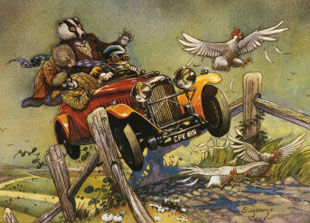
Stories have a power that goes beyond their physical existence and beyond even the ideas expressed in them. Stories are community, and sharing our tales is one way we love each other. As my girls grew up I read to them out loud all seven volumes in The Chronicles of Narnia. When they were barely old enough to understand, we read out loud Treasure Island.  We exulted together in The Wind In the Willows, driving furiously with Toad, journeying with Mole and Rat. For hours on end they sat on my lap or under my arm, reveling in story, in language and most of all in having an arm around a shoulder, a hand on a forearm, a leg touching the border of another leg. Touch and story are a perfect compound.

Sometimes I didn’t read stories at all; I told them stories. They have always loved to hear the stories from how I grew up, like the time I shot my brother.  In telling them, I try to stick to reality, but it’s hard. The stories tend to get away from me.   

They like the one about the clubbing. This one involved a clubbing game that my brothers and I invented when we were young. We would fill our socks with other socks until they were hard and bloated. Then we would separate, hide and hunt each other. Our improvised games were often about maiming or killing each other. The intent of the sock game was to bludgeoning each other into oblivion. On one memorable occasion, I crouched down beside the washing machine in wait for my brother Steve. I  put my right hand back over my shoulder, club ready. I would strike, as quickly as the Lone Star ranger could shoot. The pocket door from the kitchen slid open. I could see the light change on the floor. With one fluid, non-stop motion I rose from the floor and swung the club down on his head with a vengeance. Except it wasn’t Steve; it was grandma. She swayed, staggered back, gasped and collapsed on the linoleum in  a defeated heap.

 It was shortly after that, that she moved back to California.  It probably didn’t matter to her that her beating was intended for my brother Steve. She went home anyway. I was distraught. She had bought us a TV. More good was sure to come from her living with us. Perhaps the clubbing was the last straw. But maybe it was just time.

The girls love this story; so do I. I’m the hero. But it is the girl’s birth narratives that are perhaps the most popular in our family.  When I tell Rosalind’s I say, “I cried when you were born. You were so beautiful. I loved you so much.” She is beautiful, the bluest eyes, the most lovely skin color. We played a call and response game throughout her childhood. “When will I stop loving you?” I’d ask. “You’ll never stop loving me,” she’d respond. That mattered when we were told that she was brain damaged, when we realized she would never read beyond the second or third grade level. When my wife or I tell Laurel’s story, we say, “When you was born, you were ten pounds and fourteen ounces. You were big because you were late, almost half-grown, practically ready to go to school and you didn’t want to come out. They had to suck you out with a vacuum. You looked like a cone head for weeks.”  Other stories involve their very early years. The girls were both bald for a year or so and they had fat cheeks. I tell them, “We paid extra for your cheeks. And we rubbed vitamins on your heads to try to get your hair to grow.” Sometimes they have asked, “Did you really?”  Such simple narratives are our histories, our oral traditions; we all need them.  We want our mythic tales. We want to have a story about ourselves.

I know adults who don’t know who their parents were; they don’t know any birth stories about themselves. They live without a personal myth. One of them has an attachment disorder, another a relational disorder; they are screwed up. Stories matter.When we don’t have early childhood stories we grow sick.  When my girls were very little I made up stories for them. I’d begin, “Once upon a time there was a piece of dirt. He felt so sad because he didn’t think that he was worth anything. Then one day a little girl came with a seed.” The dirt, or bug or plant always ended up finding their place in the world, making a contribution. I also told the girls stories about animals, who did what the girls would  like to do, fly, eat, adventure. The most famous stories I told were the Rusty Jake Stories, renown throughout my clan. Rusty was my brother Steve’s dog, but when my brother wasn’t home, Rusty took my brother’s motor cycle for a ride, with the family house cat on the back, and they went to Washington. They were stopped by the police, but had to be let go, because their were no laws on the books about dogs riding motorcycles,  and they saved the President of the United States and came back home to cheers and a parade.

Stories make choices for us.  In grade school Rosalind picked a poem by Robert Louis Stevenson, our good family friend, when she was asked to choose something to memorize for a class assignment.  She heard the whole of Treasure Island very young, in the first or second grade, and she invited the author back.

When I was down beside the sea

a wooden spade they gave to me

to dig the sandy shore.

My holes were empty like a cup.

In every hole the sea came up,

till it could come no more.

Rosalind grew up at the beach in San Diego. On one of her early trips to the beach she ate sand, hand over hand. We never knew why she did that, but it came out in he diaper and we were amazed — we have a sand eating baby. So when she chose this poem, she could taste it, and she could smell the salty air and she had seen the sea wash away her sand castles. She had already lived her story poem.  Why do we read what we read? Perhaps we move toward the stories we have lived or almost lived or hope to live someday.

For my family, and for all of us, stories come to us in so many different packages. They are so much a part of our lives, and of course, they aren’t always in books. One of the most powerful first stories I bonded with my daughter Rosalind over was The Little Mermaid, a movie. It was the movie that saved Disney and it added to us too. We came home from seeing it cheering, singing the songs, “Kiss the Girl,” and “Under the Sea.” Disney had rediscovered it, the formula, the songs, the dialogue and more great stories were to come. We were taken up, as a family, with Beauty and the Beast, The Lion King, Hercules.

Hercules was a standout for us, the characters, Hades, Pain and Panic, the clever dialogue. We use it around the house. The characters became a part of our family. The movie is about Hercules searching for his own story, what happened to him when he was little, the reason he is different, the identity of his father, Zeus. It is one of those universal stories, zero to hero, and the more important discovery of his family and his own true love, Meg.  

We loved Meg,  “I’m a big tough girl, I can tie my own sandals and everything.”

“Thanks for everything, Herc. It’s been a real slice.”

Pain and Panic gave us one of our most repeatable family mantras, “If? If is good.”

Hades  was sheer genius, “So is this an audience or a mosaic?”

We live by our movie lines; they have become part of the family ideolect, a homey parlance to joke with. People do this, quote lines from movies to talk to each other. The dialogue comes off the page and works in the real world. People quote from What About Bob, from Napoleon Dynamite, from everything. The stories in this way get integrated into our lives. They become part of our mythology, the shared narratives that we use to understand life.

On the movie screen, on the TV, on the computer screen — it doesn’t so much matter how the stories are delivered, but it matters how they are told. A good narrative is a good narrative and nothing will substitute.  I read a lot now online, on my phone too, a news story, an article, Facebook, Twitter, checking my blog. I love a story song, something unexpected. niche, heard on Pandora Radio for the first time. I love a good sound bite, a pithy Tweet, but I think that most of all, I still love a good book. There will always be something about the page, about the longer read, about the physical experience of books, especially the books we keep.   My battered copy of Shakespeare’s complete works, the checked and underlined passages on the smooth, thin pages, those favorite lines I find my way back to,  “Nothing will come of nothing,” but something will come from a good story, like Macbeth or As You Like It, which is one of the sources for my daughter Rosalind’s name. And there is my old hardback copy of Emily Dickinson’s poems, the numbers of my favorites written in the front of the book so I can find my way again to those explosive bits of insight that blow the top of my brain off every time I read them.  “Tell the truth but tell it slant…” I like the pencil check beside this line in my book.

Books are so physical. There textures and their smells compliment so nicely their ideas and concepts. After we reread “Rootie Kazootie” the other night, I smelled it, the pages. Matija Strlic, a chemist at University College London, has figured out that the smell of the paper in old books comes from hundreds of volatile organic compounds released into the air from the pages. From her research, she writes of discovering in old paper “a combination of grassy notes with a tang of acids and a hint of vanilla over an underlying mustiness.”

Reading is a total sensory experience, the grassy, tangy, musty pages, the spines, covers, dust jackets, paper pages signal us through our fingers.  Many of the books on the book mobile, as was common with library books then, were bound into heavy, fabric bindings, dark red, blue, green, brown, and hardened with glue. The authors, titles and call numbers were printed or embossed onto the spines. I can still remember the heft of them, the rough feel of their covers in my hands.

And  stories are relational and meant to be handed to other people and shared in close quarters. How often have my wife and I called out in the evening after reading alone, and laughing, “Hey, listen to this.” I still find stories as a way to find my people and bond with them. I  love a reading groups where we eat together before we talk books and then we gather in the living room and puzzle over print and story and concept and quote lines and laugh and remember and travel together to a world of ideas and foreign places and togetherness. A story in another person’s mouth is a new story. I’m always surprised by what someone else sees that I don’t. We read The Elephant Whisperer by Lawrence Anthony and discussed it in a group recently. I commented that I thought Lawrence was a masterful leader shown in how he immediately addressed problems. My friend Melissa pointed out that she was more impressed by his subtle leadership, the way he let others learn for themselves and take leadership for themselves.

Our lives are journies to find good stories and to explain those stories to each other, to find something to pass on to the little ones sitting under our arms, to get back on the book mobile, the idea mobile, to take a cerebral ride, to bring friends along, to have something to tell while we eat.  So has it been for all of us, or if it has not, then I wish that it may be so in the future.

Life is story and story life and there is so much more to tell.

.
On summer nights when I was a child,  my brothers and I ran loose in the dark cool fields in front of our cinder block  house. Children chasing after each other at night  is a delicious unrestraint,  like dragon flies darting over smooth water or wild horses running free in open spaces. We lived on a campground which my parents oversaw, and during the summer months the camp filled with wild children, rounded up from unsafe neighborhoods in Kansas City and bused to the Ozarks in rural Missouri.

One magical summer night when the campers were out, playing tag, which is just another of the many activities of life that we make up so that we can touch each other, I rounded the corner by a lilac bush, and there she was.  I had seen her a few days before in the dining room, where we all ate together. I was smitten.

What makes something cute? Puppies, kittens, baby elephants – cute is cute, big eyes, pug noses, long legs, curly hair. Whatever cute is for girls, she was that, and I loved her, so  I kissed her on the cheek. At the moment it seemed right, the most natural, innocent, wonderful thing in the universe. A summer night, a lilac bush in a grassy field, a game of tag, the most darling little girl, a pounding heart — a darting kiss. It was the perfect touch for what I felt.

I lived to regret it.  She went back to her cabin that night and told the other girls. There was a mole in her cabin; word leaked to the outside world, and my brothers found out. If that wasn’t bad enough, when she went back home to the city, she wrote me a letter. My brothers ferreted this out too, and the letter became a public discussion in my house. It couldn’t have been worse.  It was a mystery to me: Why would she do that, be kissed and tell — everybody?

And when my  brothers sang the  song, I knew then that life as I had known it before waw over.

 Randy candy, puddin’ pie, kissed the girls and made ‘em cry.
When the boys came out to play,
Randy candy ran away.

I fell in that moment, like Adam, and I knew the difference between good and evil.  If you liked a girl, you shouldn’t let it ever be discovered. And  kissing – it was a certain catastrophe.  Why? I wasn’t sure.  At ten years old I couldn’t figure it out. I couldn’t bring it to light. I couldn’t fathom it, the mystery of girls. And so, very young, I learned to stick  to cats, mostly, and dogs.  I still like them, a lot.

I rub my cat’s ears in the morning, the friction ridges on my finger tips sliding over her soft black fur,  the epidermal ridges on my finger tips amplifying the vibrations rising from my contact with her edges. I love ruffling her fur, smoothing it down again. I run the backs of my fingers over her, then I rub my finger tips over her head.  I luxuriate in her softness, and I enjoy my skin ridges, my high places that link me to her fur. My corrugated skin is so useful, so alive, so well-designed, so pragmatic, allowing me to sooth myself and my cat, grip my food and hold onto the hands of my people.  

Touch is  ancient. In our beginning, we were all touched. Our first bits of reality were experienced inside of our mothers skins, in sacred spaces where we differentiated and became sentient. I believe that we all have neonatal memories. We first heard our mothers’ voices while embedded in their bodies. We may not be able to access  the cognitive memories of neonatal life, but we do have physical, tactile memories of it. I think that we  remember it in primal, chemical, neurological ways. Our bodies remember cell division, and so our bodies how to do things like replace our own skin about every two weeks. And our livers know; they know how to regenerate from as little as 25% of the original. And we all experience the physicality of memory when we come very close to another person.  “I’ve been here before,” our skin thinks, because we have.

The other day one of my daughters put her head close to mine. Our skulls bridged. Our checks touched. I almost couldn’t stand it. It is always like this for me when I get to close to my grown babies: I experienced an overwhelming chemical-electrical storm of connectedness — powerful, familiar, close. It’s my past; I’ve been here before, I will be here again, de ja vu and foreshadowing, at the same time, my neurons remembering and my brain anticipating more.

We were constructed for tactility. Our  arms were made long enough to care for our toes, and long enough  to  steady our babies riding on our necks. And our fingers were constructed as perfect baskets to ferry strawberries and cats and other loved things closer to us. I licked some guacamole off my fingers recently. The soft, delicious slickness of the green ambrosia slid from my finger tips and into my mouth. All good food is essentially tactile, texturized, mouthable – the velvet, lightness of cool whip melting on our tongues, the chewy edges of caramelized coatings on meat gluing our teeth together, the liquid flow of milk soothing our dry throats and acid stomachs. Our experience of life’s resources is essentially tactile.

Closeness was the first thing with my babies. Every night when they were infants, my wife and I held them to put them to sleep, lying on our backs on the couch or floor, our stomachs and chests their human mattresses. I remember their little sweaty, baldish heads lying sideways, against my chest, sleeping, the smooth soft down on the top of their heads against  my lips. I breathed them, their baby fragrance; they breathed more deeply and heard my heart beat. We bonded, our rhythms in sync.  These moments — something deep in me knows them, the heart beat, the breath in and out. I began here. You too.

You remember, although perhaps you don’t, but then so much goes unrecognized, doesn’t it? I’m beginning to think most things have been unobserved. The age of exploration and discovery  isn’t past; it hasn’t happened yet. Magellan wasn’t one of the few at the right time and place; we are all voyaging, out to sea in a small boat, peering over the horizon, looking for next place where we might port, where we might touch. But we can so easily lose sight of this and come to see ourselves not at boats but as islands. I think that this begins to happen right after birth. In those first magical moments, we begin to sail away from touch.

Our births were one of the most startling experiences of our lives. When we were suddenly and shockingly out, and then held in someone’s grip, held from the outside, then set  aside in a cradle, in a nursery, wrapped in a covering, not a skin, our first moments all alone, not touched by flesh. Wham and bam —  birth — what a rude shock and an awesome thrill. Our first taste of autonomy was intrinsically lonely; our first taste of  freedom — it was exhilarating! We must have startled, and begun a startle pattern that has not stopped – each moment of responsibility since then a startle, each moment of opportunity to choose is another startle, the steady forward-jerking freedom to decide to be touched, or not.

Autonomy is rocket fuel, projecting us both into and away from the tactile world. Very soon in life we learned to flip over on our backs, we discovered the crawl, we got up on our own two legs and cruised the edges of the couch, we took our first unaided steps into open space, we tottered, we landed on our behinds, we got up again and walked! And in those moments, those incredibly mobile, ambulatory moments, we were empowered, and we looked back at our mothers, and gloated, “I am free of you.” Don’t you remember this? Yes, you do, for with this power, you  have carried your body away from the touch. Most of life is an effort to get back.

 I remember Teresa, in  elementary school. She was the most exquisite thing in my fifth grade class. She had long golden hair, a cute nose,  slender legs, and she was wicked smart. I’ve always liked smart. My wife is smart.  I fell in love with her brain. I still can’t predict what she will say on any given topic, but I know it will be worth hearing, not the crowd’s mantra. But in school, I was afraid of Teresa, and of my classmates, and I was very afraid of telling  her  how I felt. I knew that what I felt was good, but  I was afraid the ridicule that might come from embracing the good.  So I worshipped her from afar. We do this, secretly, throughout life, adore others from a distance.  I think she liked me back, but how can one tell these things in grade school? She used to smile at me from across the room. When our eyes met, I gave a shy smile back and  in that moment of connection, I received electric shock therapy. Our eyes would touch, across the room, and lock. Jingle, jangle, emotional tangle — it is more than my circuits could bear. We always unlocked, fast.   

One day in the seventh or eight grade, I could stand it no longer. I wrote her a note on a small bit of paper I carried it with me as I exited the room to get on the bus. I dropped it on her desk as I went by. It said, “I love you.”

I was an idiot. I had done it again. I was playing tag, and in another unguarded moment, I had gone too far. A note! It was a document, like the letter that my brothers got their grubby, touch-stupid hands on.  Someone might get their hands on this.  I  had to be more careful. So I was careful: I didn’t follow-up. I kept it to “Hi” when I passed Teresa on the playground.  I loved her from a distance — all the way through highschool, and adulthood, and I never  asked her out or told her again how I felt about her. It couldn’t have been more agonizing. Other guys took her out, and I was jealous, but I didn’t. Negotiating affection had become a mystery to me. The whole dating and kissing and talking thing had totally eluded me, and it even came between me and the possibility for the expression of infatuation and affection and physical closeness. If one didn’t do this the way everybody else did, going out to eat and to a movie and to kiss hard in the car, then what did one do?

I have total and complete recall of several dates in high school. They were so awkward that it physically hurt. I remember going to a basketball game with a very attractive girl and not talking much. The first thing you noticed about her wasn’t her eyes. Afterwards we  parked in a secluded spot and kissed each other fiercely. She got me down in the front seat. That was interesting, but she was kind of aggressive, and there wasn’t much room. The steering wheel seemed to grow bigger than it ever had been before. You can kiss for a long time, but eventually it can make your lips hurt, so after a while we gave up and went home. We were trying to connect, but we just didn’t know how. Not enough talking. I didn’t learn how to talk to girls until much later in life, when my wife, who was more experienced than me, schooled me in the art of conversation with women.

Looking back, I can see now that other things besides scary girls come between me and  the possibilities for affection, for closeness, for safe touching. There is so much working against us holding hands. The other thing, besides girls, that keeps us from each other  is the love of dead things. Dead things come between us and people, the first of this order being pacifiers, blankies and toys. These things  are wonderful, helpful, magical, but they also intrude, cut us off, substitute, become essential to us, multiply endlessly, clone themselves, take over —  food, clothes, books, cars, houses endlessly. By such dead things we come to live and to isolate from human touch.  Touching things is magic, but it may become dark magic, making people disappear right in the middle of a bright room, plate glass between us and those who have come to talk to us and hold us.

I remember being given a portable radio for Christmas one year. I still remember the shiny green plastic case, the chrome handle, the black speaker, the row of defining numbers, the tall silver antenna. Voices came to me through my radio, hit songs, local baseball games, other worlds. I went to my room, lay on my bed, I treasured it; I have always had a love affair with technology. I kept it for years, long after I stopped using it. I’m not sure when that happened. Those aren’t memorable moments, when we throw a mobile phone in the back of a drawer in the laundry room or  unload a TV at the Goodwill. I remember occasionally seeing the radio again while going through its storage box in the garage, looking for something else and there it was – Christmas, a connection to a larger world, life. But it ended up getting dusty in a cardboard box like so much other stuff does. Its dials and buttons lost their intrigue.

Dead things don’t eventually cut it. They have a golden touch, a Midas touch, but it is a cold touch, not enough. We want something warm, living; we want to get back to first things, to unrestraint and summer nights and lilac bush kisses. What to do? It is complicated. I was born by the means of a caesarean section. The knife, one of those dead things, saved me. But I assiduously keep knives away from my skin now. The knife is necessary, but I don’t love the knife. I don’t have the pocket knife that I treasured when I was a boy. Things shed. The knife the doctor used to remove me from my mother is probably in a landfill now, rusting away with other trash.  

Stuff seduces us then rots. I love stuff and I always will, but I have learned to speak more bluntly now to new and shiny things, to cameras, phones, TV’s, cars and houses. I take them by the chins and I say to them,  “Look at me. I know you; you little traitors. You are so hot now, young and smooth-bodied, but someday you are going to sag and rust on me aren’t you?  You are all fixed up and cute tonight, but after we kiss, you little rotters, you are going to let yourselves go, aren’t you? And someday you are going to leave me, aren’t you?” And they nod because they know they will, and hang their heads in shame and are afraid. For they know what they are, and they know too that if they hang around too long, we will leave them.

We hunt and we gather and we move; we clean house, have a garage sale, empty boxes, give to charity, put things in the recycle bin, abandon things. It it isn’t easy. We  need the soothing touch of dead things, but more deeply we want and need the warm touch of living things. We need useful things, pot and pans and toothbrushes, and so we get them and dance with them and loose them from our grips and get more. We are addicted to things. We are not. We are. We are bag ladies, shopping cart people. We push stuff in front of us, we pull it behind us, we cram it in with us, we hang it off of us. It doesn’t make up for not being touched by creatures.

A lady came to my office recently. She was hung with white, plastic grocery store bags. They were wrapped around both her wrists, full of food, hanging heavy on her, pulling her down. She asked if she could leave her bags with me. I was immediately confused. It isn’t uncommon for me.  Why would she be giving me all this food? And then it came out that she was coming home from the store to her nearby apartment.  She had ridden the bus to this point, but now that she had to walk, her strategy was failing. The bags were cutting off her wrists. She had to have another plan.  She would go get a cart from home, and bring it back to my office, so she could ferry her groceries home. Could she please just leave the bags with me for a few minutes?

It was obvious what I should do. I helped her take the bags off, holding them up, loosing their tight grips on her, freeing her red skin. My fingers gently touched her wrists. I was the dermatologist, removing the plastic growths, restoring her mobility, healing her wounded skin, setting her free. We put the bags in my car and I drove her home. I helped her carry them upstairs, and then I left. She never came back to my office. I wonder what has happened to her and her disabled son. When we opened her door, he was sitting at the table, surrounded by stuff, waiting for his mother to come back home.

This will keep happening. Exactly this scenario. We will stock up. “My God, we have to eat.” We will drape ourselves in goods, we will attempt to carry too much home with us, we will not be able “to get these stupid bags off” our wrists. We will need help untangling. 

And we will touch things briefly, “Your it!” but our touches will be short; they will be bit parts that we play in a childhood game, and we won’t know what to do after that with real, living, sweating human beings.  And we will wait for our mothers to return, but when they do we will only look up briefly, busy with our distractions at the table.

I don’t know exactly what to do with this.  I’ve never met anyone who did.

My daughter sat beside me the other night while we watched a movie late, and she rubbed the hairs on the top of my arm. It was soothing , a magic moment at the end of a day. A bit of the stress of the day was conjured out of me. Skin to skin— I don’t want to get away from this. None of us should.

One of my friends, who is lives in a tent down behind Target, or when it gets too crazy down there, up under the overpass where the 805 and the 54 connect, told me the other day, “The worst thing is the loneliness. I sit by myself in my camp and wish I just has someone to talk to, someone to be with.”

The other day, a guy who lives in a group home came to a food line that a friend of mine oversees. I know him. He is big, tall, dresses like a skin head, but is not in any way racist. He is a simple person, with a simple understanding of things.  She gave him a hug. A few minutes later he came over to her again and said, “I just want to thank you.”

“Why? she asked.

“For hugging me,” he said.

No one touches him.

If we knew how to fix what is wrong with the world, I suspect that we would have to begin by making sure that everyone on earth was hugged by someone safe and good every morning, and that just before every person lay down to sleep every night, someone loving and tender would gently rub their backs and kiss them goodnight on the top of their heads, even if just for a moment, close enough to feel their warmth.

Don’t it always seem to go

That you don’t know what you got ’til it’s gone.

They paved paradise, and put up a parking lot.

Big pop rock hit; cool lyrics; “Counting Crows,” Joni Mitchell — ongoing issue. How do we live on our earth? Do we pave it with asphalt or plant it with flowers? Do we save it or use it up?  But it’s not as simple as  that, a parking lot or a paradise. And rhetoric dominated by one-sided presentations doesn’t help. Our choice isn’t simply to eat organic, “go green”  and hog tie offending businesses, or “go business,” skip the regulations, cut the forest and protect the jobs.

Take the ants — we share paradise with them. How is that going for you? I personally kill the heck out of them. When they come to my house for dinner, I spray them with Raid or if I’m out of Raid, I nuke them with 409. A while back ants got in my kitchen sink. I washed them down the drain and turn on the garbage disposal. It didn’t bother me.  I grew up in a mid-western gun and fishing-rod culture. If it moved, we shot it.

I’ve moved beyond that now, I don’t go find things to kill. I only kill things if they come to my house uninvited, in a web or in a nest —  spiders and wasps. I hate spiders. I’m death to spiders. And while I’m confessing, I’m a serial flea-killer. I repeatedly put Advantage on my cats. .

And when it comes to pavement, I love asphalt, because I love cars, fast cars, rear-wheel driven, asphalt-ripping cars. Let’s see, a paradise or a parking lot? Most of us think it’s paradise when we find parking. I do.

But there is another side to me, and you. Most of us will be happy to drive cars that run on natural gas, electricity or solar power. And we all hate what is happening in the gulf; the BP oil disaster makes us sick. All that gooey brown oil flowing into our beautiful blue-green ocean, the flopping, dying creatures at the shore, the fisherman’s lost jobs. We love our earth. And we love our shrimp, with cocktail sauce on it. And we don’t like petroleum on our shrimp. We hate seeing the ocean ruined. Paradise for most of us includes asphalt, and sea food, but it isn’t an ocean full of oil.

And I’ll man up. I contributed to the BP disaster. I helped create BP. If you drive, you did too. Our love affair with the American auto, our toleration of the internal combustion engine is ruining the earth.

We didn’t rush the BP job; we didn’t violate the safety regulations; we didn’t fail to have a backup plan, but nonetheless, we don’t have a clear conscience. Steven Wright once said,  “A clear conscience is usually the sign of a bad memory.”  I have helped pollute the earth by wasteful living. I want to be different.

I like the Hebrew Psalm,  number 148. It’s a hymn of creation, the writer exulting in the galaxies, angels, sun, moon, rain – everything up there praising, the writer exulting in everything down here, including little creatures, praising. “Praise the LORD …  “small creatures,” the Psalmist writes. I guess that includes ants and fleas. The Psalm presents a world-view that reveals a vast, universal hymn going up from the earth, from flea to galaxy, creation — all  praising. It makes me think. We should be very careful when destroying what is praising. When we fill the ocean with oil we drowned some of the plankton praise.

But, Psalm 148 doesn’t cancel the food chain. The day the writer wrote Psalm 148, he probably had a quail egg for breakfast and a steak for lunch. The cattle and flying birds, while praising, flew into his mouth, no longer praising.

“Praise you!–  oooh no!”  Silence.

This is our world: some who praise kill others who praise and then package and sell the silenced praise.

But the truth is that the praising creation cannot live without consuming. Wendell Berry, the great environmentalist, wrote, “We cannot live without another dying.” “We depend upon other creatures and survive by their deaths. To live, we must daily break the body and shed the blood of Creation.”

The oats die so we can keep blowing in the wind. The chicken gives its life so we can keep squawking. We wash with the water, so we can be clean but then the water is dirty. We cut down a tree to build a house or a church, and we make a safe place from the tree in which to worship. 

We will consume, but how, that’s the issue. Wendell Berry: “When we do it ignorantly, greedily, clumsily, destructively, it is a desecration.”

It is not okay to pillage and rape anything. The Deep Horizon, BP oil disaster, the rushing of this job, the carelessness, the lack of a backup plan —  these are reminders of the damaging possibilities in such living. The destruction of the ozone layer, the loss of glaciers throughout the world, the cutting of the rain forests, the pollution of rivers, lakes oceans, the loss of evergreens throughout the western United States and Canada – the evidence is overwhelming, we are killing the planet that God gave us to nurture.

We must use to survive, but we must also steward, shepherd, nurture, pamper and sustain to  survive.

What to do?

Take care of yourself.. One of the best ways we can love and steward creation is taking care of our own bodies. We are the crown of creation, the greatest sacrament, and we must steward our bodies  and our minds

I bought a happy meal recently from Mc Donalds as an experiment. It didn’t make me happy. I took it apart  and was left with a small pile of food and a huge pile of wrappings. There were 14 surfaces of paper and plastic to present two, small greasy pieces of food, an egg in a bun and a fried potato paddy. It took me about eleven minutes to drive to McDonald’s, wait in line, and receive my meal.

The morning before I cooked my own breakfast at home.  I cooked up two eggs and added in fresh green onions, chives, fresh organic tomatoes and cheese. I toasted a slice of multi-grain bread and I made a smoothie from strawberries, blue berries and soy milk.  The eggs took 7 minutes to prepare and cook, the smoothie took 4 minutes. The whole process took me eleven minutes.

So what’s fast food? Home was as fast as McDonald’s. Most of us will confess that we are addicted to convenience, or is it just what we think is convenience?

We are aghast at what BP has done to the ocean, but many of us will dump oil in the form of saturated fats into our own little ocean, our bodies, without a qualm. It isn’t right, it doesn’t steward creation well, it’s hypocritical.  

What else?  We may not solve the BP disaster today, but we can nurture our own tattered cusp of Eden, the bay or river or stream near us, the town or city we live in by not driving too much, the community we live in by sharing our resources with neighbors, by giving a tithe of what we have to charities that renew and help the environment and people in need.  

Recently a sparrow flew in a classroom when I was teaching.  I got down on the floor and took it in my hands. The little creature was afraid,  warm, beautiful. I could feel its heart beating in my hands.  I thought about avian flu, but children were watching. So I took it out to the balcony and tossed it into the air. It flew, banging its wings against the air with praise.

I felt like Saint Francis of Assisi. But I washed my hands, just in case. 

I like myself when I act like this — nurturing the surrounding praise.

I have a lot of friends.  I have friends from school. I have friends from work. I have friends from church. I have friends in my family. I have friends in other countries. I have friends who are dead. I have friends who are not but pretend to be. I have friends who are fun, and I have some other friends who are friends because they aren’t fun. I have friends who I meet for a tête-à-tête at Starbucks, and I have friends who add me on Facebook.

By friends I mean a lot of different things, as we all do — people we got drunk with in high school but now have nothing in common with, a checker at Costco whose line we often choose, people who dabble in what we also waste time on, people who “get us” and leggo-people who used to get us but have now snapped off and don’t, furry friends — our cats and dogs, friends who we keep on call by the bedside — our favorite dead poets, painters, novelists or philosophers, and lastly and most importantly, our real friends, the cherished soul-mates who hang on through it all and just won’t let go, like Taylor in Barbara Kingsolver’s novel, Pigs in Heaven, who won’t let go of little Turtle —  the mythic, profoundly archetypal lost child, “six pigs in heaven and the mother who wouldn’t let go.”  This is it, the core of it, the will-not-let-go friend.

I’ve told my daughters, trying to help them with the vagueness and occasional hurtfulness of the thing, “There are lots of kinds of friends, all kinds of levels and layers and lunacy. Enjoy them all.” It’s hard. Friendship is a garage that we throw a lot of different stuff in, and some of the stuff gets lost and some gets found again and then lost for good, but, “No,” found for good again.  Crazy!

Whatever the “How To” books tell us, friendship certainly isn’t something we can control — much. People will make their choices. They will do what they will do or not do, and what they don’t do will perhaps kick us in the head the most. Martin Luther King said it, “In the end we will remember not the words of our enemies but the silence of our friends.”

King’s observation is clever, provocative, probably garnered in the civil-rights trenches and brutal, when it happens to you. Plain and simple: People — when things get messy — will shut up —  way too much! They won’t ask, and they won’t want you to tell.

Silence is the most eloquent monologue of indifference. Something happens. Silence.  More silence. Wow! It is singularly dysfunctional.

And then there are the friends who in the wars, switch sides and become the enemies. Funny how that works, “Et tu, Brute?”  Samuel Butler quipped that “Man is the only animal that can remain on friendly terms with the victims he intends to eat until he eats them.”

One feeds the chickens until one day — boom. Get out the crock pot, “I love my chicken falling off the bone.” And in a like manner, one man feeds the psyche of another man, until, one day, bam. “Strike three! You’re out!”

It happens. Life goes on. Time shows friendships, real and not. I’ll take the real, even with the not thrown in, the hurley burley of it all, the rough and tumble, the in and then out, it’s worth it. I love my friends. I love the people who love me. And the ones who no longer love me  make the ones who still do, seem sweeter yet.  

Someone once said, “A friend is someone who will help you move. A real friend is someone who will help you move a body.”

“Come on, help me hoist these cold, clammy bodies, buddy. Let’s move ‘em out.”

“Nice work! Hey, will you kick that foot sticking out of the closet back in so I can shut the door?”

Thump.

“Thanks, friend.”

Recently, on a Thursday afternoon, I stopped by the farmer’s market near my work.  It’s on Center Street, between Third Ave. and Church Street in Chula Vista, California. A soft, cooling afternoon breeze was coming in off the San Diego bay.

Ray’s Shoe Repair is here. A red neon sign says “Nails” at the place on the corner.  Fat, short lemon trees and bins of lemons are painted on the side of the wall between the two.  The First Southern Baptist Church of Chula Vista sits at the far corner. Smooth, white Greek pillars pose in front of red brick facing.

As I crossed Third and approached the farmer’s market, walking with a couple of friends, the famers market gently emanated that one-day-outdoor event feel, a kind of  pseudo-gypsy mana,  a small, Euro-market ambience with canopies covering fresh fruit, flowers in plastic cans and hand-crafted jewelry. It was a temporary, civic improvement to the area.  

The hand-written signs (black marker on cardboard) behind the fresh produce proclaimed proudly,   “Grown in Carlsbad.”  Carlsbad is a beach resort city north of San Diego, known for expensive homes and its eastern edge of commercial flower fields. There aren’t so many cardboard signs there.

I did what we all do at the produce market; I picked carefully, rejecting the fruit and vegetables with cuts and scars and culling the ripe, unbattered pieces from the bins. I picked out some nice white squash and some fat, ripe tomatoes.

At the end of the produce stands was the food court. The “Indian Fusion” cuisine caught my attention. The owner was giving away samples, yogurt dips on Indian bread and hot and spicy chicken. It was all a curious and fascinating blend of Indian, Afghani and Chinese food.  It was exotic, tasty, spicy, and I found myself suddenly longing for a large cold Coke – fusion.  

It’s somewhat exciting, really, to meet people selling Indian fusion food, to dialogue, to eat experimentally. On Center Street there are opportunities.

I brought my veggies and went home thinking about culling. We all do it. We cull Main Street and Church Street for the best. And we reject the worst, or what we think of as the worst. It’s normal; it can get weird.

I ran into a guy the other day who was doing some serious culling. He said to me, “The country is going downhill,” he proclaimed to me. “The Muslims are building mosques all over the place.”

“Really? “ I said.

“Yes,” he said. “They hate us. They are trying to kill us.”

I paused. These kinds of conversations require an occasional pause.

“Have you even read the United States Constitution?” I asked.

He looked up at me from his bench.

“It seems to me,” I said, “That there is something in there about the free exercise of religion.”

He sputtered, but I didn’t let him get up a head of verbal steam again.

“Do you remember what Jesus said about people who we think are our enemies?” I asked him smiling.

“Oh, you mean that we are supposed to…”

I went for his spiritual throat with another smile. “I think he mentioned something about loving them.”

I reached down to his bench, shook his hand, wished him a good day and walked off. He was still frothing a bit, but I felt that at least I had taken the moment to throw a brick under his mental front tire. We were on Fifth Ave and E Street, not far from Center and Church. If you go down Fifth and take a left on G you run over to Third Ave and from there you can walk to Center.  It’s not that hard to get to Center Street.

There are actually a million ways to get to where we want to go. One basic way is to say what we are against; the other is to say what we are for.

It’s okay to say what we are against, but I’m for saying more of what we are for. I’m pretty burned out on the narrow, negative, judgmental verbal ordnance that gets launched as conventional wisdom in the nail painting shops, churches and internet chat sessions just off Main Street in downtown America. There is a lot of such railing in America, liberals railing against conservatives, Republicans railing against Democrats, the poor railing against the rich, the Christians railing against the gays, Muslims railing aginst Christians and back and forth, stereotypes and overgeneralizations galore.

I suppose it’s  okay to cull your fruit, that’s what we do everywhere, and to it’s okay to  say whatever you think. Well, we all will no matter what anyone else says.  But the fruit we like isn’t necessarily the best fruit, and the fruit we don’t take home somebody else probably will. And really,  does the rind and surface color we judge  tell all. I’ve picked fruit that looked good in the store and found it rotten at home – and church.

In the last few years I’ve had the opportunity to make the aquaintance of some Muslims. Some of them have been brilliantly educated, enlightened and more than accepting of me and my differing beliefs. And, I have had the opportunity to make friends with some brave young women who are gay. I’ve listen to their stories, and I’ve felt their pain. And, I have made friends with friends who are not homed, and some who don’t want to be. 

I have friends who don’t know what they think, but that they are sure they don’t think what they have been told to think. I have friends who are stoned drunk most of the time but who believe more deeply in God that some people who go to Church Street every Sunday.

I have friends in South Africa, in Brazil, in England and in America.  Many of them think differently than I do. That is why I like to go see them. But often I find that they think the same as I do. I like that too.  I’m interested in how we see things the same. There is a lot there.

And, I’m for getting out on the street here at home more, more farmer’s markets, more locally grown foods, more relationships with local growers, and locally owned eateries, less Von’s and Albertson’s. They are great stores, but the chance to mix, on the street, to discover Indian fusion food, to meet someone outside of your comfort zone – it’s appealing.

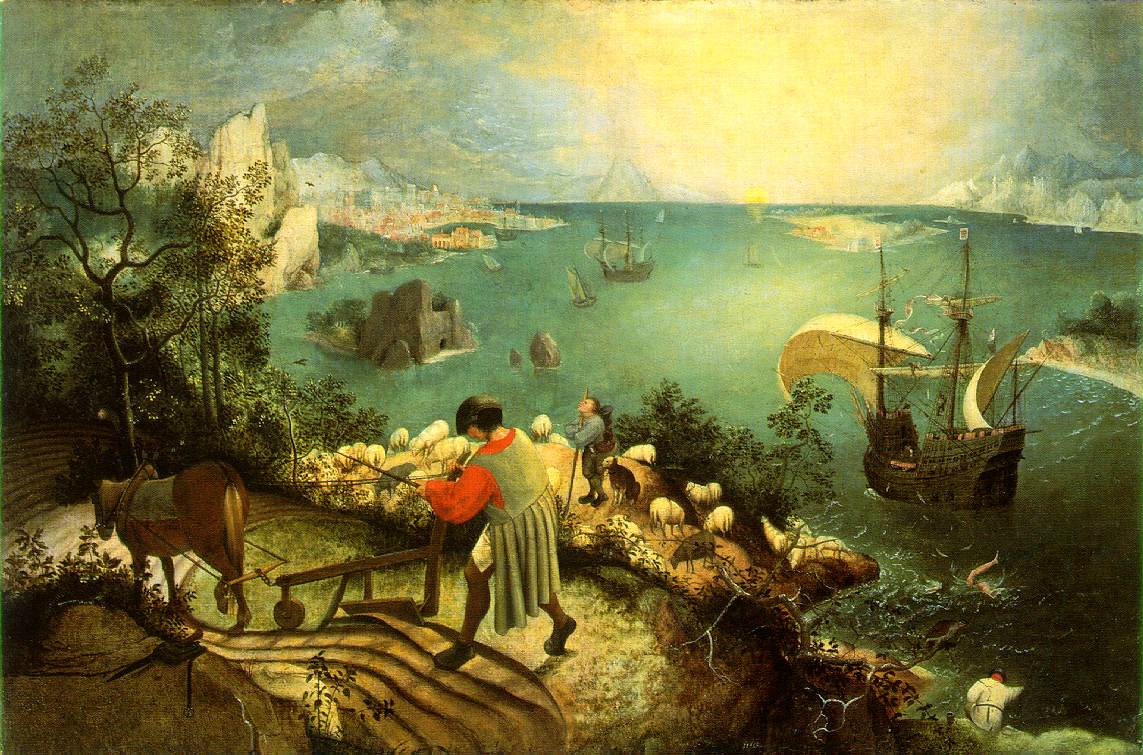
And I’m for listening more. And I’m for feeling more. I’m good and sick of people who can’t feel, who won’t feel what they feel and who won’t let themselves feel what other people who are not like them feel, who refuse to feel other people’s disasters. It is not enough simply not to attack.   I like W. H. Auden’s poem, Musee des Beaux Arts.

             About suffering they were never wrong,

            The Old Masters: how well, they understood

            Its human position; how it takes place

            While someone else is eating or opening a window or just walking dully along …

 It’s not new that we don’t identify with other people’s joy and pain. Auden makes his insight come alive with the infusion of an artistic allusion.

              In Brueghel’s Icarus, for instance: how everything turns away from

              Quite leisurely from the disaster …

              A boy falling out of the sky.

It is true; we all sail blissfully on; we plough our fields; we cull or vegetable, while Icarus falls unnoticed out of the sky. But, I wonder, if we were looking around more, might we not notice such things, and choose to go to the rescue, of  foreign legs disappearing into distant seas?

I’ll say it straight up. I think that it would be best if we were more in touch with people who are different than we are, and if we made more effort to understand their flights and their disasters.

I think we should replace blame with understanding and that we should substitute forgiveness for judgment. Life isn’t simply us and them, it’s more  just  — us.

You can shop where, you want – it’s a free country – and you can cull your fruit as you like, but this much is true: The fruit you select isn’t necessarily better than the battered pieces you reject.

first communion

Posted: June 18, 2010 in beautiful
Tags: , , , , ,

She walked down  to the front of the church by herself, standing in line, only eight and yet making her own decisions to take the sacrament, making her own choices to put herself  in the moment of holiness. 

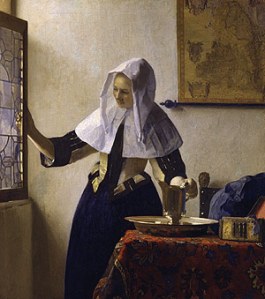
She stood expectant before the woman serving her, like Vermeer’s girl at the window, caught in the light, reaching to open the glass to something beautiful.  The little communicant held the bread, her short black hair cropped straight along the bottom of her chin , her head tilted as  in the painting, angled slightly down and yet opening to something outside of herself.

Then she took the cup, and held this too, perhaps too long, certainly longer than the adults before and after her, either not sure what to do or simply savoring the moment, maybe a little embarrassed, always looking down at the hem of her dress, sipping the blood of Jesus so carefully,  half emptying the cup and handing it over,  as if it were too special to drink it all. 

It was her first communion, but then firsts were now coming fast  for her. Only a few weeks before she prayed for Christ to live out his life in her. Shortly after that she was baptized, by her own choice.

The server took her cup from her, still half full, and she went back to her seat with her head still down.  The adults moved more quickly through the line after her. 

Not long after this,  a young boy came to the front. He had been served the sacrament already that morning, but now he was back for seconds.

“I’m hungry,” he said, looking up to the woman holding the bowl of bread.  “May I have some more?” She looked down at him and said softly,  “Certainly you can.” So he took another piece of the fresh, soft torn bread and stood there, before her, and ate it. Then looking up he said, “I’m still hungry. May I  have some more?” 

“Yes, you may have some more,” replied the woman with the bowl.  And so he ate again, standing at the altar hungry,  taking communion for a third time, eating the body of Christ again and again.

Then he returned to his  his seat.

It isn’t in the way things are usually done.

We adults take the bread and the wine by the book, as if by prescription, as if by mandate passed down from some ancient Pharmacopoeia Sacra, with the sacred liturgy and the defining rules for the administrations of the holy medicines. We know the drill; we hurry through, we get it done.

We nervously drain the cup; we never think to savor the bread; we don’t like to wait; we don’t know how hungry we are; we don’t go back for more.

And yet, what Jesus said about the little ones somehow comes to mind, “I tell you the truth, unless you change and become like little children, you will never enter the kingdom of heaven.” 

To stand expectantly in church as if in a Vermeer, by the window with our arm extended, the warm light  falling softly on our skin,  to keep our heads tilted down a little longer, waiting, savoring, opening to something, beautiful, to hold the fresh bread between our fingers a little longer, to drink the glossy, purple cup as if it were to precious to use all up.

To eat and drink and yet know that we have not had enough, to come again to the front to stand in the holy place hungry, to ask for more of what we are starving to death for but can’t get enough of — this we might learn from a child.  

Perhaps if we could only — and yet in time —  as we grow younger — perhaps we can do just these things.

The boys were throwing rocks.

One thrown rock ricocheted off the nearby trash can with  a clang and spun out over the road.

A flickering thought came to me, “This could be dangerous.’

I kept walking, and then I heard the cry, turned my head and saw the little girl crumpling into the dirt. I ran to her, and  picked her up.  Down her face ran a rivulet of blood, streaming from the gash in her forehead.

As I carried her down the road, looking for her parents, raw emotion ran over through me, “Why hadn’t I stopped the boys?’

I”m wasn’t exactly sure. “They weren’t my boys?”

Lame.

Here is the way I am feeling lately; there isn’t enough leadership on the planet.

Think about it: Think about the Gaza.

Think of the number of homes being foreclosed in the US.

Think about the  BP oil disaster, BP’s response, the goverment’s response.

Think children, think the childification of poverty, the feminization of poverty.

Think about the needs in your work place, your church, your home, your community.

Think about the pain in your own family.

Most people I meet tell me, “I’m not a leader.”

I don’t buy it. It’s a con. It’s a ruse. It’s a dodge. 

A leader is anyone who sees what needs to be done and does it, who sees what needs to be said and says it, who knows what they failed to do and resolves never to do that again.

You’re not a leader?  Really now; give me a break!  Every time you open your mouth you lead! You are a model to someone.

Every time  you take action you are a leader, and every time you do not take action you are a leader too. You prevent or fail to prevent things, and you are an example.

I helped a homeless woman recently by giving her a safe place to nap, a phone to use to call for help. But I didn’t go to the second level and find her a place to live. I was leading, deciding how much I would lead, give, do, what I wouldn’t do.

I think that I am watching too much TV without doing anything about what I see on TV.

I think I am sitting too much at home when I should be over at my neighbor’s house helping.

I think I am sitting in church too much singing when the baby in the community is wailing!

Enough.

I’m sick of it.

Rocks are flying.

Children are walking nearby.

Somebody lead.

“The conflict with the inspector  happened because she couldn’t read the social cues,” I said, “It’s part of her disability.”

“Oh, I totally get that,” she said, standing behind the food counter. “It’s just that other people don’t.”

“I know,” I replied, “and then it’s like they think she’s just making a choice to be difficult, but she’s not. It’s because of her brain damage.”

I could feel a bit of extra humidity in the corner of my eyes. I could see it in hers too. We looked straight at each other in a way people just don’t do across a public counter.  In this instant we bonded over our understanding of the pain resident in the complications of relationships compounded by disabilities. Our eyes seemed to reach out and touch.

I wonder lately, are there really any other kinds of human relationships, ones without disabilities complicating them? And do we often stop to look at the many shades of emotion resident in our failed attempts to communicate with each other?

A day earlier I sat a lunch in a restaurant on the other side of town.  

“Fear isn’t a disease,” he said. “It’s normal. Everybody has it.”

I sat there not eating, just looking at the astonishment on his face. It was fascinating, his knowing smile. It had taken 30 years  of brilliant psychiatrists getting it wrong for him to realize that inside  he knew the truth all along.

“Everybody is afraid,”  he said, ” not just the people who did drugs in high school”.

“Etiology is tricky,”  I thought to myself; the professionals made a muck of this. They blamed his fears on him.

I nodded to him, flashing back to a few of my own seasons of terrible anxiety. And I thought about how I keep running into this —  learning embedded in feeling. How being human is about some kind of rich affectivity realized and accepted.

I will always remember kicking my fins along the coral wall in Kauai,  excitedly pushing myself toward a large school of Achilles tangs. I still remember the joy of  their dark purple bodies, their bright orange tear drops and their blazing white highlights, the sudden and odd thrill of the unexpected combination of vibrant colors swimming together like some kind of underwater mobile home painted by a madman.

I think that emotions are like this. You turn a corner, kick a couple of times and there — a new school of them, unexpectedly colored, swimming with you. Then, as you approach, off they dart  together into the deep, you in mad pursuit of something amazing.

I like this. It reminds me of Charles Burchfield’s painting, “Oncomming Spring,” where the cold, white snow is melting into the ground and the trees are all ablur with  motion, everything moving in the storm, all of nature alive to the wind and the bright yellow warmth that will bring life to the dry, brown trunks.  I like how the windows open between the tree frames to blue skies. Life is found in such movements toward things not yet fully realized.

Older, I’m more aware of the storms within. Now I find it increasingly odd, how relational Achilles heels and all the emotions schooling with them are so much rejected in the public sphere — those places where we too much see the tight lips, the polyurethane expressions, the harsh judgments and the keratitis sicca.

I feel.

 I am.

 I am open to feel.

I grieve over the emotional damage that has been done by people who refuse to acknowledge the validity of feelings, those who have said to others, after causing extreme pain to them, “I’d advise you not to talk about how you feel. That’s not going to help here.”  Cause a reaction, and stifle the reactor?

I grieve over those who only say to their children, “Don’t be afraid.” Better it be sometimes said, “I too have been afraid. I know how you feel.”

I grieve over how those who have caused extreme emotional hurt to others have then turned and said, “I’m not hurt,” as if it is possible  to damage others and for that not to damage ourselves.

It’s storming. And I will be a Charles Burchfield and  go out and paint it. This is reality.  I see windows opening up upon our emotional realities.

This is reality, beautiful, heart wrenching emotional reality, to go out into the tossing ocean and swim with the purple and orange tangs again.

my little sister

Posted: June 5, 2010 in nature
Tags:

i woke last night at 2 am

breathing audibly

heart pounding inside me

it’s my beautifully wild little sister

she’s punctured somewhere far from me

bleeding hard and i can’t reach her

if you only knew how i love her

she wears her blue green and silver dresses tight and shimmery

filling the room at every crazy bluesy party she puts on

fast and fun until she rises from her couch late and scares the hell out of all her guests

i love the things she loves

her white flyers skimming

her black and white giants leaping

her vibrantly hued darters schooling 

her long brown tresses waving

her radiant edges glowing

but now

in the night

i am angry and lonely over those who have attacked and left her there

she bleeds internally

fouling brown blood squirting into her clean pure blue

the goopy flopping things at the edges dying with her

my little sister if I could only reach you and hold you

i would heal you if I could

i’m punctured too

Failure

Posted: June 2, 2010 in difficulty
Tags: , , , ,

We deal with failure differently.

Some failures we laugh off.  An older lady told me yesterday. “I was trying to read in a group recently, and I couldn’t seem to read the page I was on, then I figured out I had my glasses on upside down!”   We both laughed.

Some failures can’t be laughed off.  A person told me with great pain recently, “I never thought I’d be divorced.” No humor in this moment.

It’s interesting how we process failure. There is actually controversy about this. Some people take an aggressive, positive approach. They fight against things; they pray against things; they refuse to accept defeat. They may say things like, “There aren’t any failures; there are only learning experiences.” They give examples of those who have been healed, who have risen above loss, who have made a come back, who have reinvented themselves. They are believers in power. They speak of post-traumatic growth.  

This response has value in that it is positive, it sometimes wins the day, it works well to motivate reform; it preserves self-esteem; it uses failure as nuclear fuel to energize a  new  future. At its best it is a plucky, hopeful, can-do approach to life. At its worst it is an arrogant triumphalism, fostering a sense of superiority and the over-expectation of ultimate triumph.

Some, on the other hand, take a more accepting, honest-about-loss, humanized approach. They say things like, “It’s important to face the reality of loss. To do that we need to grieve. We need to feel.”  This approach embraces loss and failure as deep learning experiences  that help us gentlize, become more human, more relational. The interest isn’t in winning something, defeating something or healing something.  The response isn’t interested in becoming a dynamo of success fueled by a devastated past.

The interest is in becoming an authentic person, an emotionally intelligent person, a more aware person. This person leans into failure, learns to listen to the rumblings within. This perspective is good in that it clearly identifies a legitimate failure. It often leads to appropriate expressions of grief, to deeper empathy, even perhaps to a few much-needed apologies. It is good; it is emotionally healthy, but taken too far it may become defeatist, overly emotional, giving up on reversing declines, not tapping into the power to heal or reform, not pushing ahead and winning victories that could yet be won.

To see these approaches in action, consider how persons with these two perspectives might respond to terminal illness. The upside-of-life, assertive, go-for-it person says, “We can still beat this,” or prays, “God, we ask you to heal this.” But the more emotionally focused, reality-accepting person might say at a death bed, “It is time to let her go. We have to now accept this.” And then this person prays, “God, comfort us as we grieve this.”  It’s problematic spiritually; both responses can be seen as spiritual. To look to God for healing shows great faith, but to accept reality when it isn’t what you want also shows great faith. 

Such responses are a choice in each situation of life, and we many of us probably go back and forth between these. But some of us have one of these two reactions as a default setting. We tend toward either a triumphalist or a more humanize response to failure and loss. Where this is true this may become problematic for us. Being stuck in one kind of response to every situation many keep us from bringing wisdom to the subtlety and complication of life.

For example, being overly optimistic in some situations can stifle legitimate grief. It can also sabotage a needed apology. It can also run over the top of other people involved in the same incident who need time to process and recover. A downright Pollyannaish outlook can even deny reality.

But being overly “in touch” with emotions, and the past and human frailty also has a downside. Self-confidence can be destroyed if in a time of failure as a person turns upon themselves too much, wallowing in feelings, perhaps over-analyzing themselves for what they think they did wrong.  Too much introspection can stifle action, prevent us from going on, keep us from believing that with God’s help situations can be reversed, dramatically changed, people healed.

What to do?

Do both. Engage in both the “I’m looking forward” and the “I’m looking inward” approaches. Reality is complex; so must our responses be, nuanced, intricate, bi-functional.

True, we must move beyond failure, but we while doing so we must not deny the losses in the past. It is good to see the best in things, but not to deny the worst. Praying for healing is good. And when it doesn’t happen it is also good to accept that God had something else in mind.

In short, to be wise we must be human, and more than that.

In failure, we must  grieve and then move on and finally know when to do one and then the other.