Posts Tagged ‘thriving’

I dumped the appendages into the trash bin, and went back for more. Dismembering is a lot of work.

I used a big pair of loppers.

Snip, snap!

I had to break out the sawzall on some of the bigger ones.

When I was done, no dead things remained, only living things, bright green leaves — orange, yellow, red and purple flowers.

I had cut, trimmed, lopped and plucked all the dead branches, dead leaves and dry flower heads from every plant in my back yard. And I had mucked out my backyard pond, dragging out the green algae and dead water lily leaves.

Done! Only good things remained.

The whole thing now looked a bit like Monet’s garden — the effect stunning — green, red, yellow, purple efflorescence everywhere.

And this is how it is.

What is dead and dying is best cropped, lopped and dumpstered, so what is alive and growing can thrive.

It’s the same with my thoughts. They need lopping.

My mental pond constantly needs mucking out. And my mental flowers constantly need dead-heading. I beautify by cutting off my old fears, dumping my regrets, lopping off my unrealistic aspirations, dumpstering my inveterate dissatisfactions, dismembering all my unforgivenesses, beheading all of the negative unlovelies dying on my eager-to-thrive green branches.

Today I spent some time with someone who needed help getting her head filled up with true thoughts, with mental beauty commensurate with her value. We talked. It helped. We were pruning her thoughts. I hope she can keep hauling out the lies and telling herself the truth and when I’m not there. Maturity lies in the ability to garden ones own mind.

Mental beautification — for all of us — it is so much about making the dead things go.

Friday night I motored out to sea with about twenty other people to throw ashes and flowers out of boxes onto the smooth water, the setting sun above, the calico bass below, white flower petals floating in a line out behind the boat.

It was a moment. I had trouble knowing what to feel. We rode home through the sloshing sea in the dark. An orange bonfire glowed on the shore. I sat alone for part of the trip.

What remains — a sense of the sea, an image of a pelican floating on the air beside the boat, a swirl of bright color in the water as a bass took a small fish on the surface, a swell picking up the boat and softly letting it down again, the flowers on the surface of the sea.

Monday night I talked to my daughter for a long time. We were both ruffled a bit by the day — picked up, set down, taken on the rise, sloshing in the dark and to each other we were a small bonfire on the shore, a splash of warmth and color on a small phone screen as we video chatted each other back up. We prayed for each other before we hung up.

Sunday after church I hugged some people and made a couple of lunch appointments for next week. Bonfires.

Life is loss and gain, up and down, moving close and then farther off, riding together, riding alone, thinking about it.

We are grass, caper and vapor, flowers on a tree, flowers in a box, flowers in the air, flowers floating in a saline sea.

I don’t like losing people. Nobody does. I don’t much like being close and then not being close anymore.

I think I’ll make more phone calls and lunch appointments, and do what people ask me to do for them, even when it is hard, and pray more, and grow flowers and not pick them, as much as I can.

I remain hopeful.

It’s evening.

I like it.

It’s grown dark, but my family is safely at home, and we seize the opportunity to dip to the very bottom of the jar of satisfaction.

If one of us were missing how terrible that would be, but we are not missing, and because of that we are not traumatized.

I am in my warm house; the heater is on; my family is hugging me.

I like the safe, warm, tingle in these cheek-to-cheek encounters, so very different from not being touched, so different from no warm skin-on-skin contact, so different from unsafe and cold and lonely.

We eat chicken stir fry. We have enough, and it fills us up, and it is so not like being hungry, not like the weak, tired, empty, gnawing pain of want and deprivation.

We are deep in the jar. We sigh a satisfaction. We lick our fingers.

I lie on the couch and watch TV; my cat comes and sleeps on me; she purrs. This is so different from nothing to entertain us, from lying on the ground, from having no lights to turn on, from having no pets to snuggle with.

We dip, we lick our lips, we feast on the familiar. These provisions, by which discomfort and dissatisfaction are warded off, surround us now.

There is no medical test tomorrow, no scheduled surgery, no cancer treatment, no soul racking, sobbing loss to wake up to.

We luxuriate within the jar. Satisfaction deepens through the awareness of its opposite.

It won’t always be like this.

I know that, it makes it even sweeter, and so I savor it now.

I savor the deep, rich, delicious, astonishing, provisioned, universal-particular present tense. I dive into it; I suck on it; I down it.

I call to mind the desperate, terrible, dehumanizing opposite of all my mundane and astonishing satisfactions and in doing so turn my jar upside down and pour it down my throat!

Randy Hasper“Men lie in their lovers’ arms, but when they tell the truth, they stand up and deliver it from ten feet away.”

That storyline came to me a few weeks ago as I was drafting some thoughts about lying. The sentence might be classified as a truism, as axiomatic, or as proverbial truth housed in a mini-story. It is a story proverb.

The story is about a word man and a word woman who live in a word sentence. They are inauthentic lovers. One night they speak their endearments to each other and stroke each others’ hair and hold each other close. The two are together in that magically exquisite way in which humans who collide may also merge. But, after the “but,” in the sentence, the mood changes. He gets up, because he has kept something from her. He can no longer lie and lie. And then he tells her the truth. He knew she would be hurt and upset, so when he says it, he stands away from her, about ten feet away. It is a relative safe distance from which to wage conflict.

Perhaps he is afraid. Maybe she cries. He paces the room. There is now a moment of expanding distance and pain between them. Then what happens next?

I don’t know what happens next. It’s not in the line. The line is a fiction, an imagined narrative, unfinished so to speak, two acts, not three: love and then conflict, with no resolution. The story is frozen in print, unresolved, but for a purpose, so that it might aptly carry it’s content and no more than that. The content is something like this: Men lie while they lie, and the lie, once exposed, turns close lovers into distant enemies.

That’s life, or life similar.  Life includes lies and the story lines that follow those lies and a lot of pouting and crying and throwing things. But that’s not all life offers us. The narrative of  real life, a life still being lived, is different from a frozen, proverbial  narrative. A real, ongoing, present-tense story, like each of us is living, is not frozen or stuck in a sentence with a limited meaning and freighted with unresolvable conflict. Life, thankfully, is still malleable, and pregnant with a multi-stranded hope for more.  The life we are each currently living, while it is made up out of the multiple narratives of the past, loosely braided together in our minds, that life is yet still  capable of being further braided into something new.  We aren’t done, like a sentence penned.

Each one of us have options to live past our former storylines, to write a new sentence, to write new pages and even volumes if we will. What I am saying is that life includes redemption. Life includes second chances. Life offers us opportunities for rewritten endings. This is what God gave us when he made us like himself and gave us life — the power to story something good, even after something bad.

I believe that, because I’ve seen it and lived it. And I take from this, that it is my responsibility and yours to take the current pieces of our narrative and make some sense of them, to bring some kind of resolution to our conflicts where we can, even if it is only within ourselves, and to carry on with us our frayed and broken strands if we will, and weave them into something else. We can yet take up a thread of the old and braid it into the pattern of the new.  We can yet make choices to act out where we want the story of our lives to go. We are not frozen in words that do not resolve.

If there is a secret it can be told. If that creates conflict, that can be talked about. If there is pain, and brokeness, that can be healed, or learned and recovered from, even redeemed in perhaps another relationship. For instance, real people, who have “lied” in their lover’s arms, may eventually come to say, “I have learned from secrets kept in one relationship, not to keep them in another.”

I spoke to a woman this morning who said to me: “I am blessed that I have a mental illness and that I have been so physically sick. I am not happy about it, but I am blessed, because without it I would never have known God.  I know that if I had been rich and healthy, I would not have known God. ” This is shocking language, sure to unnerve some people, and yet look at how she is telling her story, making sense of it, stranding it into something good even in the center of something terrible. She is bipolar, and yet she is unipolar, focused when possible on a good narrative that she is struggling so bravely to write.

We are, each one of us, with God’s help, the novelists of our own lives. It is our responsibility and privilege to write a good story that moves toward order and understanding, to exert strength, to be human, to embrace the whole of it, loss, pain, sickness — health, gain and pleasure. All of it, taken as a whole,  makes sense, says something, defines what it means for us to be alive.

Story on.

You aren’t done.

There is no sentence in your past that you can’t rewrite in the future.

You are responsible for the ending of your own story.

Just write it.

Freedom is being responsible for nothing — plus every single choice we make.

If you and I were to slip into a crack and fall to the center of the earth, at the center of the precise center of the earth, we would be weightless. With nothing between us and the middle, there would be no gravitational pull on us, so we would weigh nothing, which of course we wouldn’t realize nor would we even remark on to each other. It would be too hot for chattiness — over 5,000 degrees — about as hot at the surface of the roiling, roasting, egg-frying sun, and so we would just bake together — weightless.

Cool! In a warm, high-pressure, floaty kind of way.

This postulated, in other words, say you and I do fall into a chute that leads to the earth’s core, lets agree to something. Let’s agree that if you don’t want to go there, it is your option to snag a root on the way down, or fall on your ice axe, if you have one. I want to experience 5,000 degrees and weightlessness and view the molten core within the core, but if you don’t then that is your choice.

Here is the thing in life. The places we go, the weightlessness we experience, the temperatures we allow ourselves, the self-arrestments we pull off, the times we choose to fall into a new landscape — these are up to each of us individually.

I’m thinking more and more these days: I am responsible, and you are too, for what we choose, and for where we are.

I am responsible, we are responsible, they are responsible and everyone else is responsible too! We are, the whole lot of us, choosers, travelers, Voortrekkers. Like the Afrikaan Voortrekkering pioneers, we choose to voyage toward the interior, to be “those who pull ahead,” or not.

I’m thinking of staying home less. I am crazed for the interior. I am wild for the core of things.

This summer I trekked to the beach. I hauled along some books and food; I ate the food; I ignored the books; I stared blankly at the ocean. I needed that big, bright blue expanse of liquid to leach from me a couple of pseudo-defamations, one or two persistent self-incriminations, a baker’s dozen addictive infatuations and a handful of snarled and tangled minor intimidations–and such.

Why? Why go there? Because I am responsible. I am responsible for the health of my psyche. I am responsible for where I go and what it does to my soul. I know this, and these days I am prepared to fight for every, freakin’, psychologically healthy moment possible.

I am going to the gym this afternoon to run until my heart pounds so hard I know I am alive. I am going to do this because I accept the premise that I become a very slightly different person with every choice I make, with every place I go, with everything I allow my soul to experience.

I am looking for opportunities these days to fall into deep, exhilarating, life-changing cracks of personal responsibility — cracks like God, love, justice, pain.

Recently I put myself up close to a person in extreme psychological pain. Why? They needed me, and mostly, I needed them, to remind me that life is full of extreme pain that must be attended to, that must be acknowledged, that must be endured, that must be experienced. Extreme pain is certain to make us temporarily insane, but afterwards, we may be able to move into a different future, knowing what we can only know after living in 5,000 degrees of mental anguish. What we know, after such heat, is the loss of weight, perhaps even the heavy fear and anxiety and selfishness that have kept us from rising up, and floating.

On the other side of responsibility, of our responsibility for engaging extreme experiences, experiences like meeting God, doing justice, choosing to love, being healthy, embracing other people’s pain — there is a strange and wonderful landscape with a super-animated kind of beauty — it’s weightlessness.

I’m Voortrekking toward it.

Why?

I am taking responsibility for the health of my own soul and of others.

Do you want to go with me?

Drive from work to the gym.

Eight stop lights. Ten thoughts about work. Think about six people. One thought about wife. Bad ratio.

Run on the elliptical. Lift weights. One thousand five-hundred and fifty-one different movements.

Wash hands. Diseases on my mind. New gym; probably crawling with bacteria.

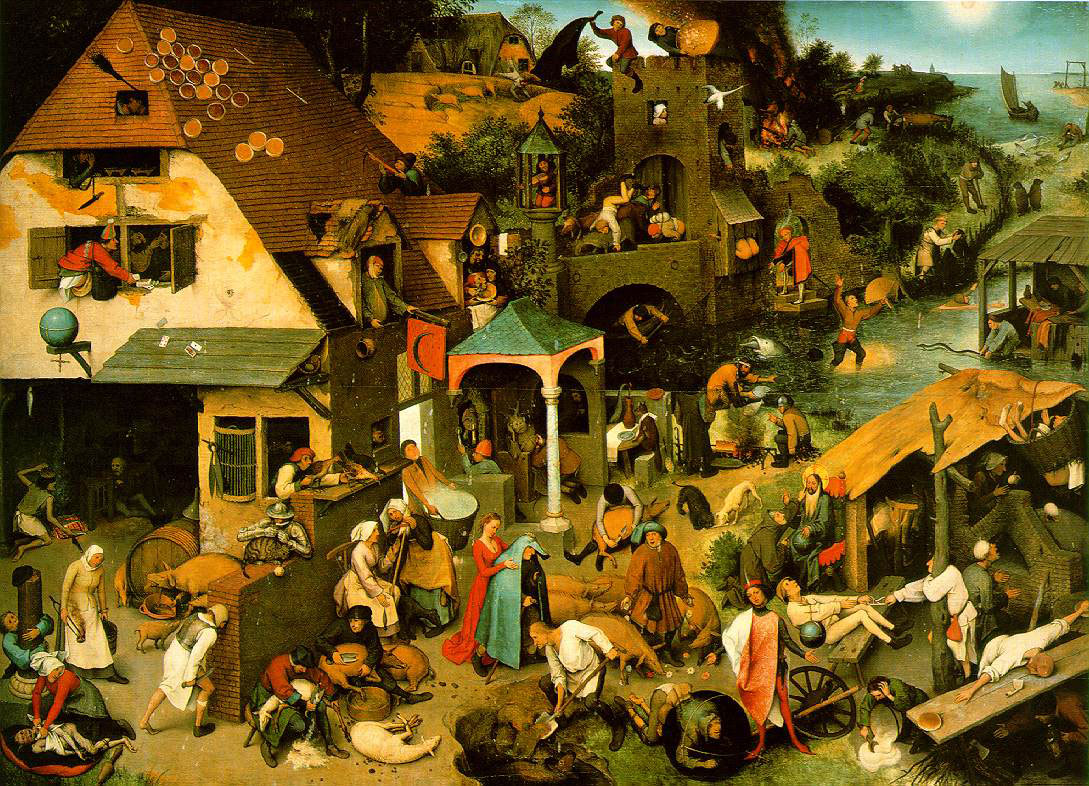
Stop and talk to the gym owner. He is going through third divorce. Sucks, for him. I live in a Brueghel — sweaty, pulsing, messy, high-density.

Drive home. One near miss. Eleven traffic lights. One incident. No hand gestures. Eleven emotions during whole drive.

Accelerate hard with the turbo-charged engine twice. Rocket forward. Smile twice. One phone call on car phone to wife. She’s in traffic. Our cars talk, then we talk.

Pull in garage. Car off. Break on. One car door. One backpack. One phone. One garage door button.

Greet my daughter and both cats. Stash backpack.

Make dinner. A hundred and seventy-two different steps.

Feed the cats in the middle of the process. Six motions.

Answer two texts. One from work.

Eat exhausted, with daughter, wondering if the homemade spaghetti is worth it. One hundred ten motions not counting chewing.

It wasn’t, worth it. Daughter didn’t like it, but it was good the next day as leftovers.

Do the dishes. Fifty four disparate movements.

Help my daughter change a setting her iPad. Stress! I didn’t want to.

Think about a bill I need to pay online. Decide to pay it in the morning.

Think about work. Eight thoughts in a row. Three were repeats.

Wife arrives home. Hug. Get her food. She likes the spaghetti. Ask about her day. Answer a text. Try to stop thinking about work.

Get a work related call. Ignore it.

Sit on the couch — exhausted. Turn on TV.

Run through the DVR list while scanning the news on my iPhone while answering a text.

Watch one show.

Go to my room. Think about life as a crush of details and problems. It’s clutter.

Think.

Read my Bible.

Pray.

Rethink.

Got it!

Life is simple.

There is the clutter, laden with detail, fraught with emotion, cargoed with movement, and then there is one simple thing.

I have only one thing to do.

I have just one choice to make.

One thought.

One movement.

One goal.

Love.

Simply love. Love them; love it.

All.

I go to sleep.

I’m okay.

When Africa crashed into Europe, the Alps jutted up from the earth

When India crashed into Asia, 40 to 50 million years ago, the Himalayas thrust into the sky. Marine fossils came to rest on the top of Mt. Everest, at over 29,000 feet! A crash put limestone sea beds on the roof of the world.

Modern geology has discovered powerful interior forces that have shaped the earth.

Yellowstone National Park, the unique steaming, hissing spouting world like-no-other is the result of an ancient super-volcano. Looking at the current landscape, ones sees nothing left poking up that resembles a volcano. Only the bubbling remains of Old Faithful tell of the tremendous heat that once blew this landscape apart.

4,000 years worth of supercomputer simulations of weather are now revealing an association between periodic changes in stratospheric wind patterns (the polar vortex) and similar rhythmic changes in deep-sea circulation.

The sky controls the sea!

Wow and superwow!

Interestingly, it is the same inside of our souls. We are beginning to understand how the psyche is formed. Superforces have been at work.

When one human, with its massive continent of thought and emotion, collides with another individuated mass of articulated humanification, a unique personality is thrust up. We are a product of the crash with our parents. The seabed of their lives ends up in the top of our heads. We discover their fossils at our highest altitudes.

And when hot human emotions collect beneath the surface, they eventually volcano, explode, and wipe the emotional landscape flat. The geography of human personality bubbles and hisses for years after.

And that’s not all folks. When the polar vortex of culture and tradition swirl above the people, the deep sea of human behavior circulates in a similar pattern below.

Life, inside and out, is shaped by hidden forces.

Interiority expresses itself in exteriority. This is the divine, the geological and the human order of things.

What to do? Search! Putter around, check out the clues, eyeball the landscape, ask the questions no one has dared ask, observe the revealing patterns.

Do you want to understand yourself? Then you must become a scientist of your own soul. Look at the framework under your own bridge.

Only discovers, seekers, microscope carrying hikers, hungry-to-know-what-happened rock-smashers and peak climbers, may read the clues left of the surface of exterior things and figure out what happened as a result of interior things.

A small tip for all psyche searchers looking to understand themselves and others.

Interiority often explains exteriority.

I went to a wedding last night, very social, very nice, good company, good beer, decent food — which of course we waited for. Waiting for the meal after the wedding is like waiting for the second coming; you know it will come but not the hour or the day.

But the waiting at least has a purpose — pictures with translate into memories, all good.

Actually this wedding was reasonable, the wait, the money spent, the whole thing.  The couple had been sensible about it. I’ve been to some that were completely over the top. Perhaps couples over-spend on their weddings to protect their marriages — they’ll have to stay together forever to have any hope of paying off the debt.

I met a lawyer at the wedding.  Cool. I like lawyers. They have stories.

“Tell me stuff,” I said.

“Give me a topic,” he said.

“Does money make a difference in court?” I asked.

“Money gives you access,” he said.

“Define access,” I said.

“Access comes through lawyers,” he said, “and motions. Say you have a patent case. The small guy is claiming that he created something, but if the rich company that has gotten a hold of it, and is not paying him adequately for it, prolongs the case long enough, filing motion after motion, then at some point the little guy can’t afford it, and he gives up. Money wins.”

I got it. In court, the rich defeat the poor by outlasting them. No money? No power!

It sucks to be poor, in court, and weak.

It suck so be weak at all. It sucks not to have access, to not have a nice wedding, to not be able to last all the way to justice in court or to not have what you need to live.

I gave away a bunch of  money yesterday and then some today too.

Why?

Access. I want some people in my family, people I really love,  to have access, and some of my friends too,  so I choose to resource them in the same way that I have been resourced, with access. I  have been given access and I am beginning to want to be a person who provides access to others.

It has come to my attention that access is a big deal, and that God himself is outrageously committed to access.  Look around. He holds back his judgments, he blesses the earth with resources and beauty, he waits, he forgives, he waits some more, he is patient, he is unfathomably patient, he pauses, we live in the great pause, we have been given time to choose, to change, to experiment, to fail, to try again, to persent our case, to have a hearing, to be given justice, to have justice withheld and replaced by mercy,  to discourage him and each other and yet remain under the fierce weight of his patience.

The door of the world is open, the windows flung back, the roof is off, the sky is huge, waiting for us to decide. The  white  carpet is laid out for us, the bridal party awaits us at the other end, smiles everywhere, expectant on us, to run down the aisle of the universe to them, to the meal, to justice, to the wedding gifts.

Incredible. Unspeakable. Shocking. Knock you down good.

Access is being poured out on the earth by a good God.

Our best response. Take it, and make access for others too.

The disparity between what I want and what I get can be uncomfortable for me.

I have this, I want that — ah.

This morning, another option occurs to me.

This morning, I open my bag of steel-cut oatmeal and put my nose down to top and, ah — a fresh, oaty, grain-kissed aroma rises to greet me.

My wife pushes the button on my coffee maker and ah —  a roasted, nutty, rich java fragrance wafts through the kitchen and surrounds me.

I go out to my backyard patio, which this summer is dressed in green lawn and yellow flowers and silver pond water and sit with my coffee and read the proverbs of King Solomon and, ah — an emotionally-energizing and rationally-enriching concept passes through my frontal lobe.

Wisdom has the sweet smell of contentment in it.

To reach for my cup, to walk to my gardern, to read my wisdom literature, to sit quietly in my garden and reflect —  this is a present-tense good that quashes that ubiquitous, unrelenting universal push for more.

It is enough for me in this moment to be able to walk, to be able to reach, to be able to taste and smell, to be able to sit quietly. It is enough and more than enough in the morning to have someone else in the kitchen to start my coffee for me.

There will be time, in the push and shove of time, for the working out of my good dreams and passionate visions.

But for now, the simple, gentle movements of the morning,  with someone who loves me, far removed from the bluster and press of my daily ambition — so frequently fraught with stress and anxiety — these are most beautiful, refreshing and precious.

Many people these days seem to be off put by judgment.

They don’t like politicians who sling mud at opposing parties. They don’t like religious fanatics who pronounce judgment on sinners. They don’t like ex-wives who tell the kids that dad is a jerk.

That’s interesting. I find that all very interesting.

Someone told me recently that they were embarrassed by their own skin, literally,  how it looks, how it feels.

Someone told me recently that they lacked confidence, with others — almost always.

Someone told me recently that they had a lot of guilt, when really, as far as I can tell,  this person has done nothing much wrong. They aren’t old enough!

Someone confessed to me, “I don’t know if I’ve done enough good to outweigh the bad I’ve done.”

People don’t like judgment and yet it  seems that many people are  the harshest judge of themselves that they know. People judge themselves in ways that they would never judge others.

I heard that someone told their friend a while back, “People don’t like us!”  I know both these people. It isn’t true. Both are liked.

Most all of us, if we hear a baby crying will pick up the baby and comfort it, not scold it. And yet when we cry inside, we too often scold ourselves for the very feelings we should embrace, comfort and sooth.

Yesterday, at a picnic I attended, one of the little boys present whacked his head on the tailgate of a pickup. He bellowed. I held him. He leaned into me. He was comforted. His mom came. He was comforted again.

This is the model for how we should treat ourselves. There will be jugment, but better yet is discernment, and better yet is tolerance and compassion and mercy.

We would all do well, I think, to hold ourselves more when we whack our heads against life, and to bring a little pat and not another whack to the little one within.