does God care?

Posted: January 21, 2008 in spirituality
Tags: , , ,

I think about God a lot. Sometimes I feel like I’m connected to him, sometimes I don’t feel it, but I know he is still there.

I’ve been thinking a lot lately about people who have issues that make them feel far off from God.  I don’t like that — people feeling like God doesn’t care about them. It’s not true. God cares.

If a person’s issues have social shame, then that person may be transferring society’s judgement of their problem to God. They may think that God sees them in the same way society does.

If a person attends religious services, that person may look around, and seeing a bunch of “together” people, think, “I don’t fit here. I bet no one here has my issue.”  It’s so easy to get isolated, from other people and God.

But the New Testament says that God has so much love for us that even when we were all messed up, God sent Jesus to give his life for us. That a wildly different and attractive kind of love.

I believe that. And I believe that God totally adores you right now and wants to be a part of your life, even if you don’t have it together. What do you think?

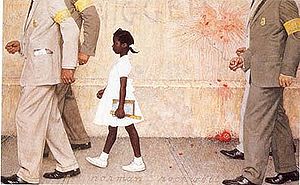
Ruby Bridges

Let The Children Change the World

 I love kids and teens and young people. Kids are smart. Kids are tough. Young people rock, even in the hard times!

 Rodney Dangerfield’s once said,  “When I was a kid my parents moved a lot, but I always found them.”

 The Bible and Rodney Dangerfield have something in common; they both narrate tough childhoods. But the Bible goes further. It finishes the childhoood narratives with some fine endings.

Moses was abandoned in a basket in a river, but he became the ruler of Egypt. David, a mere boy, faced an abusive adult, and using simple technology, defeated him.  Young Ruth’s husband died, but Ruth found another man to love her, and she had a baby boy, an ancestor of Jesus.

 Mary, pregnant and unmarried, suffered the social judgment of her community, but she gave birth to Jesus.  Paul had a narrow, legalistic childhood education, but he wrote a lion’s share of a very radical and liberating text, the New Testament.

 Kids survive tough stuff and thrive! Many people in history and today are proof of that. Many of us have enter adulthood as survivors, having overcome illness, dislocation, abandonment, and loss of all kinds.

 Once my brothers and I were playing baseball with a golf ball. We thought it was a good idea. It wasn’t. A golf ball goes fast.  I hit a line drive. It hit my brother in the mouth. He is still sending me the dental bills. I still regret that mistake.

 But life is tough; put on a face mask. We keep going despite the mistakes.

Childhood resilience – our modern, cultural narratives often celebrate this. In Lemony Snicket’s A Series of Unfortunate Events, Count Olaf is trying to kill the three Baudelaire orphans for their inheritance. The villain, Olaf, played by Jim Carrey, leaves the children in a car on the railroad tracks. Young Violet makes a spring loaded, bobble-headed track switcher and the children escape harm with ingenuity and resolve. Fiction? Consider this. 

Laurence Gonzales, in his well-researched book Deep Survival, asks the question:  Who has most chance of surviving in a wilderness crisis, exposed to the elements? Answer: Children six and under have one of the highest survival rates. Gonzales writes, “They often survive in the same conditioins better than experienced hunters, better than physically fit hikers, better than former members of the militrary or skilled sailors.” If they get cold, reports Gonzales,  they find a warm place. If they tire they rest. “They try to make themselves comfortable, and staying comfortable helps keep the alive.”

Jesus himself thought so highly of kids, he put them up as the top model! Kids are Jesus’ top model.

 The people brought children to Jesus, hoping he might touch them. The disciples shooed them off.

 But Jesus was irate and let them know it: “Don’t push these children away. Don’t ever get between them and me. These children are at the very center of life in the kingdom.

 Mark this: Unless you accept God’s kingdom in the simplicity of a child, you’ll never get in.” Then, gathering the children up in his arms, he laid his hands of blessing on them.

 Jesus was crazy about children! Jesus bragged on children. Jesus said children owned the kingdom! Jesus said we should learn from children. Learn what? We should learn to be simple, receptive and open.   

 Life is hard. People hurt us. We make bad decisions. Then, too often, a parent-like voice within us chides:  “What is wrong with you? Grow up. Pull yourself together. Your future is up to you.”

 But Jesus says, “Be like the children. They know they need help. They know they can’t control and fix everything. They come near for help. Children model appropriate and wise dependence for us; it is with a simple childlike faith that we come into God’s peaceable kingdom.

 Robert Coles, Harvard Child psychiatrist, in his studies, Children of Crisis, shows us that children in difficult circumstances — poverty, loss,  family break-up — children often exhibit “authority, dignity, fragility, and rock-bottom strength.”  And there is frequently a trust in God present.

 Ruby Bridges, was the first African-American child to attend an all-white school in the South in 1960. In the face of violent, resistance, little Ruby stood up, and marched to class each day. She helped bring about school desegregation in New Orleans. Her mother told Robert Coles, Ruby’s counselor, that Ruby prayed for those in the mob who threatened and harassed her.

 Ruby had an inner moral compass. She looked to God to deal with evil. This is not untypical. Children, as Coles showed in his book The Spiritual Life of Children, often try to figure out life by tapping into spirituality.

 Again, we see this reality portrayed in our culture’s popular stories. In the movie, Bridge to Terabithia, a young girl named Leslie goes to church for the first time with her friend Jeff. On the ride home in the back of a pickup, Leslie grapples with  deep theological issues. Jess and his little sister have grown up in church, but they focus on the fearful prospect of God damning people to hell.  Leslie is just hearing the spiritual narrative for the first time and she sees the vibrant life in it. She thinks the Jesus narrative is beautiful. She glories in the goodness of God surrounding her,  in the trees and sun that the children swish home through!


Kids think about God, and not just in movie life. Many children, like adults, try to make sense out of the idea of a loving God in an evil world. Children need adults to teach them and to dialogue with them, but adults should also encourage children to think, wonder, ask questions and try to make their own expressions of wonder and faith. By doing so, we are helping develop great thinkers and doers. Remember again, that Jesus himself made children the model of true spirituality.

 And let’s take it further than talk. We need, and children need, to struggle together over what to do with tough issues, issues that touch them like poverty and hardship. Really, sitting at the core of all this,  is the truth that we need to include children in helping us solve life’s big problems.

 When five thousand people needed to be fed, who offered a loaf of bread and five fish to Jesus disciples? A child did! Only a child had the good sense to bring a lunch that day, and give it away.

 In my community, this Easter, children from several churches helped make almost 300 Easter baskets for homeless children and under-resourced children. In the spring these children helped make 150 birthday boxes for foster children. Then in the summer they helped put together 200 backpacks, full of school supplies, for foster and refugee children. Children in our community, are changing the world.

 A teacher in our preschool lost her mom this year. One of her three year olds, Taylor, asked her: “Did your mommy die?”

 “Yes, she did,” answered the teacher.

 Then three-year old Taylor said, “I have a mommy. And my mommy can be your mommy too.”

 Children get it right. Children want to be part of the solution. Children will share their lunch, their mommy, with others.

 There is extreme value in children serving children.

 It exposes children to the needs of their peers.

 My daughter just got back from a mission’s trip to La Paz. She told me, “Now I have a place in my heat for Mexico.”

 It expands their confidence that needs can be met.

 Ruby Bridges is now chairwoman of her foundation that promotes toleration of differences.

  It shapes them into future world changers.

 After David killed Goliath, he went on to become king.

 I have a friend, Rich, who is a highway patrol officer. He is also a fantastic volley ball player. Rich just got back from a Volley Ball tournament in Vancouver. He took his two grade school daughters, and they did a mountain climb. The climbed up a couple miles of switch backs. Rich is in good shape, but he was panting at the top. Then Rich bragged to me, “My littlest daughter, skinny little Kristin, she never broke a sweat. She never even breathed hard!”

 Children have energy! We tout the energy in wind power. We know the potential of solar power. We keep tapping the polluting energy of fossil fuel power.

 What about kid power? Jesus believed in it. So should we. Let the children change the world!

just start

Posted: January 19, 2008 in difficulty
Tags:

2timothy1_7

If you don’t start you’ll never finish.

What should you go start as soon as you get off the computer.

 You are so gifted, you have been given so much. The question is what will you do with that today?

If I knew you and loved you, I think  I’d tell you to start now.

Money

Posted: January 17, 2008 in family
Tags: , , ,

money

Money 101

By Randy Hasper

What you are currently teaching your teens about money has everything to do with whether they will be in debt up to their eyeballs ten years from now. The teen years are the habit setting years – whether it’s snacking, studying or spending. These are the years when young buyers (and their parents) begin to spend some serious cash, and so this is a parent’s best and perhaps last chance to teach life-long financial skills.

The financial community is ready to put plastic in the next generation’s wallets, but do our young spenders know when to pull it out and when to put it back in the holster? CNNMoney reports that high school seniors, on average, answered only 52.4 percent of the answers correctly on a financial survey.

The consequences of not teaching the next generation about money are clear. According to Dr. Robert Manning, the author of Credit Card Nation, the fastest-growing group of bankruptcy filers is people age 25 and younger. Will your teen be filing ten years from now?

Here are ten things you can do right to positively shape your young spender’s financial future:

1. Show them the money.  One of the best things you can do for your teens is to put them in touch with prices. Show them the gas and electric bill, the phone bill, the car payment, the mortgage or rent.

My wife and I have our young spenders go grocery shopping with us, picking out the best deals together, stopping to grab that half-gallon of cookie dough ice cream because it’s on sale. Several times this last year I had one of my daughters pay some bills with me on-line. I let her do the clicking, entering the $80 for the family mobile phone policy, the $65 for the water bill. In the fall, when I was out of the country, I asked her to pay some bills for me. She pulled it off like a financial cyber-pro.


2. Bankroll them.  Young adults will cost you, whether they manage their money or you do.  When they are little we give them allowances. As they age we need to give them an increasing amount of money until they manage all their own expenses. Figure out what you spend each month on your teens (not housing or food), but clothes, lessons (piano, dance), french fries, cosmetics, and entertainment. This might be a significant sum, but it is what it is. Then each month give them that amount of money and let them do the paying. In this way, they learn to set priorities (jeans this month, shoes next), and to make consistent payments for their lessons. If they run out, don’t rescue them. Make them live in the real world of you’ve got what you’ve got.

This is the best route to financial independence. Last December, my seventeen year old bought, with her allocated money, all the Christmas presents that she gave. Last week she picked up a pair of Converse shoes and Lucky jeans. Her choices are wonderfully up to her.

3. Make ‘em pay.  There are some things that most teens won’t be able to buy without you, perhaps it’s the MP3 player, the cell phone, the cost of their involvement in a school activity, their first car, college. There is still value in them paying something. Require them to save up a portion of the cost. It’s a great chance to teach so many things, not the least being learning to delay gratification.

When my daughter wanted an expensive MP3 player, we discussed with her what she could contribute to the purchase. This was a bit tough on her, but we talked it out and she proposed a figure. It was a significant amount of money for her, so she had to wait, and work and save. But when the time came to buy, it was a meaningful, satisfying buy.

4. Show them the cost of money.  Explain interest to your teens. This matters! You are protecting their future marriage. Financial stress and conflict are leading causes of divorce. Show your teens the amount of interest you pay on your home loan, your car loans, and your credit cards.  Explain that, for most people, things like a home purchase require paying interest.

Show them, on the other hand, the danger in debt. I show my daughter our credit card statement. The daily periodic rate is .0828%. That doesn’t seem like so much now does it? The annual percentage rate is 30.24%. Now that is a monster we avoid!

I know a parent who will loan her teens money if they are out shopping and forget to bring their wallets along. But she charges a small amount of interest. She’s not making money, she’s making responsible people.

5. Introduce them to a banker. To aid our empowered spenders in controlling their money, we took them to our credit union and helped them open savings accounts and obtain ATM cards. Once they leaned to manage those, we moved on to Visa check cards, debit cards. Different institutions have different policies, but we found our credit union very helpful. Now both girls have checking accounts, and they keep track of these online. They have small savings accounts so that if they go over there is overdraft protection.

But they are learning that when the money is out, the money is out. If they incur fees, they are responsible for them.  And we don’t bail them out. The best financial teacher is experience. Not every teen is ready for this, but at some point they need to get ready for this. Adulthood, it’s coming fast.

6. Shop ‘til they drop.  Then next time they want to buy something important to them, comparison shop with them. Take a trip with them on-line to web sites that offer product reviews and comparisons. Go with them to several stores before making big purchases. Show them how to look for sales in the newspaper, how to use coupons.

When my daughter upgraded her mobile phone recently, we read the reviews on the internet. Through our research we found the coolest phone at the coolest price. What a fine feeling – tracking down and capturing a great deal!

7. Share a classic with them.  Help your teens set up a savings account and a savings goal.  Saving is at the crown jewel of good money management. An emergency, a sudden need doesn’t throw the saver into a panic. Capital, margin is an antidote to financial stress. And through saving, they can eventually get some really cool stuff.

They can save up for a trip, perhaps for their part of a car. My oldest daughter bought her own TV, after saving. She bought a leather couch for her room – saving.  She bought her own PlayStation – saving. She has the most fun room in the house – because she saves before she spends.

8. Don’t forget generosity. Having something to give is a privilege, a pleasure. Begin to talk to your teens about charity. It is their choice, but you should share what you do as a model. Show them what you have donated to disaster relief, medical research, your alma matter, your church, synagogue or mosque.  It is more blessed to raise generosity than stinginess. You may be raising the next Joan Kroc or Bill Gates.

My wife and I help support a young teacher who works for a nonprofit organization that runs a first-rate school in an inner city area.  Following our choice one of our girls decided to donate some of her money too. How satisfying!

9. “Get a Job.”  During the school year, we have decided that we don’t want our teens working, or working very much. We want them to focus on their studies, to enjoy life when they finish the homework. But they can do something. The occasional Saturday job, the short-term summer or intercession job – it’s excellent training. In some markets, it can be very hard for teens to find a job on their own. We found success in helping our young adults get their first jobs through friends and personal connections. It may be mowing lawns, babysitting, working for a friend with a business.

Recently, one of the girls got a job tutoring a younger student. It’s perfect! Four hours per week for really good money. Excellent possibilities are out there for  the go-getters who have connections.

10. Be the model. There is no more powerful influence than the power of a good model.  If you make smart choices your young spenders will see how to make smart choices. If you show restraint, they will have a model of restraint. If you overindulge, show them what it is costing you. If you make a late payment, show them the late fees.  When you get a bargain, brag about it. The girls know which new sports car I like. They also know that I don’t have one in the garage.

We love our kids. Because of this we plan ahead for them, saving for college, perhaps investing in real estate and mutual funds that may someday provide for them and their children. We are investing in them, in their future. Someday we will spend big bucks for them, on cars and college and weddings.

But when they arrive at adulthood, when they have the bucks, when they have the plastic, when they inherit the assets, will they know how to handle it all?  What we do today, will help determine how they spend tomorrow. Money 101, you’re the teacher, and class starts now.

What do you think?

Who Leads?

Posted: January 17, 2008 in leadership

Are you a leader? Most people probably think they aren’t, unless they have a title or a position. But leadership is not a title; leadership is an action.

 Whenever we solve a problem, adapt to a situation, make a choice, very often in that moment we are leading.

 I think a lot about leadership. More of it is needed in this screwy world.  A while back I noticed how much certain women that I know were charging ahead.

Take a look at the next article or two. What do you need to lead out in? Do the examples in these articles motivate you to step up? Let me know what you think.

One of Life’s Tough Questions

Posted: January 17, 2008 in difficulty

In the 90’s, K.D. Lang sang : “Craving, constant craving.” They got it right. Most of us crave stuff, love, something. What do you crave?

What do you want?  How do you get what you want? The truth, of course, is that we don’t get everything we want.  Even the “Rolling Stones” knew that.

The truth is, of course, that it is not even good for a person to get everything they want. Disappointment can shape us to understand other people, loss and pain can give us the  opportunity to learn and adapt and experience new things.

Question: Do you think God cares about what people want? Do you think he cares when when people don’t get what they want, when they suffer disappointment, loss, pain, stigma? Read the next article, “Pain Gain” and tell me what you think.

Trail Blazers in Clogs

Posted: January 17, 2008 in leadership
Tags: , ,


Trail Blazers in Clogs

By Randy Hasper

I am impressed by nervy, risk-taking, trail-blazing women. They are the best  women I know. They do what they are inspired to do — now! They are the gutsy-obedient. They dress themselves in change. They may tremble, but even shaking in their clogs, they head out. Such women are my heroes. And the world needs more of them.

Chris

Chris is a trail blazer. She and her husband Steve met Tesia on a rocky path. It ran through the Neonatal Intensive Care Unit (NICU) of a hospital. Chris was a young R.N. Tesia was a medically fragile five month old with paralyzed vocal cords and a tracheostomy.

Over the next several years, Tesia and Chris kept meeting in step-down ICU as Tesia returned there again and again in crisis. And they kept saying “goodbye” again and yet again as Tesia would leave to yet another foster family.Chris got pregnant. The way ahead for her family looked beautiful. And then she and Steve confronted their own crisis — Chris miscarried. Something precious was lost.

But something else was stirring inside of Steve and Chris. What if they adopted Tesia? Such a momentous decision! Tesia would need 16 hours of care a day. She would need an in-home nurse to live with the family. There would be a court case, years of doctors appointments, life on the edge.

“Right before we took her,” says Chris, “I thought, ‘What are we doing?'” Steve encouraged Chris to spend a weekend with her closest Christian friends to think about it. She talked; she prayed; she listened. “It boiled down to obedience and trust,” she now says. Chris became one of the gutsy-obedient. She doesn’t regret it. Neither does her daughter.

Tesia has much to be thankful for: not the least is a trail blazing mom.

Lee Ann

Lee Ann  is a trekker. A number of years ago, she was challenged to backpack her beliefs in doing good and carry them into the community. But, she wondered, what could she do? The answer wasn’t very far off.Lee Ann works in a local high school cafeteria. She knows food. It was there that a co-worker mentioned to her that another woman in the city was organizing an effort to feed people with inadequate resources. Lee Ann began thinking, “Why shouldn’t my church be involved reaching out to people who aren’t a part of us?” The questions that many of us tussle with but few of us answer, struggled for answers inside of her. Why don’t the well-provided for put out their hands to the poorly-provided for? Why don’t we get out of our comfort zone and do something?

But there was one small problem, noted Lee Ann. “I felt inadequate leading on my own. I told God, ‘I’m a good second person. Just don’t have me be the one to carry something out.'” But despite her fears, she forged ahead and brought the idea to feed people back to the church. Surprise! Others wanted to join her — Joyce, Carol, Agnes, Ruth and on and on. Lee Ann blazed a trail in her mind, and when she turned around there was a food army standing behind her.

That was ten years ago. Lee Ann’s leadership has inspired hundreds of people from her church to join her. Seniors, children, teens, whole families have handed thousands of plates of steaming homemade casseroles to the “least of these” in the community.

“Wow,” she muses now. “My idea was significant.” Wow, I think to myself,  Lee Ann is significant.”

Lisa

“My big risk was feeling like I didn’t have what it would take,” says Lisa. “I had volunteered for years at my church, but I had never been a leader.” Then came an opportunity to join the staff. Lisa waited, prayed, agonized, and eventually turned in an application. Despite shaky sandals, she got the job — the church’s Director of Children’s Ministries.But this church was on the move, and Lisa was in for a real scramble. That was just fine.

As her level of responsibility rose to scary heights, so did her dependence on God. Children’s Choir, 35 little musical ones; Sunday school, 125 studious ones; Vacation Bible School, 175 wild ones; Fall Festival outreach to the community, 500 crazed, candy-fueled ones. Lisa grew with the new challenges — all five foot four of her seemed to stretch. “A lot of fear has left me,” says Lisa. As she was obedient, she grew psychologically bigger, spiritually stronger, and much more confident.

She booked nationally known puppeteers and musicians for children’s concerts. No sweat; they were huge successes. Christmas Craft day for children, winter camp for fifth and sixth graders, a concert for preschoolers, a service club for kids — Lisa was on a roll.

“This position made sense of my life,” she enthused. And Lisa made sense out of a lot of things for other people too.

Chris, Lee Ann, Lisa — they are the gutsy-obedient. They have in common a willingness to blaze a trail.

Inspired to act, they went ahead and moved their feet. They slogged over the hill in no more than their sandals or clogs and found God on the other side with boots just their size, ready to head up the wilderness trail with them.

I’m totally inspired by such women. Who’s next?

Pain

Posted: January 17, 2008 in difficulty
Tags: , , , ,

clouds1.jpg        Pain Gain

By Randy Hasper

If you are acquainted with pain, trouble, and loss you are in good company.  So are most people. Even  great spiritual heroes like Moses, Esther, Jesus, Ghandi, Martin Luther King, Mother Teresa — all ached and burned with pain and disappointment. Pain is the norm.

The jab and ache of pain, our whole species knows it well. We open the morning newspaper to kidnapped children, disease, terrorism, and war. We live in families aching with accidents, disabilities, conflicts,  illnesses and stigmatized issues.

We humans know “ouch!” So does God. Think about it. Perhaps we need to formulate an ouch theology.  

Apparently, God already has one.  When God created us, he obviously hard wired us to respond to pain. The hand jerking back from the thorn,  that ability to feel pain is God’s brilliant biological safety gear. Fragile bodies warn of harm through the nerves. Pain is protective and preventative. It keeps the hand from the fire. Safety pain was built into the creation.  But it is also built into God. God has experienced pain.

The prophet Isaiah, exploring the profound connection between God and pain wrote, “In all their distress, [Israel]  he [God] was distressed.” (Isaiah 63:9) This is an amazing claim. God, chose to feel distress. God entered in, by his own choice, to “all” the distress of his people. “All” of it says Isaiah. His people were distressed for centuries. They still are. God feels it.

Scripture records God as having feelings. It records anger, love, compassion, and jealousy. Each of these emotions contains some psychological pain. The painful feelings are in God and from God.   Yet we hear people say, “You can’t trust your feelings.” Actually we can trust them to tell us a lot about what is going on with us. It’s true that our feelings can lead us into bad choices. And yet, so can our thoughts lead us the wrong way. This hasn’t caused most of us to abandon thinking. We should not stigmatize our strongest feelings. They are a gift, a divine richness.

The life of Jesus is most eloquent of God’s willingness to feel. Matthew records the events of the crucifixion writing, “Again and again they struck him [Jesus] on the head with a staff.” (Matthew 15:19) This is our experience too. “Again and again,” life serves up the stunning “again and again.” Pain stutters, and God allows the terrible repetition. Allows? For Christ, we are told that He even intended it. It fit his purpose. “Yet it was the LORD’s will to crush him and cause him to suffer.”

We would rather not hear this. His will to crush? A crushing we don’t want, for Christ, our friends, our selves, our children, no one. And yet, a crushing we will have. This is recorded in the Bible. “In this world you will have trouble,” claimed Jesus.  It is affirmed in our experience. One of my close friends, an excellent  musician, is experiencing hearing loss. Another has MS. Another a bipolar disorder. Another has a painfully failed marriage.

We sometimes want to pull away from such difficult experiences. We manage our lives to insulate ourselves from pain. We touch but we don’t embrace such trying times in others. We all jerk back at some point, from of our world’s pain – the AIDS sufferers, the mentally ill, those who have divorced, the addicts, this dispossessed, the poor, the socially stigmatized.  It is not easy for a human to readily or willingly put out a hand to chronic suffering. We recoil. The jerk-back response rules. We may even mildly despise the suffering one. “The poor thing,” we sympathize, “not realizing the “thing” may be more enriched than us, in our sanitized encapsulated insulation.

We work hard to sanitize our responses to people with “issues.” We may ask God to heal them.  Nothing wrong with that. We may tell people, “I hope you are feeling better.”  Shared hope is excellent, and yet, when the “stricken” ones don’t heal, haven’t  healed, can’t change, then what? At times, do our ongoing prayers and our euphemisms of wishful health become screens that we construct to distance ourselves from the suffering person, polite ways of putting our hands over our noses, of holding off their unpleasant reality?

If so we should bravely ask ourselves, why are we praying? To avoid reality? To avoid empathy?  Are we praying and yet not calling them, emailing, visiting them? Are we praying for healing and not accepting the reality of a loss?  If so, then we must mature in response. We must enter more deeply into the person’s experience. At some point we must accept the condition and refocus on supporting them.  Acceptance is crucial. It can even lessen  pain.  We must move with our friend, seeing more than a “sick” person, engage the rest of the experience. We must get beyond looking at the wheel chair, the walker, the diagnosis, the label. We must see the rest of the person.

Surely God doesn’t move closer or further from us depending on if he heals us or changes us or not. Even when he doesn’t heal or change, he doesn’t jerk back. His silence doesn’t mean he pulls himself away. We may be most comfortable with recovery, but in this world God obvious sees it differently.  God looks the most brutal distress of the world in the eye and doesn’t blink. Instead, God steps into our pain. God’s face is seen in the sick person’s face, in the distressed face. His eyes are present in the hurt child’s fearful eyes. He is close to the  grimace of the lonely. Christ must have grimaced on the cross. It is not a sin to grimace.

 The apostle Paul felt overwhelmed. And he felt no shame in writing it down, penning his darkest moments as if writing in his private journal, “we despaired even of life.” 2 Corinthians 1:8  And what posture did God take toward this admission of despair? Paul himself says God was allowing the suffering so that he, Paul, would look to God for deliverance. It is true. God hovered over Paul’s worst moments – to help. Psalm 22:24 records just such a hover, declaring, “For he has not despised or disdained the suffering of the afflicted one; he has not hidden his face from him but has listened to his cry for help.”

I believe that God always crosses the skin barrier to participate in, to make himself known in our experiences. David writes,” When anxiety was great within me, your consolation brought joy to my soul.” Psalm 94:19  Note that the psalmist does not write, “When anxiety was  great within me, you filled me with conviction of sin.” No, we don’t see God condemning. Instead we see God tending to the anxiety attack, consoling the person, helping. How did God do this? Not by removing the source of anxiety, but by bringing consolation in the thick of it.

The Bible is a catalogue of God’s gentleness with our emotions. God is the father of gentleness. His gentleness is the essence of his love, and he wants us to become like him in this. Praise be to the God and Father of our Lord Jesus Christ, the Father of compassion and the God of all comfort, who comforts us in all our troubles, so that we can comfort those in any trouble with the comfort we ourselves have received from God. 2 Corinthians 1:3.

“Joy and woe are woven fine, a clothing for the soul divine,” wrote William Blake. And God is the master clothier.  God knows your “ouch.”

Here Comes the Sun

Posted: January 17, 2008 in nature
Tags: , , , ,

maine-river-and-home-scenes-027

“The jewel that we find, we stoop and take it,

Because we see it; but what we do not see

We tread upon and never think of it.” 

                                                                               Angelo – Measure For Measure

To live in San Diego is to live among jewels, and to really thrive here one must be constantly looking down. There is one precious treasure San Diegans walk on daily — it is the sun, the jewel that defines the city.

Sun, sun, sun – in this town you walk all over it. Check the bottoms of your shoes. They are probably warm. San Diegans bask in sunshine about 70% of the daylight hours. City hall scandals, half-a-million dollar house prices, Qualcomm stadium, Balboa Park, the San Diego zoo, Sea World – all and more make up the local identity, but it is the average daytime temperature, the 70.5 degrees, that best defines this city. The essence of San Diego, in the long run, is what piles up on the red tile roofs, covers the sidewalks and fills the potholes in the streets most everyday – sunshine! Sunshine is San Diego’s bejeweled identity.

The experts say that the Sun’s energy output is about 386 billion billion megawatts, and  in San Diego the sun certainly rules as Shakespeare’s jewel multiplied by billions. The sun is warmly overhead and underfoot here often and it’s worth taking a second look at it. If you live here, if you pay the local sun tax, if you visit here — don’t miss this radiant gift.  How could you? You could. We all tread on jewels.

Illumination 101

One of the primary lessons the impressionist painters taught is to catch light on the smooth surfaces. In 1892 the French Impressionist Monet rented a room opposite the Cathedral of Rouen and painted the church’s facade over and over again. Each painting is a unique study in light, because with the changes in light, the colors and angles of the walls were ever changing. This approach still yields treasure.

When the sun is out, San Diego’s architecture is a vast sun catcher. In the afternoon the huge windowed walls of San Diego’s downtown buildings turn into great sheets of fire as the sun sets over the Pacific. Solar fire falls onto all unblocked offices and homes facing west. Every window becomes the sun’s picture frame. Some places in the world are defined by ice. San Diego is defined by fire.

On a sunny afternoon, the edges of the city, an overhead street sign, the top of a building, a fender speeding down the Interstate 5 – all turned to California gold. A custom wheel spins the local yellow star into a perfectly straight thread of gold. Here, the ordinary commute home is a solar fantasia.


Natural Sun Catchers

Although the sun is the largest object in the solar system and contains more than 99.8% of the systems total mass, the small, thin, fragile surfaces of the natural world finely show it off. 

San Diego is a city where the trees work for the city as a force of light gatherers. San Diego’s palms are sun harvesters, and they fill up and literally drip with light. Their dark green and shiny surfaces turn sunshine into sterling silver. The tall Mexican fan palms drip silver light from their glowing fan tips. The graceful queen palms grab light with their long silver-green fingers. “Catch more,” they cry, holding up their hands to the sun.

Kate Sessions, San Diego’s early 20th century “city gardener,” who imported, propagated and popularized many trees here helped set the stage for a tree lit city. The trees in this city are the daytime street lamps.

The magnolias, bearing dark green shiny leaves, function as sun spades, slicing light in half. The avocados do the same. The secret to being a leafy street lamp is in having shiny leaves. Banana leaves glow like pale green lamp shades. Jacarandas blaze with an inspired blue-lavender splendor.

Light Remixed

Walls, shadows, leaves — it’s all good, but to see San Diego’s light in a special glory, one should see it mixed, and remixed with water. Along the cliffed beaches, the swells toss the water joyfully against the sandstone. Then as the salty sea runs back into the ocean, it grabs the light from the air and hangs glowing icicles of light between rock and sea.  Along the sandy beaches, the sun and water mix in another form as the waves  fall and break into tiny white water bubbles. The bubbles are lenses, they focus the light.  With the sun directly overhead, each single bubbles catch a bit of it and casts a tiny star-shaped bright spot onto the sandy floor below. Astonishing — the sun in a bubble!

It has been computed that one hundred and nine earths would fit across the sun’s disk. Its interior could house about 1.3 million earths and in this beach city, every sunny day the sun is as tiny and accessible to San Diegans as a bubble floating at the edge of the sea.

Stay at the shoreline that is filled with suns long enough and the light will get by you and head for the water, like some huge solar bonfire falling out of the sky. Every San Diego day ends with the sun in the sea. Down the bright light tumbles, past a bit of glowing dust wafting by like a planet, past the illuminated sea gulls, past the radiated tourists, past the silver palms. As it cartwheels toward the Pacific, it distorts in the thick atmosphere at the horizon, and its brilliant golden light trickles down its sides and puddles in the water. There it flows in a long glitter path, a sun road across the salty blue, collected finally in the tide pools, pure California gold.

At the end of the day, every San Diego frond and flat wall celebrates the sun. Every shell fragment lying on the shore and every wispy cloud above is baptized together for one glorious moment in golden fire until at last a tiny gold rim remains on the ocean’s horizon, and then is gone. The copies dissolve, the gold fades, and the light vanishes!  It was the jewel of the city.

Did they see it? Perhaps some San Diegans didn’t. Not to worry. In San Diego the sun will almost always come out tomorrow. And mostly likely, it will come out the day after that and the day after that. And although it may be tread upon,  there is the frequent opportunity here to stoop and take it — even for the briefest of flickering, sentient moments – the jewel of the city, the  beautiful, glorious San Diego sunshine.

=