Archive for the ‘thriving’ Category

Doubters asks the questions believers have already answered — unsuccessfully. Is there God?  Can we trust our leaders? Is it okay to have doubts? The world is still exploring these questions, and we should certainly keep asking such questions, and answering the best we can without acting arrogantly on either side of the answers, doubt or faith.

Doubt is useful. By it we test our theories, disbelieve liars and discover more truth. I doubt that a fomer friend of my is capable of receiving the truth that his style of relating is harmful, to himself and others. He simply won’t or  can’t go there. I doubt he ever will.

For centuries people thought the earth was the center of the universe. But by observation Galileo, with his telescope and his questions, attacked the old geocentrism and led the way to a more accurate view of reality, heliocentrism. But interestingly enough, most people still live like  they are the center of the universe.  Heliocentrism is taught in school, but geocentrism reigns in our personal choices. Two-year olds and adults have the same problem — decentering. Proof. They do nothing about injustice.

People usually don’t live according to their beliefs. People also do not usually live according to their doubts. Doubters are notorious for not doubting their own doubts. People of faith and people of science are famous for holding on to their theories in the face of contrary evidence.

I’m a doubter. I doubt most conspiracy theories I hear. I doubt what I hear from most political and religious leaders.  I doubt that people have pure motives. I doubt that we exercise anything like pure reason. I doubt that there are space ships visiting the earth from other planets, and I doubt that the next President of the United States will do much to improve international relations, bringing peace to our own planet.

I have at one time doubted everything I have believe, and I have even doubted my own doubts. But this has been good for me, because by means of doubt I have come to more certainty about what I do believe. And I have come to believe some things that I formerly doubted by testing them and proving them in my own experience. I doubted that french fries tasted good dipped in ice cream. Then I tried it.

Test everything, but don’t be afraid to believe something. And you do, sometimes.

For more thoughts on doubt, check out www.modernproverbs.net    Click on the tab “doubt.”

pride

Posted: March 8, 2011 in thriving
Tags: , , , , , ,

Pride is complicated stuff.

How’s that? Because it’s about thinking we are better than other people and about thinking we are worse.

It is both, because pride is essentially being overly focused on oneself, making oneself the center, the core, the issue.

Pride puts its nose in the air and says, “Look at my hot car, or body or house or wife or personality or whatever.”

And pride puts its nose down, low, and says, “Look at what a mess I am, and look at how badly I feel.”

This too is a kind of pride because it is all about me or you or whoever is super-focused on themselves.

To really understand pride, we must realize that it is a fiction. Pride is a restoried, manufactured, studied, fictionalized version of reality that we write for ourselves. It takes the story of our life, and rewrites it with our self as the protagonist, the hero, the heroin, the star.

To really understand it might help to see that pride is a lot like a card game.

Life deals us cards. As we grow up, we look over our hand to see what cards we got.  And then, we select our high card, and we begin to play it, for a win, for a winning of  love and money and approval. Our high card  may be our personality, our looks, our smart mouth, our money, our social status, our race, our parents, our attitude, our whatever. There are many high cards, different in value in different contexts, and the cards become high or low, depending on how we and others see them.

This is fine, normal, and this is not so fine, this card game, when pride enters the game. It is not cool,  to play ourselves too much, to  game ourselves, to story game ourselves, to restory ourselves, to dominate, to win by making others lose. It is not cool when we flaunt our cards, when we use them to use other people, to get what we want, to beat down the competition into submission to our superiority.

But this game, the high card game, the game of who is better than who, is played all the time. People get into it or they spend a lot of energy trying to get away from it.

A person who has worked hard on being humble, may then be proud of not being proud. Wow! Tough sledding, the downhill run away from the self.

What to do?

About the only cure for pride is not to think of it at all —  self, self-love, self-hate, dealing with self. The cure comes in turning away from all  of this to other selves. We lose pride when we find the other. We quit playing our high card when we think beyond the game, at what we will all do when we slide our chairs back from the table and go to lunch together.

This matters, the game after the game, the game without the game, the time when we gather to support each other, not to win or lose.

This matters.

The interesting thing is the the Bible sees dealing with pride as the central issue of life, because pride keeps us from God. And to persist in pride, can lead to  God opposing us

Proverbs 3:34 says that God “mocks proud mockers but gives grace to the humble.”

Cool!  And not cool. If we mock the suposedly inferior, we will be mocked.

Interesting. Being proud will bring us down; keeping away from pride will put God on our side and pick us up.

Nothing better than that.

Think about it.

(Todays blog entry is just a discussion starter. What do you think? I invite you to add a comment.)

Randy

wise stuff

Posted: February 21, 2011 in thriving
Tags: , , , ,

Life is a firehose of information but sometimes we just want a sweet drop of truth. I saw a hummingbird dip its food snagger in a red honeysuckle flower recently. Yum! One sip! Good!

I ran into a couple who had just celebrated fifty years of marriage this week. They agreed that to do that, they had done some serious shutting up. Less is more, over the long haul.

Sometimes we want for small when buried in too much big. Yesterday after being social all day, my pajamas and my bed and my laptop were just right to help me restore.  Simple beats complex, at the end of most days.

In the end, I went to sleep. We all do, always. Sleep is a good simple for it is simply accepting  the day. It is more; the simple act of going to bed each night is preparation for death, the moment when we give in to what was, with no more complicated attempts to change that.

Wise stuff? We need it. More. It explains the world.

Think elegant explanations, like Kepler’s elliptical orbit of the planets,; the beauty is often in the simplicity.

And so, we love a theory and we love a proverb. Short truth delights by telling all with some. We call such collected truth, wisdom literature.

Wisdom literature is ancient, oral, axiomatic, classic, lasting.  It is often pithy, punchy, with a pinch of sarcasm, wit and humor tossed in for seasoning. It skewers us, in a way we like, stabbing sence into our psyches. It shapens up  the mundane into the  sublime.

Want some? 

I invite you to visit    http://modernproverbs.net

Life multiplies at an alarming rate. It springs fecund and prolific from an amazing variety of astonishing places. Birth and death and resurrection are everywhere, part and parcel of each other.

When I was I grade school my family had a dog that in one litter had 17 puppies. The poor thing.

In  the 17th C the first wife of Feodor Vassil-yev of Russia gave birth to four sets of quadruplets, 7 sets of triplets  and 16 twins. In her 27 pregnancies she produced — 69 children!

And some think two children are a challenge.

The insects easily top that. A queen bee can lay up to 1500 eggs per day. That’s scary prolific.

A powerful fecundity is pulsing through the blood stream of the universe; on earth every spring life even shoots up out of death.

 We make goofy movies about death turning back to life, movies like “The Mummy,” where the dead are accidentally awakened for unknown reasons. Silly Hollywood; resurrection isn’t weird and paranormal; it is as common as birth and seeds and eggs. It is part of nature, built into life, how things normally work.

Take red tail hawks. My dad tells me a red tail hawk lives near his apartment in Alhambra. My dad has never seen his hawk friend eat. There is a McDonalds nearby. But sometimes my dad says he finds a pile of pigeon feathers and bones on the ground. I guess his hawk doesn’t eat fast food. Obviously, not fast enough! The slow pigeons die for the fast hawk to live. Wendell Barry, the great environmentalist wrote in his famous essay “Wilderness:”  “We can only live at the expense of other lives.”  Every death fuels another life.

Take seeds. Burbee seed companies sale are up. Why? Seeds work. Well, they work for most of us. When it comes to planting things, some people claim they have the death touch. Really? Most everything everyone plants, dies and lives again.

Take a poppy seed, put it in the ground, it sprouts, a plant appears, it grows, it flowers in a kind of celebratory shout at the end of a stem, and then the poppy drops in head in death and out of it salt shaker pod falls seeds. They are buried in the ground; they winter over and then with the warm of spring and the rain they rise again with new life. Every sprouting seed is a kind of resurrection.

Resurrection is more common than that: it is familiar as your bed. Every day you lay down and sleep; you temporarily die, and you are resurrected, with some variation, the next morning. Working people resurrect as early as 5 am; teenagers left undisturbed, resurrect closer to noon or one.  Whatever the hour, a rebirth begins everyday life.

Getting up is resurrection. And the older you get, the more it feels like you are emerging from the grave.

We were at the tide pools recently. We found a Sea Star. It was regenerating an arm. A few species can grow an entirely new sea star just from a portion of a severed limb. Amazing, but we share this power. After we are cut, our skin heals over. Our livers can regenerate from as little as 25% of the original.

It is widely claimed that God raised Jesus from the dead. I believe God did that. It follows logically from what most of us believe. Most people on earth believe there is a God. And they believe he made the universe. So if God did that, and he built life and death into it, then he has the power of life and death, and he can raise the dead. This resurrection of Jesus has been called the grand miracle of creation. It is. It is a unique, special, death-reversing, life-giving, new order of events.

But it is not weird, it is not beyond what we would expect of an all-creating God, and it is not entirely unlike other things we can see all the time; the resurrection claim is reinforced by similar events every day. We continuously see things regenerate themselves. In the resurrection of Jesus, God regenerated himself.

Odd to you? Then you must think the universe odd. Odd? We need this kind of odd. We need to tap into this class of oddity.

History is full of kinds of resurrection, artistic, social, psychological, technological resurrections — the renaissance, the reformation and the scientific revolution.

So is the history of finance. Businesses are revived all the time. Careers are resurrected every day. So are aging rock stars. So are wounded soldiers. So are defeated psyches. So are sick children.

Resurrection is normal. Look around. Look inside. Are you going through a death-like experience? You can be resurrected. Believe that. It happens all the time.

Open your eyes. Is it death? Out of that can spring new life.

Fly

Posted: October 27, 2009 in thriving
Tags: , , , , ,

break through momentThere is a moment, when there is no going back.

You are in the air. You are falling down a cliff. You are falling for thousands of feet. 

How do you get into such a no-going-back position? You hike to a really high spot and jump off.

There are people who jump off huge cliffs wearing wing suits.  When they reach a speed of 140 miles per hour, they fly, kind of.  But it is not flying, as much as it is controlled falling, fun falling! They fall two feet for every one foot they travel forwards. Then before death, they pull a parachute.

flying menThese “bird men” are crazy, risking, adventure lovers. They are thriving, and having a great time besides. After 60 Minutes filmed one of their jumps in Norway, one of them remarked: “Nobody on the planet, had more fun than us today.”

I love to fly. My favorite plane ride was in a Cessna in Alaska, up a glacier and over Glacier Bay. But, I’ve noticed one subtle thing about adventure flying; if you want to fly, then you have to get on the plane. In Alaska, there is a lot of flying and quite a few plane crashes. If this scares you, then to fly, you have to have a break through moment. You may be afraid, but you do it anyway.

I remember my first jump off a high dive into a pool when I was a kid. I thought, “This might kill me.” I died in the air. I came back to life in the water, “Whoohoo!”

History is full of cliff jumpers.  Moses killed a man in Egypt and fled. Then he went back to Egypt and liberated his people. His decision to come out of hiding and confront a Pharaoh was a brake through moment.

Ester, a totally unknown Jewish beauty,  became a Persian queen. She had never been a queen. It was dangerous. But she had a break through moment when she went before the king, uncalled, and pleaded for her people’s lives.

This inexperienced, unknown gorgeous girl wanted to fly, so she jumped off a political cliff.

Some people have a past that has makes them afraid of the cliff. But history has been made by people who went past their pasts and jumped.

When Jesus was walking beside the Sea of Galilee, he saw some good Jewish boys, Simon and his brother Andrew fishing.

“Come, follow me,” Jesus said. The historical record says that at once they left their family business and went after him. Peter and Andrew made a major life decision quickly. They didn’t take years at the edge of the cliff.

They didn’t follow the family business to their own fortune. They emancipated themselves. Perhaps as good Jews they had been told in various ways, “Don’t do anything rash.” But when they went after Jesus they were rash. The history books are full of  rashly successful people.

As a little girl, Drew Barrymore was our ET star. She charmed America. She believed and we did too.

Then came the clubs her mom took her too, the alcohol, the drugs. She was in rehab by 15. It came to her that she shouldn’t  keep living with parents who took her to clubs and let her use drugs. In a legal process, she was emancipated from her parents. Then came more successful movies, Never Been Kissed, Ever After, Charlie’s Angels. Now she is a director.  Her emancipation was a break through moment. After that, she  was able to fly on her own.

Peter and John did the same, leaving the family business. Peter,  in making this jump, became the leader of a movement, a director in a new film that would sweep the world. “Can I do this?” he must have asked himself. And then he stood and delivered. He switched identities in a rash way, “at once,”  without delay.

Why do some people come to edge of a fun, adventurous, life-changing cliff, and not jump? Perhaps they have been playing it safe for so long, jumping isn’t an option.  Perhaps they are afraid to be successful.  Perhaps they are tired, depressed, hurt.  

Thrive? Fly? They have to jump.

The bird men, Moses, Esther, Peter had had amazing lives. They made the turn, walked to the edge and leaned into the air.

How did that happen? Each one had a break through experience, a moment when they chose to move past the past and risked something new. The best  life includes a willingness to respond to a possible adventure, to go into action when the opportunity arises.

Here is truth: Believing something can happen and doing nothing to make it happen is worthless.

At certain moments in life, I believe that we hear a voice saying, this is it, your time, take the jump, surrender to this experience. Then we have a  chance to fall and fly. By risking, we can set in play a momentum, created by a decision, and something fast and good can flow from that.

Some jumps matter more than others. I believe that the best jumps come down to catapulting ourselves in sync, in formation, in conjunction with others.  Every person who has changed the world in a good way has jumped with someone and toward someone. I think the best jump isn’t the lunge into thin, existential  air, but the purposeful drop toward someone else’s benefit.

Antonio Stradivarius was a great violin maker.  After Stradivarius died in 1737, no more great Stradivarius violins were produced. Why? He left no apprentices in his workshop. He didn’t pass on the secrets. 

Each one of us is a Stradivarius,  a unique, cultural, idiosyncratic expression of something that  can inspire, help and change the world. But it dies with us if we don’t pass it on.

I went to Mexicali  recently with friends. Mexicali is a town of a million peoples south of El Centro. We drove from San Diego for two and one-half hours to get there.  Mexico was in the 90’s that day in October.  Friends navigated; once in Mexico, I had  no idea where we were. I was flying.

P1000675We arrived at an escuela. We were there to help, and so we were given the job of painting a classroom.  When I was about to pour paint, ten Mexican teenagers showed up to help. It is a dangerous thing to give ten teens  paint rollers and a continuous supply of  paint. They painted themselves, each other, the floor and all the walls. They did a beautiful job. And then they cleaned the spilled paint off the floor.  What a pleasure, seeing gentle, beautiful altruistic young people give, serve, care.

And it wasn’t all work. When we finished we celebrated what was right with the world. We ate huge, grilled slices of carne assada in the shade of a bean tree.  Rocking music, played by a band from a San Diego church, filled the spaces between us.

It was good. And then we headed for home.  Up the El Centro valley and into the hills, the sunset flamed on the electrical wires strung along the road. Once in the mountains, we passed through a land of glowing rocks, twisting Ocotillo, and stately barrel cactus. 

It was a spectacular ending to an international, friendship adventure. Nobody on the planet that day had more fun than my friends and I who went to Mexicali. Why? We broke through. We jumped. And we flew.

The best life is no arm chair life. Sitting at the cliff’s edge is missing the fun. Jump life, risk life, reach life, fly life is the best life. Cliff jumping is emancipating.

Yet for some people, as they hear this, voices counter in frantic, parental whispers … be careful, be responsible, preserve resources, be cautious.

Of course, this is the wise parental voice, working in so many of our heads.  To be sure, safety is a consideration in every choice. Certain things should not be done by certain people at certain times. Responsibility, caution, calculated risk, all beautiful things.

But know this. If you live a life of fear, then you will on reap a life of fear. And fear? It is one of the worst crops you can ever hope to pack into your mental barn.  Fear is the absolutely worst motivator in the universe. Fear opened Pandora’s box. Out of fear came and continues to come self-torture,  oppression of others, apathy, isolation and paralysis.

Get a grip. You were made for more. There is a Moses in you, an Esther, a crazy successful Peter. Bird men circle inside you waiting for their time.   

Make a choice. Emancipate. Break through. Share your secret.  Thrive. Jump. Fly. Now!


It’s Good!

Posted: October 19, 2009 in thriving
Tags: , , , ,

puff ballThe second-longest  running  Off Broadway musical comedy is called I Love You, You’re Perfect … Now Change.

Murphy’s law tells us: “If anything can go wrong, it will.” Someone added: “And it will be your fault, and everyone will know it.”

Mark Twain famously quipped, “If man could be crossed with the cat, it would improve man but deteriorate the cat.” For starters, the cat would stop purring.

It’s easy to carp, and kind of fun to pick on our species. I was negative, once in my life. Or was it twice.  I enjoyed it.  Sometimes I even enjoy being negative about being negative.

To be honest, many of us incline toward the gloomy. Foreclosures, bankruptcies, corporate greed, natural disasters, terrorist attacks, and declining moral values – a negative outlook is simply the downside of being informed. People shouldn’t have taken financial risks, our country shouldn’t bail people out, our leaders shouldn’t…

Yes, perhaps, but I say, beware, the naysay. Don’t … shouldn’t … too much.

 Last week I found my red and yellow peppers had molded in the refrigerator. Proof: it’s a spoiled world.  But Friday night I ate a large slice of spice cake. It was moist and sweet, a sticky cake with a rich, creamy, smooth frosting. Times may be hard, but the spice cake is still lip smacking good.

I’m a Christian, and I believe that Christianity, at its core, is a positive-narrative. Christians aren’t the financial police, the social police or the food police of the world. We aren’t the moral scolds either. We are happy, good news reporters. In the worst of times, we always have good news.

In the ancient days of Noah, there was a large retributive flood; but there was also a rescuing ark-zoo. The ancient Hebrew God-lovers were enslaved in Egypt – but they were liberated by Moses.

 For every negative, in the Bible, there is a leaning into something positive. For every failure, there is a contrasting redemption.

Calvinism is making a comeback in Christian circles. Famed reformation scholar John Calvin held that the Bible teaches a doctrine of “total depravity?” Yes, I agree, I’m depraved. I have a penchant for forbidden, harmful cake. For anyone else to recognize this requires a look no further than the edges of their own unhealthy thinking.

But the Bible also teaches a doctrine of total forgiveness. We taste Christ, and we are good again.

The cynical nursery rhyme says, “All the kings’ horses and all the kings’ men can’t put Humpty together again.”  But the Bible counters that there is a king who can put Humpty together again.

Shakespeare quipped that life is a “tale told by an idiot, full of sound and fury, signifying nothing.”  The Bible says life is a tale told by an artist, full of symbols and meaning, signifying everything.

Do you want to thrive?  Repent from being negative and celebrate what is right with the world.  

What is right with the world?

“In the beginning God created the heavens and earth …” and after each brush stroke, each God breathed event,  the Bible records that God paused and saw that “it was good.”

Light, pause, good; land and sea, pause, good; plants, pause, “good;” creatures, pause, good.

The pause was in the “saw,”   “Check out that spiral galaxy, 100 million light years across. That’s good.”

“Love that pink rose with the yellow center, good.”

“The kids are going to go crazy over those pandas and striped zebras, very good.”

Good? How good? Good as in beautiful. And it still is beautifully good.  

 I was out walking the other day, and I saw little circles on the ground. It was the sun, shining through the leaves, reproduced, by the solar pinhole effect. 386 billion megawatts of energy was projected on the ground in a tiny, me-sized image!  Good!

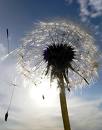
 Dewitt Jones is a renown National Geographic photographer tells of  how he once he traveled to the British Columbia on assignment. Out in the field, he decided to photograph a field of dandelions. But then not into it, he packed up and with a mind to return later. Several weeks passed before he got back. The field had turned to puff balls. 

About to leave again, Dewitt instead began to move in a more positive direction. With his camera he was suddenly over the puff balls, eye level with puff balls, under the buff balls, and there it was – an award winning shot!

We live in a God kissed world.

 Psalm 24:1 says, “The earth is the LORD’S, and everything in it, the world, and all who live in it.”

 And yet even as we claim this, less positive images come to mind.

 I have several friends who work in hospitals. The hospital presents a 360 degree view of life. One of my hospital buddies told me that this week a man with diabetes had his leg cut off.  I grieve for that man. But on the same day, in the same hospital, a baby was born with all its fingers and toes.

 The good is always framed by the tragic. This doesn’t take from good’s intrinsic goodness.

A man named Jud came to my office recently. He is a devastated person. He has vacant eyes. He has little contact with his family. His spirit is broken by an alcohol addiction. What can I do? In 30 minutes can I fix 50 years? I invited him to use the phone.

 I watched as he called his parole officer. I watched as he called a detox program. I watched a man digging himself out of his own grave. I invited him to come back the next day, sober, to call again. He came back. He made more calls. He left for the trolley, to go downtown to the detox center. I watched his back as he left, a man on a mission.  It was good.

 How good? Good in being one step back toward beauty in the form of order. This is what good means –order out of a depraved mess.

 I striped a parking lot recently, laying down new white parking space lines in measured, chalked and then sprayed rows. When I was done, I paused, the divine  pause, and enjoyed. I thought, this is how God must have felt after making the zebra. Striped is good. For me, striped is a mirror image of some kind of mysterious divine order.

 Perhaps we have been busy without pausing. Perhaps we should eat more spice cake and buy more paint.

 Life isn’t just a bunch of shouldn’ts and didn’ts. Certainly it is tragic, but certainly it is also framed in wonderments and full of astonishing possibilities.

 Look around. Life is good.   


.

Remember To Forget

Posted: October 5, 2009 in thriving
Tags: , , ,

Press on!Press On!

In the Disney movie Hercules, Hades hair busts into flames when he gets angry. But it isn’t just the god of the underworld who spontaneously combusts.

We all have fire in us. We all house residual emotional embers. We all carry incendiary memories. All heads occasionally flame.

Friends turned out not to be friends. Financial losses beyond our control occur. People close to us die. We fail to parent or spouse as we should. Embers smolder in the rubble.

But there is an extinguisher for this. We can still thrive.  To do this, we must learn to forget some things. The remedy for a firey past is to let some fires go out, to put them behind us.

Forget it. Forget it? That’s problematic. What does forget mean? It can’t mean erase completely or permanently from memory. Short of brain damage, and we don’t want that, we can’t and won’t forget loved ones lost. We can’t and won’t forget former friends who stabbed us in the back.

Traumatic, difficult things are not forgotten, and really shouldn’t be forgotten, a lost son, a betrayal, a mistake. The Apostle Paul never forgot that he persecuted Christians, referring to it in writing. The fire in his past was often on his mind. But he also spoke of “forgetting what lies behind.”

I remember driving to work one day when I was in high school. It was a two lane road. I came up behind a slow car. I accelerated to pass. Then I saw, another car coming straight at me.  I couldn’t make it around the car I was passing. I braked, hard. My car went into a slide. Off the road, spinning around — I came to a stop in a cloud of dust. I was shaking. I drove to work, very carefully. I continued to drive carefully — for about two weeks.  But I haven’t forgotten. I am informed by my driving memories.

Recently, a friend came to dinner in her sports car. She offered to let me take it for a spin. I did. I felt a calling to explore the potential of the turbo-charged engine. It was a caged beast. It needed to be let out. I went fast but not too fast. My right foot, it knows.

Fortunately, there is no wipe for driving memories. If there were, we wouldn’t learn from our mistakes. We couldn’t identify with others pain.

Then what does it mean to forget what lies behind?

To forget means not call to mind in a way that will hold us back  “Forget” means to not let the past drag us down, burn us down, keep us from the future God has for us. It means to not fall into a disabling grief. This is a choice we can and should make.

There is a need to say, “I am getting on with my life. I am living post-crash, post-fire!”

Clara Barton, founder of Red Cross, was once hurt by a friend. When she seemed unaffected, later, someone asked her, “Don’t you remember that?” She replied, “I distinctly remember forgetting that.”

How does one do that? To forget, first remember. This may seem counter intuitive. It is not. To forget a hurt, take it out and feel it, for a time. Say out loud what you feel. Write it out in a journal.  Find a safe person to tell.

It is okay to remember losses, to cry, to feel sad for a time, to grieve. But then, to be healthy, we must put them away. We call this the compartmentalization of grief. Hold it, then put it away in a mental drawer.

In other words, remember to forget.

There are 2.5 million annual deaths in the United States. Each directly affects four other people, on an average. For most of these people, the suffering is finite — painful and lasting, of course, but not  disabling

Skip to next paragraphSome people, however — an estimated 15 percent of the bereaved population, or more than a million people a year — fall into  “a loop of suffering.”  They go back, around and around. They can barely function.

This extreme form of grieving is called “complicated grief disorder.”  It has no redeeming value. It steals the present and the future.

Perhaps, we all get stuck at times in a loop of remembering, suffering our loses and mistakes over and over again. Then our heads are on fire, with the past.  We are suffering from a complicated grief disorder. To break out, we must put a psychological foot down. We must choose to set aside what we remember and press on.

Say we have a lost relationship. It is wise to look forward to the new relationships ahead for us. Say we have made a mistake. We can look forward to choosing not to do that again. Say we have been sick. This can purge us of our focus on things and center us on the core of life, relationships, God.

Want to thrive? Press on. Press forward. Keep driving. Occupy yourself with new plans, school, work, church. Don’t loop back very much. Loop forward. Remember to forget.

How To Thrive!

Posted: August 24, 2009 in thriving
Tags: , , , ,

flower in the wall Love Yourself

Recently, for lunch, I had some delicious chicken tacos with a likeable friend. It was part of my work day. I have a cool job. Basically, I get paid to eat with people.

So, my friend and I were eating tacos and talking and I thought. I like this guy. He is comfortable with himself.  So I said, “You’re pretty relaxed around people. People seem to like you.”

I always compliment the people I eat with. It leads to better digestion. And maybe they’ll pay.

 “I wasn’t always comfortable with people,” he said. “It’s something I’ve worked on.”  “Really,” I said, “It seems natural.”

“Yeah,” he said, “One day I when I was younger, I was bragging on something. A girl walking by overheard me and said to me, “You don’t think much of yourself, do you?” She kept on walking.

I thought, “Is she being sarcastic? Or does she think that I don’t like myself?” It got me to thinking. And after thinking on it, I realized: I didn’t think much of myself. And I decided I’d work on that.”

Looking at my friend, I thought: That worked! He’s transformed himself into a likeable person.

I like the narrative here. It rings real. I’ve noticed that I struggle with self-love, at least at some point or some area.  So do many of my friends. It’s something to work on.

After a making a mistake, I know I’ve said, “I’m so stupid.” Looking at one of my flaws in the mirror, I’ve said, “I hate the way I look.” After a public faux pas, and I’ve made them, I’ve thought, “I am such a social klutz.” Forgetting an appointment, my own inner voice has critiqued me:  “You are seriously losing it!”

Consider however, that many of the great thinkers of the world, those who have transformed history, have counseled self-love. Gandhi was committed to human dignity, self-respect and self-rule for India. Buddhist practice is called the “middle way,” between self-denial and self-aggrandizement. Jesus taught, ‘Love your neighbor as yourself.’” Jesus assumed we love ourselves

In saying, “Love your neighbor as youself,”  Jesus was more specifically saying something like, ” You feed yourself, clean yourself, groom yourself, rest yourself, protect yourself. So feed, groom, rest and protect others in the same way. You overlook you own mistakes. Don’t jump on other people for theirs.”

I was with a person recently. I teased that not everybody in the world loved her. She quipped back, “If they don’t love me, there is something wrong with them.” I think Jesus would approve!

But for many people, self-love is a battlefield. 

A couple of thoughts come to mind. How do we love ourselves in healthy, appropriate ways?

Speak truth.

When tempted to say, “I’m a failure,” it would be more truthful to say, “I made a mistake. “When tempted to think, “I am a social klutz,’ it would be more truthful to say, “No I made a  blunder, but I’m not defined by one interaction.”

Gerald Ford gained a reputation as clumsy after several mishaps, driving his golf cart into a crowd, falling down the steps of Air Force One. Chevy Chase lampooned him for this on Saturday Night Live. The truth? Ford was very athletic.

At the University of Michigan, Ford played on two championship football teams, and he was named to the college all-star team. He turned down offers from the NFL. At one time or another, we will all need to fight for a truthful view of self

I’ve noticed that even seasoned older people have difficulty treating their souls with dignity and kindness.

Recently, I was with a very wise and accomplished lady, who has, in the last few years, lost her husband and a private grade school she helped create and direct. I sat with her in a preschool board meeting. The school is a remnant of her lost grade school. As we discussed a tough decision regarding some cutbacks in the preschool, she began to cry. “I just realized,” she said. “I’ve been so caught up in grieving the loss of my husband, I have never taken the time to grieve the loss of my school.”

Multiple losses – this is one of the signatures of aging. But do we know to give appropriate time and sacred space for recovery? It is a deep truth that we need to make sacred time to love ourselves by allowing ourselves time to grieve our losses.

If any of us saw a baby unattended and crying, we would go pick it up and we would speak soothingly to the baby. So when we cry, why don’t we go gently to ourselves, pick ourselves up, speaking soothing words of understanding and comfort?

Backing my SUV up a few years ago, I jarringly realized that a telephone pole had jumped out of its place and slammed into the back of my car.  $900 in damage resulted. I felt  stupid! “Why didn’t I see it coming?”  At home that day, not one harsh or critical word came from my wife. “We’ll just get it fixed. That’s why we have insurance,” she said. Her gentleness was theraputic for me. I dropped the complaint against myself that was beginning to breed something ugly in my mind.

But let’s take this further. Loving yourself isn’t an end in itself; it is a beginning. It is the beginning of loving others.  A healthy, true self, is a self that can love other selves. Thinking gently is  excellent, but being gentle with others is supreme.

In the United States in the 1980’s, there was a massive self-esteem school campaign. At its worst, everybody got an award certificate, whether they had done the work or not! The general consensus by the experts? That didn’t work.

Why? A proper sense of self must be based in part on real accomplishments. Remember: “Love your neighbor as yourself.” Love yourself and don’t love your neighbor, and you’ve got some kind of nasty form of selfishness and ego-centrism. It will rot the self.

Why do we feed ourselves? So we can feed others. Why do we need to get comfortable with ourselves? So we can be comfortable with others, so we will know how to help them be comfortable with themselves.

Last week I watched a woman giving away food. She glowed! Last week I saw a man pray for another man. They were living deeply in that moment. Last week, I saw a lady pick up a child and kiss it. It doesn’t get any better than that.

It is self-loving to love others. We all must end with this. We are a self to love another self.

Want to really make progress in self-respect? Go do something worthy of self-respect.

Change The World

Posted: August 17, 2009 in thriving
Tags: , , , ,

\child 5  child 3child 4


Let The Children Change the World

I love kids and teens and young adults. Kids are smart. Young people are resilient.  Young people rock, even when life is hard.

 Rodney Dangerfield, remarking on childhood trauma said,  “When I was a kid my parents moved a lot, but I always found them.”

Rodney Dangerfield and the Bible and have something in common; they both narrate accounts of tough childhoods. But the Bible goes further than Mr. Dangerfield. It finishes the childhood narratives with fine endings.

Moses was abandoned in a basket in a river, but he became the ruler of Egypt. David, a mere boy, faced an abusive adult, and using simple technology, defeated him.  Young Ruth’s husband died, but Ruth found another man to love her, and she had a baby boy, an ancestor of Jesus.

 Mary, pregnant and unmarried, suffered the social judgment of her community, but she gave birth to Jesus.  Paul had a narrow, legalistic childhood education, but he wrote a lion’s share of a very radical and liberating text, the New Testament.

 Kids survive tough stuff and thrive! Many people in history and today are proof of that. Many of us have enter adulthood as survivors, having overcome illness, dislocation, abandonment,  losses of all kinds.

 Once my brothers and I were playing baseball with a golf ball. We thought it was a good idea. It wasn’t. A golf ball goes hard when hit with a wooden bat.   I hit a line drive. It hit my brother in the mouth. He is still sending me the dental bills. I still regret the mistake.

 Early years can be tough; but young people can be tougher.

Childhood resilience? Our modern, cultural narratives often celebrate it.  In Lemony Snicket’s A Series of Unfortunate Events,Count Olaf is trying to kill the three Baudelaire orphans for their inheritance. The villain, Olaf, played by Jim Carrey, leaves the children in a car on the railroad tracks. Young Violet makes a spring loaded, bobble-headed track switcher and the children escape harm with ingenuity and resolve. Fiction? Consider this. 

Laurence Gonzales, in his well-researched book Deep Survival, asks the question:  Who has most chance of surviving in a wilderness crisis, exposed to the elements? Answer: Children six and under have one of the highest survival rates. Gonzales writes, “They often survive in the same conditions better than experienced hunters, better than physically fit hikers, better than former members of the military or skilled sailors. “If they get cold, reports Gonzales,  they find a warm place. If they tire, they rest. “They try to make themselves comfortable, and staying comfortable helps keep the alive.”

Jesus himself thought so highly of kids, he put them up as the world’s top model! 

 The people brought children to Jesus, hoping he might touch them. The disciples shooed them off. 

 But Jesus was irate and let them know it: “Don’t push these children away. Don’t ever get between them and me. These children are at the very center of life in the kingdom.

 Mark this: Unless you accept God’s kingdom in the simplicity of a child, you’ll never get in.” Then, gathering the children up in his arms, he laid his hands of blessing on them.

 Jesus was crazy about children! Jesus bragged on children. Jesus said children owned the kingdom! Jesus said we should learn from children. Learn what? We should learn to be simple, receptive and open.   

 Life is hard. People hurt people.  They make bad decisions. Then, too often, a parent-like voice within a person’s pschye chides:  “What is wrong with you? Grow up. Pull yourself together. Your future is up to you.”

 But Jesus says, “Don’t grow up in every way. Remain like the children in their simple trust. They know they need help. They know they can’t control and fix everything. They come near for help. Children model appropriate and wise dependence; it is with a simple childlike faith that we come into God’s peaceable kingdom.

 Robert Coles, Harvard Child psychiatrist, in his studies, Children of Crisis, shows us that children in difficult circumstances — poverty, loss,  family break-up — often exhibit “authority, dignity, fragility, and rock-bottom strength.”  And there is frequently a trust in God present.

Ruby Bridges, was the first African-American child to attend an all-white school in the South in 1960. In the face of violent, resistance, little Ruby stood up, and marched to class each day. She helped bring about school desegregation in New Orleans. Her mother told Robert Coles, Ruby’s counselor, that Ruby prayed for those in the mob who threatened and harassed her.

 Ruby had an inner moral compass. She looked to God to deal with evil. This is not untypical. Children, as Coles showed in his book The Spiritual Life of Children, often try to figure out life by tapping into spirituality.

 Again, we see this reality portrayed in our culture’s popular stories. In the movie, Bridge to Terabithia, a young girl named Leslie goes to church for the first time with her friend Jeff. On the ride home in the back of a pickup, Leslie grapples with  deep theological issues. Jess and his little sister have grown up in church, but they focus on the fearful prospect of God damning people to hell.  Leslie is just hearing the spiritual narrative for the first time, and she sees the vibrant life in it. She thinks the Jesus narrative is beautiful. She revels in the goodness of God surrounding her; she lifts her hands to the trees and sun as the children in the back of the truck glide home through the splendor!

 Kids think about God, and not just in movie life. Many children, like adults, try to make sense out of the idea of a loving God in an evil world. Children need adults to teach them and to dialogue with them, but adults should also encourage children to think, wonder, ask questions and try to make their own expressions of wonder and faith. By opening a discussion with children, adults are helping develop thinkers and doers. Remember again, that Jesus himself made children the model of true spirituality.

 And let’s take it further than talk. Life rcries out for collaboration and action.  We need, and the children need, to struggle together over what to do with tough issues, issues that touch deeply,  like poverty and loss of parents. Really, sitting at the core of all this,  is the truth that we need to include children in helping us solve life’s big problems.

 When five thousand people needed to be fed, who offered a loaf of bread and five fish to Jesus disciples? A child did! Only a child had the good sense to bring a lunch that day, and give it away.

In my community, last Easter, children from several churches helped make almost 300 Easter baskets for homeless children and under-resourced children. In the spring these children helped make 150 birthday boxes for foster children. Then in the summer they helped put together 200 backpacks, full of school supplies, for foster and refugee children. Children in our community, are changing the world.

 A teacher in our preschool lost her mom this year. One of her three year olds, Taylor, asked her: “Did your mommy die?”

 “Yes, she did,” answered the teacher.

 Then three-year old Taylor said, “I have a mommy. And my mommy can be your mommy too.”

 Children get it right. Children want to be part of the solution. Children will share their lunch, their mommy, with others.

 There is extreme value in children serving children.

 It exposes children to the needs of their peers.

 My daughter just got back from a mission’s trip to La Paz. She told me, “Now I have a place in my heat for Mexico.”

 It expands their confidence that needs can be met.

 Ruby Bridges is now chairwoman of her foundation that promotes toleration of differences.

  It shapes them into future world changers.

 After David killed Goliath, he went on to become king.

 I have a friend, Rich, who is a highway patrol officer. He is also a fantastic volley ball player. Rich just got back from a Volley Ball tournament in Vancouver. He took his two grade school daughters, and they did a mountain climb. The climbed up a couple miles of switch backs. Rich is in good shape, but he was panting at the top. Then Rich bragged to me, “My littlest daughter, skinny little Kristin, she never broke a sweat. She never even breathed hard!”

 Children have energy! We tout the energy in wind power. We know the potential of solar power. We keep tapping the polluting energy of fossil fuel power.

 What about kid power? Jesus believed in it. So should we. Let the children change the world!

understanding others

Posted: January 1, 2009 in thriving
Tags: , , ,


Jan. 2009 017

We had a party recently for our friends with young children. We ate cheese enchiladas, carnitas,  salad, pizza, chips and salsa,  strawberries and brownies. We played a backyard game with giant washers and then came inside and played  bunko.

One little girl, a preschooler, Samantha,  brought her crown. She was the princess of the party. After dinner, Samantha’s face was covered with strawberry juice and pizza,  but she had her crown. Ah, to wear strawberries and pizza on your face,   to wear a crown on your head and to be the princess of the party. 

 At the end of the evening, her father carried her out of the house, sucking her thumb and carrying her crown. Thumb sucking, strawberry stuffing, tierra wearing, threshold crossing through the air — it doesn’t get any better than this. 

We all long for just this — a fun, happy, loving tasty,  royal sociality.  Don’t miss it.


cropped-thumbs_arial1.jpgDifferent

We are different. I’ve been watching people’s walk lately. We walk differently.  As for posture, there are the uprights, the slumpers and the head hangers.  Some lead with their bellies, some with their chests, some with there knees, some with their feet.  As for the feet, there are the striders, the foot draggers, the floppers (they throw their feet out as if trying to unhinge  their toes),  and the shufflers. When it comes to gait we find the amblers,   the marchers and the speed walkers. Look at attitude and you find the purposeful striders,  the aimless wanderers,  the look-at-me walkers and the lost.

The combinations are amazing. Today I saw an upright, striding, purposeful marcher.  I also witnessed a slumping, stumach-leading, foot-flopping wanderer.  And then there was the upright, flopper.

Where do we get our walk? From our parents, our personalities, our moods, our bone structure? Whatever the case we are different in ways we  sometimes don’t notice or analyze. Want to know people more, then notice their uniqueness more?

Marlyn Monroe Gets Loved

h6y0bdcah6um2acavlbscpcayp00rlcam1bo4rcavcv83yca5b6y4mca8zhsp1cacbvywncakrk1u7caxytrxbcacp9l7ocazcnvh2caktao6gcaamgnf9camjfa6gca72qmshcakxucsoca8yz4z0

Elton John’s Candle In The Wind was playing on the car CD player. There was that poignant, this-is-life feeling in the car.  I asked my daughter if she knew who the song was about. She did, Marilyn Monroe.

For a person disabled, for a mind robbed of the power to read,  my daughter knows a lot. 

I told her that Marilyn had been married to Joe DiMaggio and Arthur Miller, that she had other relationships, but that they didn’t work out that well. I finished with the comment that she probably committed suicide.

“Why would she do that?” my daughter asked. I thought a moment, not sure what to say, then ventured, “Well, I guess she may have felt like nobody really loved her.”

My daughter paused, then said, “Dad, I would have loved her.”

Ah, if only the world had more of this disability in it, the disablity that loves.

Sync

It feels good to be in sync, with the band, the family, the people you love. We should all try to be in sync with the people around us. But it isn’t always possible. To have beliefs, to hold to truth, to stand for something is to be out of sync with someone. To be unique is to be a bit out of sync with everyone.

Relax. Be secure in who you are, who God has made you to be. You don’t have to have the approval or affirmation of everyone. No one does. Freedom is not worrying about what others think. Peace is being at peace with yourself no matter whether you are lined up with the status quo or not.

The ultimate is to be in sync with God. Think about how to do that.