I’m addicted.

It is slowly killing me and my family.

Food, food, food – I love it! Fat, salt and sugar – I love them – and, I don’t!

Recently, I read the end of overeating by David Kessler, MD.

Dr. Kessler is a killjoy. He got to me because he got it right. Food, my fellow addicts, is a very powerful stimulant, and the American food industry is madly working to addict me and you to food’s most unhealthy forms.  

Dr. Kessler explains. Activity in the brain is stimulated by food and by food cues (ads, smells, pictures on restaurant windows) in our environment. These food cues   engage us, causing us to want to eat, and the wanting sometimes drives us to overeat  unhealthy foods.

Cue induced eating is triggered by the sight of a donut, the clink of ice cubes, the smell of pizza.  So the food industry puts the pictures and the posters and their food outlets everywhere. On the TV, on the internet, on the billboard, at the movies, on the corner, everywhere on the corners where we pass and stop. America, still a place where millions of people don’t have enough food, is saturated with food.

Starbucks, McDonalds, Mister Donut — positive emotions have become embedded in our minds by certain logos, name brands, advertizing cues and the foods they represent. And so we warm to them, and they call to us, and then we pig on “addictive” foods.

I confess. I have. I had a food incident recently.  I pigged the chips. The salt and the oil  and the sugar, delicately balanced by the makers, they pulled me in. 

But more is happening than what goes on in our mouths. As a result of eating foods layered with salt, fat and sugar, chemicals like dopamine and opioids are released in our brains, rewarding us with good feelings, and making us want to eat more of these foods.  If not careful, we become controlled by an unhealthy, industry-designed food culture, created by businesses only interested in profit, not our health.

It’s worth asking, what food cues are influencing your eating behavior or your family’s eating behavior in negative ways? For me, one eating cue is theTV. Watching TV, and not just watching the food channel, makes me want to eat. The glowing screen makes my mouth water. Watch a show, get a snack, it’s automatic.

But what I get for a snack, now there is the rub. I’m tempted by the hyperpalatable foods, overly processed, unhealthy foods.

Dr. Kessler explains how the food industry carefully designs hyperpalatable foods like chips, hamburgers, soft drinks, French fries, cookies, coffee drinks and candy bars to addict us. These profitable, superpalatable foods are often carefully layered with sugar, fat and salt; they are made highly mouthable with just the right crunch or softness; they are given high visual appeal with artificial colors; they are jazzed up with flavor enhancing chemicals, they are designed with multisensory qualities that optimized variables like sugar, fat and salt. These foods actually rewire our brains, creating an additive eating of unhealthy food.  

Interesting, wild, true!

It makes me think, and want to change. It makes me want my family to change.

I gained a few pounds this year. I’m not sure how, but those bowls of ice cream, those stops at Costco for a delicious hot dog, those evenings with too many trips back to the kitchen for a few more chips – those choices must have had something to do with it.  

Truthfully,  now that I think about it, now that Dr. K has educated me better,  I’m sick of buying and eating foods layered with salt, fat and sugar. It makes me want to cut up a tomato, eat a baked salmon and steam some asparagus.

I’ve been doing that lately, and I’m losing weight and feeling better. I’ve thought of Daniel, the Jewish wiseman, who when in excile in Babylon chose to eat only vegegetables, avoiding the king’s rich foods. Daniel and his men ended up healthier than their indulgent commrades, and through discipline and excellent physical condition they excelled.

It matters, to me, to my family and to God that I take care of myself.

I need to own this.

It’s my health.

It’s my productivity.

But what I do or don’t do is going to effect a lot of other people.

It’s about how I want to live, and I want to live healthy, happy and unaddicted to food, a wonderful, pleasurable but dangerous gift.
Life multiplies at an alarming rate. It springs fecund and prolific from an amazing variety of astonishing places. Birth and death and resurrection are everywhere, part and parcel of each other.

When I was I grade school my family had a dog that in one litter had 17 puppies. The poor thing.

In  the 17th C the first wife of Feodor Vassil-yev of Russia gave birth to four sets of quadruplets, 7 sets of triplets  and 16 twins. In her 27 pregnancies she produced — 69 children!

And some think two children are a challenge.

The insects easily top that. A queen bee can lay up to 1500 eggs per day. That’s scary prolific.

A powerful fecundity is pulsing through the blood stream of the universe; on earth every spring life even shoots up out of death.

 We make goofy movies about death turning back to life, movies like “The Mummy,” where the dead are accidentally awakened for unknown reasons. Silly Hollywood; resurrection isn’t weird and paranormal; it is as common as birth and seeds and eggs. It is part of nature, built into life, how things normally work.

Take red tail hawks. My dad tells me a red tail hawk lives near his apartment in Alhambra. My dad has never seen his hawk friend eat. There is a McDonalds nearby. But sometimes my dad says he finds a pile of pigeon feathers and bones on the ground. I guess his hawk doesn’t eat fast food. Obviously, not fast enough! The slow pigeons die for the fast hawk to live. Wendell Barry, the great environmentalist wrote in his famous essay “Wilderness:”  “We can only live at the expense of other lives.”  Every death fuels another life.

Take seeds. Burbee seed companies sale are up. Why? Seeds work. Well, they work for most of us. When it comes to planting things, some people claim they have the death touch. Really? Most everything everyone plants, dies and lives again.

Take a poppy seed, put it in the ground, it sprouts, a plant appears, it grows, it flowers in a kind of celebratory shout at the end of a stem, and then the poppy drops in head in death and out of it salt shaker pod falls seeds. They are buried in the ground; they winter over and then with the warm of spring and the rain they rise again with new life. Every sprouting seed is a kind of resurrection.

Resurrection is more common than that: it is familiar as your bed. Every day you lay down and sleep; you temporarily die, and you are resurrected, with some variation, the next morning. Working people resurrect as early as 5 am; teenagers left undisturbed, resurrect closer to noon or one.  Whatever the hour, a rebirth begins everyday life.

Getting up is resurrection. And the older you get, the more it feels like you are emerging from the grave.

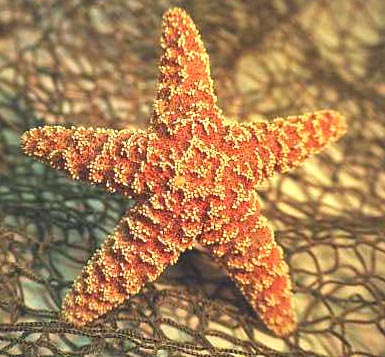
We were at the tide pools recently. We found a Sea Star. It was regenerating an arm. A few species can grow an entirely new sea star just from a portion of a severed limb. Amazing, but we share this power. After we are cut, our skin heals over. Our livers can regenerate from as little as 25% of the original.

It is widely claimed that God raised Jesus from the dead. I believe God did that. It follows logically from what most of us believe. Most people on earth believe there is a God. And they believe he made the universe. So if God did that, and he built life and death into it, then he has the power of life and death, and he can raise the dead. This resurrection of Jesus has been called the grand miracle of creation. It is. It is a unique, special, death-reversing, life-giving, new order of events.

But it is not weird, it is not beyond what we would expect of an all-creating God, and it is not entirely unlike other things we can see all the time; the resurrection claim is reinforced by similar events every day. We continuously see things regenerate themselves. In the resurrection of Jesus, God regenerated himself.

Odd to you? Then you must think the universe odd. Odd? We need this kind of odd. We need to tap into this class of oddity.

History is full of kinds of resurrection, artistic, social, psychological, technological resurrections — the renaissance, the reformation and the scientific revolution.

So is the history of finance. Businesses are revived all the time. Careers are resurrected every day. So are aging rock stars. So are wounded soldiers. So are defeated psyches. So are sick children.

Resurrection is normal. Look around. Look inside. Are you going through a death-like experience? You can be resurrected. Believe that. It happens all the time.

Open your eyes. Is it death? Out of that can spring new life.


It could be argued that sometimes we aren’t accountable enough to ourselves.

Students not doing their homework, moms not  taking care of their own needs, employees not doing their assignments, many of us not living out our vision for our  lives  – it’s common.

Recently, someone told me they would do something. They didn’t do it. Asked about it, they didn’t think it was a big deal. But it was important, from two angles. We missed a good opportunity to involve people we needed to involve, and they missed the responsibility to have integrity, to do what they said they would do.

 I said something to this person later, pointing out the missed opportunity. Oddly, they weren’t at all upset by their own omission. A casual, relaxed atmosphere of excuses and minimization reigned. I said what I thought anyway, “It isn’t loving or responsible to not do what you said you would.” As a result, they completed the task and followed through nicely on something else they had agreed to do.

Nothing new here. We’ve all seen this before.  I’ve worked with people who didn’t do their job well for years. It created a mess of missed opportunities and misunderstandings. 

Why don’t people own their work? It’s complicated. Each case might have a unique root cause — insecurity, weakness of character, laziness, sabotaging inclinations due to jealousy, cultural expectations, disabling neediness, perhaps a history of not being well-parented, incompetency. Often the roots of irresponsibility rest in fear. Fear is huge, the fear of making mistakes, the fear of negative feedback, the fear that we can’t be what the job expects us to be or has changed to be.  Fear creates inertia; fear disables.

But a responsible independence that  owns our issues is such a good alternative, so empowering. Recently, I spoke with someone who has failed his family. He admitted that he has made mistakes, that he has engaged in harmfully addictive behaviors, that he hasn’t valued his wife’s feelings, that he has caused a lot of pain. It was refreshing, and as a result of his honesty, he is now changing his behaviors.

An internal mode of self-assessment and self-correction is a mark of high maturity, but it doesn’t seem to be in the defining mode of many modern adults. Too often we operate with a culture of casual excuse; we don’t do what we say we are going to do and that seems to be okay.

It’s not. It’s not loving or mature or professional to be irresponsible.  

I have a friend in the military. He says irresponsibility has become a huge problem in his branch of the service. Many people don’t do their  jobs with high quality, and they won’t own their mistakes and fix the damage done by them. When things go wrong there is often a lot of excusing and blaming others and avoiding  responsibility. Someone he worked with spent money from someone else’s account. Once caught, the person excused the behavior and didn’t pay back what was taken.

But the alternatives to self-accountability aren’t attractive. They are punishment and being brought to task.  But standing over people to make them do their jobs, micromanaging each step they take, punishing them for not coming through, babysitting them on the job – when we reach this level of dependent functioning, something needs to dramatically change. We have a core motivational problem.

At this point, leadership must reassess their approach and find positive, proactive, not negative, ways to help people become independently responsible.  Motivation to work is best inspired, as well as required. Therapy, re-educating, creating win-win solutions, retraining, creating collaborative networks, helping people get excited about using their unique skills – this is the responsibility of a leadership facing inertia and incompetency and resistance. 

But the best solution to irresponsibility is when we each become accountable to ourselves. It is when we grow up and become independent in healthy ways. We can vastly improve our little corner of life by being self-accountable. This is maturity, to come to the point where we self-assess and self-correct when needed.

Here are some things that it would be so wise and loving to people around us to take responsibility for. To be operative they must become personal, our “I” statements of responsibility:

I am responsible to do what I say I am going to do.

I am responsible not to harm others. If I do, I am responsible to fix that the best I can.

I am responsible to do what I am assigned in my job to do, to do it efficiently, creatively and with a high degree of quality.

I am responsible to love the people I work with, live with and make a family with.

 I am responsible to identify my physical, spiritual and emotional needs and to figure out how to meet these in healthy ways that don’t harm me or others.

I am responsible to speak up when something is unfair or unjust and do what I can to change it.

I am responsible for all my actions, thoughts and feelings and the consequences that flow from them.

I am responsible for my spiritual health, to hear and know and act on what is true, good and right.

I am accountable to my own values and standards. If I say I believe something, then I should act on it.

I am responsible to know and defend my boundaries. I am responsible for what I let other people do to me.

I am responsible find solutions to my own problems or live wisely with the problems I can’t solve.

I am responsible to set my goals and priorities and then to move toward them the best I can.

There are more. I’m sure we can all think of more. All we have to do is remember when we failed someone or they failed us to add to this list. We should think about these things. Then we should get busy living them.

On a recent evening I asked one of my daughters if she had done something that she had agreed to do. She had. Peace reigned between us. Self-accountability, independent responsibilty – these are very good for relationships.

We Need Beauty

Posted: March 30, 2010 in beautiful
Tags: , ,

We need protein. We know that and so we go find it in the morning, at lunch time  and in the evening, sometimes making too many trips back to the refrigerator for what we know we need.

We need sleep. We know that at night, and sometimes in the afternoon and after we have performed for too long and given away too much of our stored energy.

We need safety. We know that when we drive and when we fly and sometimes when we read or watch the news.

We need love. We know that when we are alone too much, and when we lose someone treasured and valued and when we want to be hugged or held.

We need beauty. Too often we don’t know that.

We need the beauty of volume, of things cubic, of things with circumference. The other night I looked up. The moon was huge and far and white. I put it in my eye, and I washed a little bit of the difficult day out with it.

We need the beauty of distance. A few weeks ago I went out to the Anza Borrego desert east of San Diego. From highway 79 just south of the town of Julian I stopped at the desert outlook. I squeezed through the sun roof of my SUV and sat on top.  Thousands of feet below and miles away, the beautiful, sandy desert and beyond the blue Salton Sea. I soaked my psyche in the far off.

We need  the beauty of faces. I recently looked into the face of a woman with cancer and then into the face of her mother who  had just prayed for her, thanking God for giving her her little girl so long ago,  a very old woman praying for her aging daughter and all the beauty she was at the beginning and is now, perhaps near the end.  I looked in their faces as they looked in each other’s familiar faces and there was pure, love-drenched beauty.

We need the beauty of color. Last weekend my wife and I hiked the trail from the top of Torrey Pines, south of Del Mar, down to the beach. Stopping half way down, the color palate was stunning, yellow Sea Dahlias, red Paint Bush, blue heliotrope, purple and white Black Sage and the red sand cliffs and the aqua marine ocean. We needed this because we had worked too much in confined spaces, too close to sheet rock and paint for too long.

We desperately need beauty, the beauty of motion. Last weekend, when we reached the beach at Torrey Pines, there sliding through the waves, we watched pod after pod of dolphins swim south in the sea. They swam in lyrical, synchronized  movements, up and down with each other by threes and fours. Their arcing, slicing motion was  beauty,  healing and good.

A few days ago some friends and I got together with an artist; she spread out her water paints, and we went at it. In color and shape we expressed life, fresh life, changing life.  We broke free from amateur attempts at realism and painted our feelings of renovation, innovation and exhilaration. The results were astonishing — beautiful, inspiringly beautiful. Some of my friends had Down Syndrome. Their art? Simple and beautiful.

We need beauty, often, close, experienced,  savored.  We would do well to know that more and to make the conscious aesthetic choice to go find it, to know it, to treasure it, to soak in it, and to let it inside of us to fill us up again.

It’s weird, but sometimes the people we love the most we hate the most.  We don’t really hate them, but we sometimes have the strongest negative emotions that we have ever felt, toward them. At a moment of conflict, it feels like hate.

This is something we don’t want to admit. It sounds wrong, but really it’s quite normal. Feelings of love and hate live closer to each other than we may want to admit. We act the dance between the two out. We yell at a spouse or child, criticizing them for something they did or didn’t do, or we simmer inside, silently furious that they have neglected or hurt us, but afraid of our own emotions and afraid of conflict. And yet at the same time, we know we profoundly love them and are committed to them.

Why do we sometimes feel so strongly against those we love? There is so much at stake. Close, family relationships have a huge impact on identity, who we are or think we are. In these relationships we gain a deep sense of worth, and that this can be enhanced or damaged by the loved person. Family relationships also control us, adding to or limiting what we get from life in the crucial areas of money, sex and power. Either gain or loss of what we need amp up our emotions and stir fires of deep calm or anger in us.

We may conflict in a casual relationship without much consequence, but we know that a fight with a spouse or child matters. Our feelings in these relationships flash on brightly, like red lights at busy intersections at night.

What do we do with these feelings? We should honor them, we should accept them, we do best to lean into them. They help us. They are our friends. They tell us that we care. They tell us that these relationships matter. They are normal, and we normalize them by not denying them. And we honor them by acting on them; yes, we act on them by having the needed talk, by working out the needed negotiation, by giving time to process these valuable feelings.

This is life. Feel. You  love. Feel. You  matter. Feel. You have relationships that are important enough to fight for, to care for, to resolve.

Feel. You are alive!

Love  is idiosyncratic.

We  each  experience  love uniquely, filtering it through our personal backgrounds, personalities and experiences.  In this domain, don’t bother with generics.

One person feels loved when they are given a gift that perfectly fits an interest they have. For them, that’s love.  Another  feels deeply loved by a  snuggly hug, another by being close but not touching. Another feels most loved by being listened to as they share the trivia of their day, another by being allowed to talk about ideas, another by having a purring cat sleep on their lap, another by being allowed to watch a local football game with friends, another by being encouraged to go to the beach and walk with girl friends.

Love is ideolectic, which means it is articulated in the language of the individual, not the group. It is found in nick names and private endearments and familial neologisms and  goofy redefinitions. It resides in family jokes, favorite foods and funny family stories, a language invented by people with the same reality even if they don’t have the same last name.

When we cannot experience love, the dysfunctions behind our attachment disorders are often idiopathic, unknown or at least unrecognized by us.  An angry father, a perpetually drunk mother, a childhood illness, a traumatic divorce,  a disabling shyness — we may have some idea as to our love disability, but often we are not quite sure as to its precise etiology. We may brood, “Why can’t I seem to connect well with people, bond, enter into love the way I see that others do?” We often don’t know precisely why; perhaps we never will. Love’s dysfunctions are complex, but we do not have to understand them completely to  love.

To whatever degree we can give or receive love, we should; it is a gift and a thrill. Love  is the essence of mental health and the core of happiness. Love is so essential that it should be made the highest priority of life. We should go all out to love the people we live with idiosyncratically, in the ways in which  they want and need to be loved. We should gently, kindly, patiently and continuously customize our love for our spouses and boyfriends and kids and best friends.

If we do everything else but don’t do love, we have done absolutely nothing. Love is first, best, highest and most supreme. Do not miss making this your primary mission in every second of every day for the rest of your life.

Let quirky, personalized, specialized, custom-fitted love rule.

Main-Thing Talk

Posted: February 16, 2010 in people
Tags: , , ,

We talk about everything but the main thing.

Not talking directly and openly about the main thing is like not eating enough protein. It is like not getting enough sleep.

What is the main thing? Well, if I say it you might disagree and there we go, not talking main-thing stuff again.

Recently, I talked with my daughter about sex. Now there is a main thing. Ads talk about it a lot and radio songs gush about it all over the place, and so she should know all about it, right? Not really. She’s been saturated with ads and songs and singing ads all her life, but it hasn’t gotten it, and she still didn’t know some very simple and of-the-first-order things about sex. Why? We just don’t talk about it; we let our fear of awkwardness keep us from becoming not awkward with life. So my college-aged daughter and I got down to some honest, simple, raw questions and answers. I know what she doesn’t know, and I’m the safest person in the world to let her know. Dang!

It is so easy to be honest if we just get started and so refreshing too. It’s like leaving a crowded restaurant where there is a constant din of undecipherable noise and moving to a park bench under a quiet tree and sitting close and hearing every nuance of meaning and expression in each other’s voices.

I had a conversation with some one recently about God. Who hasn’t heard of God? But there is a constant din of puzzlement about him too, and silence here too. It’s too weird. People say they can’t talk with certain people about politics or religion. So they don’t. Fine. Who need arguments? But really now? God is arguably a main thing. And he is so main he is integrated with everything else that we talk about or don’t talk about, like sex and violence and pets and movies and the weather. And not bringing him up is bizarre. He is the ultimate elephant in the room. Why wouldn’t we in our role as parent and friend and lover and consumer speak directly and personally about God.

We know stuff and kids have questions and friends have concerns. It is long past time to break the silence and say what we think to each other!  Come on now. We are letting moments pass when we should be jumping on the opportunities to teach and learn and lean while we teach as we just get honest and real and verbal.

The main thing is always the thing below the surface of the thing we have chosen to talk about. To get down to it, we need only look further to the larger structure: what is the branch that is holding this leaf, the trunk that is holding this branch, the root that is holding the trunk, the earth that is  holding this root, the solar system that is holding this earth, the universe that is holding this solar system, the force that is holding this universe? Questions get us deeper, closer to the main things that are so interesting and refreshing and empowering to talk about.

Main stuff needs attention. This is ridiculous. We are shutting up way too much. We are acting like we don’t know about what we do know about. Just go there. Fearlessly dive to the next level.  Admit what you don’t know; say what you do know. Say it plainly, honestly and directly.  People who you love need you to say it, now.

Fight Fair

Posted: February 4, 2010 in family
Tags: , ,

“We had a fight last night.”  Few families haven’t said that.

Most of us do verbal battle in our families, often at night when we are all home, and all tired. But that isn’t necessarily a bad thing. A certain degree of conflict is normal, even healthy! Conflict is needed to set things right when they have gone wrong.

My wife has confronted me several times in our marriage over spending too much time at work. As a result, we’ve made more space to be with each other more, to do more fun things together. Lately we’ve been walking together on the days we have off together.  Conflict, if resolved well, can bring about new peace and order in the family.

But how we will fight, now that is worth thinking about, because if we don’t fight well, in fair and productive ways, we can cause a lot of damage and even eventually ruin our relationships. Early in my marriage, I said somethings my wife still remembers thirty years later. I wish I had been able to control my mouth better.

What do families commonly fight over? They fight over significant issues of power and control in important areas of life:  money, in-laws, sex, children, homework, housework, jobs and friends. The underlying psychological reasons include our desire and need to control our lives, our instinctive drive to get our own needs met and the normal competition over the emotional and financial resources available.

In my family we have sometimes fought over how to discipline the children. Sometimes one of us has wanted to be tough on an issue and the other has wanted to be relaxed, to let things go. It’s classic; it’s the old war between the obeying the rules or relaxing and having fun, between having strict in discipline or creating a relaxed, easy going atmosphere. The truth is we need both in the family. Too much just-leave-them-alone and you get chaos and rebellion; too much hammering of the policy and the bedroom turns into a military barracks.

As a result it’s good to scrap about discipline once in a while, and to come to some middle ground between the police academy and an unspervised grade school playground.

Whatever the outcome, conflict should not be seen as something to avoid. The good family is not the family that never fights, but the one that knows how to fight in fair, appropriate ways. 

Here are a few rules for fighting. You’ll recognize some of these. They are borrowed, currently part of the common language and knowledge of good conflict resolution.

 1. Seek first to understand, then to be understood. The goal is to “Get it,” to really listen in such a way that you can truly understand how the other person feels and what they think.

2. Go for win-win outcome. That means you come to a solution both parties can live with.  Avoid win-lose solutions, where someone dominates the others. To help, remember that you are fighting for your relationship, not for a personal victory.

 3. Stay under control. Be kind.  Work hard not to be abusive, mean, cold, hard, inflexible. Giving full vent to your anger can cause a lot of damage.

 4. Give people space and time to process possible solutions if they want or need that. It’s great to work things out on the spot, before you go to bed, before it can build up. But sometimes, other people just need time to cool down and think a little. In that space they may even self-correct.

 5. Stick to the point. Avoid bringing in a bunch of other unresolved issues, and avoid personally attacking the character of the person you are disputing with.

 6.  Support your spouse in front of your kids. If you don’t agree with your spouse, set aside some space and time to talk it through later. Parents who are united can do a super job of dealing with kid issues.

 7. Avoid arguing late in the evening, when you are tired, when you have the least control.

 8. Ask for forgiveness, and be willing to forgive.

One of the most obvious things about the people in your family is that some of them are quite different from you. 

Take the issue of how we process time. We process it differently. Some are speedy thinkers, quick with a response, quick to want to suggest solutions, quick to want to make up after a fight. Others are deliberate processors, slow to know what they feel, in need of time to  make a decision.

One of my daughters processes things over time. Recently we got in an argument over what movie to watch. I pushed; she got upset. It was a bit of a mess.

When the deliberate processors meet the fast processors over an issue, watch out. The quick tend to bulldoze the slow; the  slow tend to stall the quick.

The solution? In the family, it is wise to allow for differences without judging and stigmatizing the way the people we live with process things. The quick can say, “Hey, take a little time and get back to me on what you think.” The slow can say, “It’s good that you want to resolve this now. Let’s see if we can talk it out. What do you think we should do?”

The secret is to honor the other persons process and to negotiate in a way that works for both people. On the movie issue, my daughter and I gave it some time. We came to an agreeement.

Often the differences in our families show up in our likes and dislikes. Some like sports; some like to read. Some like to hike; some like to watch TV. Again it is so easy to be threatened by differences.  If we aren’t atheletic, could it be that atheletic people make us feel clutsy? If we aren’t smart and bookish, perhaps the literary nerds make us feel ignorant.

I like to watch football. My wife doesn’t. She graciously gives me space to do this. And she doesn’t just tolerate it; she supports me in it. Recently I invited a friend over to watch a playoff game with me. My wife called my friend’s wife, and they took a walk during the game.

The solution to our different likes? Again, it is to allow for differences without judging each other. Who wants a family full of rules and reactions that keep people from enjoying what they really love to do? By giving space for others to do what they want, we allow them to be happy and fulfilled. And furthermore, if we will participate in each others likes, we can expand our interests and become increasingly enriched people.

Giving a spouse or child a chance to pursue their passion is a way of serving and deeply loving them. The I-want-you-to-be-able-to-do-what-you-want response is at the core of what it means to love another person.

Differences between us can threaten or enrich;  it’s mostly our choice.

The Values Outlast The Rules

Posted: January 21, 2010 in family
Tags: , ,

Values rule, not rules.

Over a recent holiday my daughter and I  hiked through some beautifully sculpted sand cliffs down to the beach at Torrey Pines State Park in San Diego. On the way down, we stopped and ate the lunch we brought. On a bluff overlooking long, curling waves we chatted away and  luxuriated in the sun and sage bushes.   On another day we drove to downtown San Diego together and had lunch at a favorite bistro of hers. I picked the corn chowder and turkey sandwich based on her recommendation. The rye bread was superb — my choice. Afterward we walked and shot pictures of ourselves sitting by a fountain at the train depot.

These days were the best! I think of these kind of days as the it-was-all-worth-it, the now-we’re-really living, the it’s-so-good-to-be-together days.  The activities were simple, but the time was rich with deeply shaping, underlying values —  the value of respect for each other’s choices, the value of good food and the universally esteemed  value of walking with someone you love in a beautiful place.

We parents want our children to open their arms and take in our values. Step-parents and single parents and foster parents and grandparents and adopted parents and surrogate parents and every other kind of parents want to enrich our children with a wealth of rich, wise beliefs.

But there is a very important question here:  How do we do this?  Let’s try to be bluntly helpful about this. Not by pounding our children with the rules. If we pound children with rules they may reject our values.  I know a family where the kids were constantly dominated by rules. The rule hounding  produced anxious, angry, frustrated  children. On the other hand, too little rule making and enforcing and we may produce undisciplined,  unwise and disrespectful children. I know a family where the parents were very passive and the kids were very much in charge. Everyone of the kids made a mess of their adult life. It’s a balance, but keep in mind the end — we want to produce value-inspired people, not rule-enslaved people.

What are values? Values are our deepest beliefs, our core truths, the things we hold to be good and right, those guiding ideas that help us live well.  Where do we get them? We get them from our most trusted sources —  our experiences,  our  family,  best friends, our trusted spiritual leaders. They also come from the collective wisdom of the community. They are beautiful,  powerful  realities — things like love, beauty, honesty, kindness, integrity, trust in God, hard work, tolerance of diversity, freedom to make choices.

To really understand values, it helps to see that they are somewhat different from rules. Rules and values are similar in that they both set standards, but rules tend to demand while values tend to inspire.   In general we might say that values endure; rules change. Although some don’t: Replace the toilet paper roll when it runs out; don’t use other people’s tooth brush.  Rules are typically imposed from the outside; values live within and surpass rules.We give our children a rule; hold my hand when we cross the street. But one day the child will cross alone, taking her own responsiblity to look both ways.  A value underlies the crossing rule, the value of safety, and we want this value to guide all our children’s choices, even their risky ones.

Ask of every rule you make for your children, what value does it flow from? When the value becomes embedded in the child, the rule may no longer be needed. The goal is for our children to grow out of our rules and into our values. The goal is for them to become motivated from within, not from without.  A curfew will one day be let go; the value of rest and of safety will not.

In our family we have a kind-of unwritten rule that the person who cooked dinner doesn’t have to clean up., and all the people that eat without cooking, are expected to help reconstruct the kitchen. It works; it gets the job done.  But behind the rule are at least two important values: the value of order and the value of responsibility.  My wife and I hope that these values will remain in our girls long after they are gone from our home and our rules.  

How do we build our values into our children? Bottom line: your kids will most likely value what you model by your own behavior, not what enforce by your own rules. They will learn the most from what we do with them and for them, not as much what we say to them.

When our children were younger, we took them to dance classes and music lessons; we put them on sports teams. And we had a general rule that when we committed to a class or a season, we went every week and completed the experience. These were fun times,  but these times are now gone. And yet we can  see that the value of art and of sport and of teaming with others and of following through  is something that the girls now own. One now plays on a special olympics type of  basketball team by her own choice. The other is chosing to study literature in London next fall.

As our children grow up and leave home, we will no longer be there to provide the experiences and enforce the rules, but our hope is that through the experiences they have had and the way we have interpreted these experiences for them,  powerfully shaping  values will remain. When our children are with us we make rules about money and time.  One day we hope that they will internalize and live by the values behind these rules,  the value of saving, the value of planning ahead or the value of spontaneity.

 We do well to keep in mind the end product: we want our children to own the underlying powerful beliefs that make for the best life. Do your best work parents.  Go deep. By your own actions, embed powerful ideas in their little psyches.

On a recent Sunday afternoon, my oldest daughter and I went to church, went out to lunch and split a sandwich, came home and watched a football game together, went out to a movie, afterward did a little shopping for necessities, grabbed a bite at one of her favorite places for for dinner and came home and read and goofed off.  It was like being on vacation. No rules; we did what we wanted, but we honored a very high value — us!

When their arms are open and their spirits are open, while you still have time with them, pour into them the most profound and lasting values of life — the values of love and kindness and nonproductive leisure and respect and the supreme value of just being together.