It’s happened before.

People are missing.

Murdered, kidnapped, AWOL or gone to the store — I’m missing them.

When I was in Nicaragua recently, I found that my wife was missing.

I had to return home to find her. There she was, at home, saying, “You’re always the one who gets to go off on adventures, and I’m stuck home, waiting for you. I feel like I spend my whole life waiting for you!”

I know what she means — kind of.

In Nicaragua I was waiting for her too, waiting to get back to her, to be with her again, my soul mate, my true love.

She is my lady in waiting.

What is it about missing people? This summer my daughter has gone missing. She’ll be home next week after two months on the road — camps, kids, a worship band, her job.

So, next week I’ll be more complete; I’ll get back to my number of completion. The number is 4.

Perhaps there is a kind of idiosyncratic number of completion that each of us internalize and use to measure completeness. I’ve heard people say that the Biblical number of completion is 7. God created the heaven and the earth, finished the work in 6 days, and rested on the seventh day. Creation was complete at 7.

One could go on and on about 7 in Jewish and Christian history — 7 days for the feast of unleavened bread, 7 days of consecration, the seventh month of atonement, 7 cities of refuge, 7 eyes, 7 horns, 7 candlesticks, 7 churches, 7 stars …

It’s enough. I’m good with it, even if I don’t entirely understand it.

I’m a bit of a man in waiting when it comes to numbers anyway. I wait for them to make sense when they don’t.

Whatever our proclivity with numbers, I think most of us get the general concept of a number that represents a sense of completion.

“Three scoops of ice cream please.”

We like our realities in certain numbers — packaged, bundled, just the right amount.

I especially get this, the completion thing, regarding my family. In my family, my wife, my two daughters and me make 4. When all 4 are present, a very peaceful, familiar, satisfying completion settles on us.

But I don’t think this is the same for when it comes to how many other people I might be willing to talk to know, to help, to befriend, or to love.

In all cultures there are some prescribed limits on a semse of social completion. A friend of mine who just got back from South Central China told me that he found that people there were reluctant to help a stranger. There you help family and friends, you’d do anything for them, but with ones you don’t know, you are careful, because if you were to help them, then you would be including them within your close circle, and thus obligating yourself to help them always.

Interesting. We set numerical, social limits, resource limits. It the same here in the United States, but perhaps a bit more lose. Here, one can help a person once, and never help them again, and it’s okay. In fact we like that, the hit and run charity thing, but I don’t really like it.

I like hit and hug and stay charity.

I get the number of completion in a family thing, the biological deal, the same DNA bundled, but what about when that number changes, when somebody dies, and what about when you want to change that number by adopting someone, or treating them as family or taking them into your home, an aging mom or dad, to be very close extended family?

Then after a time, that may feel normal, and the number of completion is then something you have changed. I like that. I don’t like a fixed number, always and forever the same by holy writ, or cultural mandate, although that’s fine to for some purposes and ever so practical too.

But I like it when numbers flit around a bit, change shapes, become larger — numbers on fragile, hopeful, surprisingly human terms.

I’ll always want the same 4, my girls, but I think I’ll also want more because what is alive grows, changes, morphs, expands. I want to be able to open my tent to a grand-daughter someday or a grandson or someone else’s daughter or son for whatever is needed or I need to do or they need.

I think it’s a spiritual thing to think of the number of completion as a changing number. I think, but what a heretic I am, that God is interested in more than 7! Way more!

What more might He or we package up, given a little time and a little love.

Who more might end up in my bundle?

What number might feel like completion for me in the future that I can’t even imagine now?

It’s worth considering. People are missing.

In fact, I think that I’m missing people who I haven’t even met yet.

They are my people in waiting, and I’m waiting for them to get to me.

4 is good. So is 8, 16 32 or today’s count, 7,057,020,330.
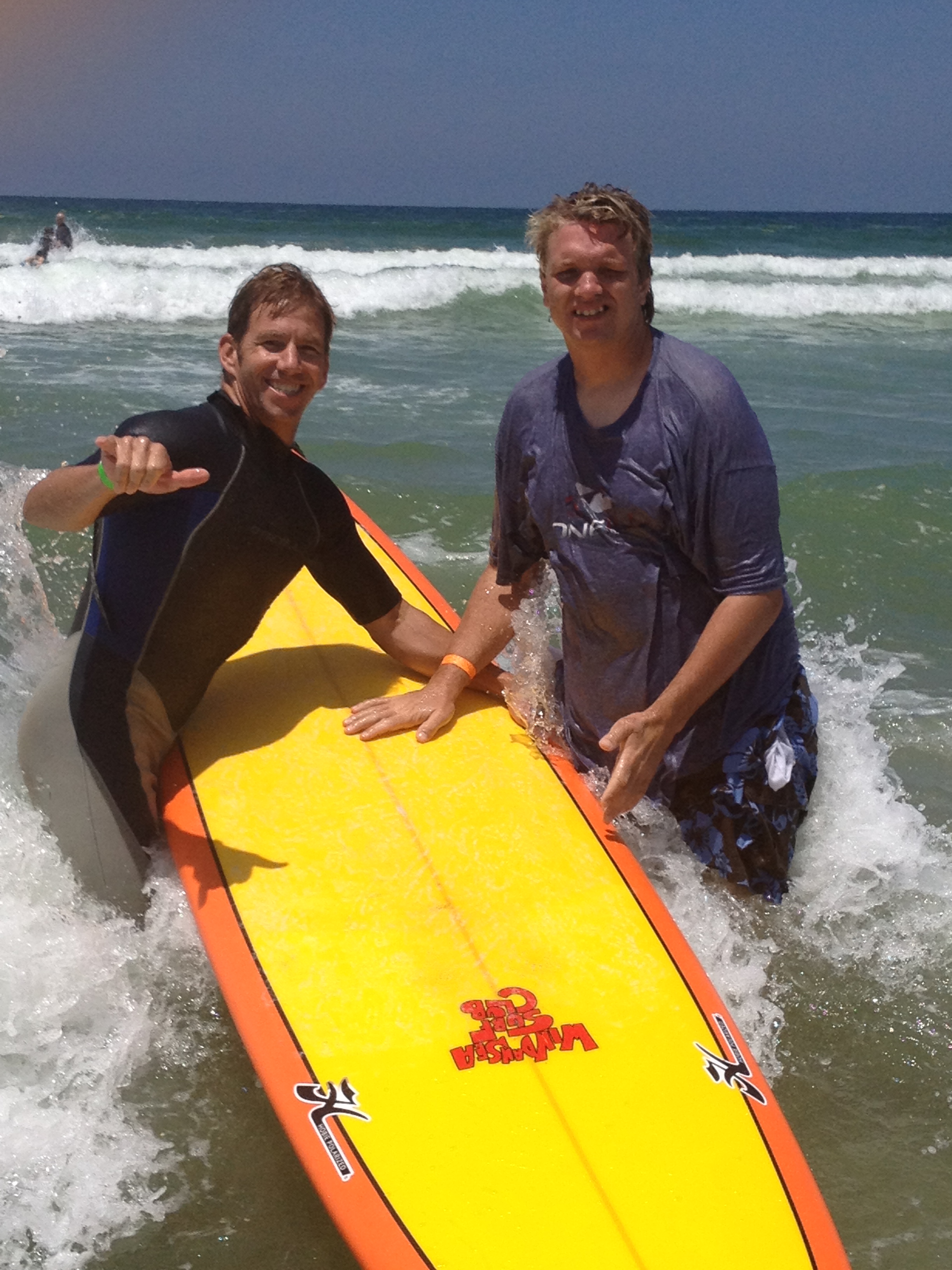
Steve is twenty-five but he had never been out in the ocean much past his ankles before last Saturday, but then again, there are a number of things Steve has never done that most American twenty-five year olds have — driven a car, read a book, spoken a complete sentence.

I like to talk to Steve; he’s my friend, but with us it’s mostly simple signs and growls. We growl well together.

My friend Daniel also has a disability. I know lots of people with disabilities. I like them the best. They are happier than anyone I know just to see me, and I never feel a need to prove anything to them or saying anything ritualistically weird like is required with my “normal” people. My friend Daniel’s mom told me once that he used to stand at the ocean and order the waves to go back. Awesome! Kind of like Jesus, but with Downs.

Last Saturday, Special Surfer Day at La Jolla Shores, Steve went into the ocean up to his waist, lay down on a surf board, allowed himself to be towed out to where the waves were setting up, and then surfed to shore on his stumach. We called his mom from the beach to tell her.

One of the leaders of the event told everybody. There were a few humid eye lids under the canopies — salt water.

Steve lay down on top of fear and rode it to the shore.

I hooted!

On his second ride, Steve came up out of the white water bloody. He had taken one on the forehead. I gave him five, and we took him to the lifeguard.

“He can’t talk, I told them,” although that isn’t totally true because there is the growling and a few words and the signing, I said that so that they wouldn’t bug him too much with questions and frustrate him.

I was proud of him. I told him so. It was a small cut.

“You’re a real surfer now, ” I told him. “Real surfers all have scars!”

He was happy. We went home happy. I like the beach! I want to go back this summer with my daughter Roz. She isn’t “normal,” whatever that means either. She has seizures, so we always have an eye on her at the beach, but what a water dog that girl is! She loves the ocean!

What is it with the ocean?

My precious ones — they rule it.

Being serious is way overrated.

Snarled up in the clutches of our worries about our health, sanity, money, family, work or waist lines, we may fail to see the droll, weirdly funny, hilarious angle on life.

Wry is good medicine for a bad bout of over-seriousness.

Mr. Mark Twain was particularly adept at ham and rye and cultivated the habit of being oddly humorous as a salvific way of life.  Mark said things like:

“Clothes make the man. Naked people have little or no influence on society.”

He also famously remarked,”When a boy turns 13, seal him in a barrel and feed him through a knot hole. When he turns 16, plug up the hole.”

Dorothy Parker had it too, the wit and wild thing going on too. She was a bad girl.  She and Twain would have been a hoot together.

“I don’t care what is written about me,” she wrote, “as long as it isn’t true.

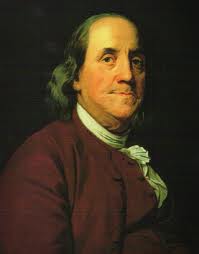
Consider Ben Franklin. Respectable, right?

“Three can keep a secret if two are dead.”

Or Zsa Zsa Gabor. I wonder how Zsa and Mr. Franklin would have gotten on?

Zsa Zsa: “He taught me housekeeping. When I divorce, I keep the house,” or “A man is incomplete until he is married, then he is finished.”

I know Ben would have hooted over Zsa.

More wry is needed, to help us laugh, and to wryght wrong and wrong wryght thinking.

Who was it now, who said:  “He who has been forgiven little loves little”?

Wasn’t that Jesus, being a bit wry?

Wry? It’s good company, with just a touch of bad manners.

I’m with Groucho Marx, “Those are my principles. If you don’t like them I have others.”

“A strong man who has known power all his life may lose respect for that power, but a weak man knows the value of strength and knows, compassion.”

So says Dr. Abraham Erskines, the German defector who injects stength serum in the anemic, weakling Steve Rogers who is about to become Captain America. Steve is the right guy to get strength serum. He has the character to handle it.  Strong, he goes out saves America by sacrficing himself. Steve’s a good guy.

In Shakespeare’s “Measure For Measure,” on the day before Claudio’s scheduled execution, Isabella pleads with Angelo to spare her brother, but Angelo refuses mercy. Frustrated by his heavy-handedness, Isabella cries out:

O, it is excellent to have a giant’s strength, but it is tyrannous to use it like a giant.

Isabella could have used a Captain America before America but not, of course, not before captains or tyranny. She needed a gentle giant, an enlightened tyrannt, a man tempered by fire. She needed the man who had been weak so that he knew how to use a giants strength, not as a tyrannt.

Weak and strong, everyone of us knows some of both, and it is one of the neat tricks of life to know how to balance the two. Paul Tournier, the brilliant Swiss therapist and writer got at this quite nicely in his book The Weak and The Strong. Tournier points out that really, depite the way we present ourselves in public, all of us are both weak and strong, and that we need to stay informed by these two parts of us in order to live sensitively and wisely.

Strong and weak, we need to get used to both becauses both are on life’s docket for all of us, and getting this right could make the world a lot easier for those who have to live with us.

This morning I spoke to a friend whos was saying that his mom had deteriorated, mentally. She could remember some things perfectly from years ago but couldn’t remember something he had said to her only a few minutes before. Another friend, listening in said that she had visited a retirement home recently, checking on a place for her parents, and that it was a bit shocking to see professors, doctors and writers in the fascility who could barely function anymore. Their brains had worn out.

No shame in that.

It happens.

The strong will one day become the weak, and some who are weak today may well be strong tomorrow.

What to do?

Well, all of us might do well to work at staying humble, because we certainly are not, nor will we ever be, in control of all that comes to us. If weakness comes then we would do well to use that as portal through which we might gain a beautifully gentle perspective on the world. And we might stay hopeful too, that we will have an opportunity to use power for good, learning and doing good whether weak or strong.

Perhaps it would be healthy for many of us to allow ourselves to admit and experience our weaknesses more, particularly if we plan to go out and play at being Captain America tomorrow. Say that happens, say we become a kind of Captain America in the future.  If we stay in touch with our intrinsic weaknesses, then we will have the best chance to avoid becoming  tyrannts.

Another Paul, centuries ago, commenting on this weak and strong thing, got right to the issue.

“When I am weak then I am strong.”

Bingo!

The disparity between what I want and what I get can be uncomfortable for me.

I have this, I want that — ah.

This morning, another option occurs to me.

This morning, I open my bag of steel-cut oatmeal and put my nose down to top and, ah — a fresh, oaty, grain-kissed aroma rises to greet me.

My wife pushes the button on my coffee maker and ah —  a roasted, nutty, rich java fragrance wafts through the kitchen and surrounds me.

I go out to my backyard patio, which this summer is dressed in green lawn and yellow flowers and silver pond water and sit with my coffee and read the proverbs of King Solomon and, ah — an emotionally-energizing and rationally-enriching concept passes through my frontal lobe.

Wisdom has the sweet smell of contentment in it.

To reach for my cup, to walk to my gardern, to read my wisdom literature, to sit quietly in my garden and reflect —  this is a present-tense good that quashes that ubiquitous, unrelenting universal push for more.

It is enough for me in this moment to be able to walk, to be able to reach, to be able to taste and smell, to be able to sit quietly. It is enough and more than enough in the morning to have someone else in the kitchen to start my coffee for me.

There will be time, in the push and shove of time, for the working out of my good dreams and passionate visions.

But for now, the simple, gentle movements of the morning,  with someone who loves me, far removed from the bluster and press of my daily ambition — so frequently fraught with stress and anxiety — these are most beautiful, refreshing and precious.

Trash collects in known places  — at the base of walls that barrier its movements and in corners that corral it. Unwanted stuff —  dirt, litter, grime, dead leaves, dust, cat hair and lost insect parts — are commonly harbored underneath raised furniture, hidden in dark nooks under car seats, smothered below couch cushions and sanctuaried in small  crannies and  crevices throughout the earth.

This morning I swept the sidewalk along the east side my house. It always needs sweeping. Dead leaves congregate there, and dirt and bits of paper hold daily convocations there too. That side of my house is a trash convention.

Live anywhere long enough and in the same body for any length of time and you’ll know where to find rogue detritus — under the fingernails and hidden in the epidermal creases of all your lesser and minor planetoids, discrete entities and bio-creaveses.

And what about that which is not that? Where might one find something that doesn’t begged to be cleaned up, something that is fresh and new and bright-eyed and full of verve and laced with the gold vein of  future hope and direction.

Where might one find wisdom, that shifting, blowing, migrating essence of smart living?

One might find it, like one finds trash, in common places.

Wisdom shines from every fissure, riff,  nook, platform, roadway, open shelf and wide roof top of the earth.

Wisdom, says one ancient proverb, cries out from every corner.

I believe that. I see wisdom lurking in every experience, hiding within every challenge,  residing inside of the lining of every problem and taking wing within the potential musings of every person. But there is one place, I have noticed, that wise stuff tends to collect most. Within a breathing, heart pounding, dialoguing relationship with the source of all knowledge and wisdom.

Wisdom, the gold of smart living, is found first, second, third, fourth and every other number in the universal catalogue of  numbers —  natural, whole, interger, rational, irrational or imaginary — in God.

Want wisdom? Then ask God for it; go further, cry out to God for it!

Really want it? Then do not let up in this single, beautiful and too seldom actioned request: “God, will you waft wise bits of  smart thought and way down my mental sidewalks and into the tiny creases and crannies of my small brain?

Mind blowingly, He will.

Yesterday, I stepped out of the Apple store in upscale Otay Ranch Shopping Center  a little dizzy. The iPads, MacBooks, AirBooks sat on new, clean table tops just behind me. Their glassy retina displays, screen spinning accelerometers, and thin, silky-smooth metals were still flashing in my head.

Brave, the new Pixar and Disney film was also rattling around in my brain. I had just seen the movie with my daughter Rosalind, and a father-daughter bonding had occurred over the mother-and-daughter-come-to-understand-each-other plot line.  I headed over to Banana Republic,  just across the street and up one-half block, to check out their sales.

But on the way, I took a moment, and I kicked the beautiful shopping paradise scene to the back of my mind.  With my brain’s top-drawer, high-tech mental imagining system, I called up an image of a street in Bluefields, Nicaragua, a street I  had been driven up in a small, Kia taxi just last week.  Here was upscale Southern California in front of me, a BMW on the corner, but  there in  my mind was now a hilly street in Bluefields, Nicaragua, and suddenly I was flying through it in a dirty, loud and rattling Kia taxi.

Dirty, broken, board and stucco buildings lined both sides of the Nicaraguan street; rusted, corrugated metal hung here and there; malnourished dogs were everywhere, sleeping in the road, cruising the sidewalks;  motor cycles with children on the back and no helmets on spun by; a horse was tied in a ditch, grazing;  people, people, people were here and there, on bicycles, in taxis, on motorcycles, walking, carrying things, talking to each other; and  green, green grass and tropical plants backdropped the scene — growing out of the street pavers and the sidewalks, filling up the yards and towering over the small, broken buildings. The jungle had not been dismissed by the city.

And there in Otay Ranch Shopping Center, with Nicaragua in mind, something inside of me unsettled. I felt lost.

The movie that I had just seen, Brave, was about a break in a mother-daughter relationship. The relational riff was symbolized in the movie by a rip in a family tapestry hanging in the family castle, the rip falling right between the mother and her daughter.  It is a universal theme, mothers at odds with daughters, and it will sell well.

But there is also a rip in the social fabric of the whole earth’s beautiful family tapestry.

Upscale Southern California — rip — downscale Eastern Nicaragua.

The images are juxtaposed upon the earth, and not by way of the Diptic  app on the iPhone. The  pieces don’t go so easily together.

The rip exists side-by-side in the real world of living, suffering, pleasuring, hoping human beings, but it geographical gap is so wide that we don’t often notice it.

This social contrast is always present, the rich and the poor, but it doesn’t often show up on iPads and movie screens and it tends not to sell too well.

Questions occur in my bifurcated, image-torn and now  partially disturbed mind.

What does it mean to not have enough?

What does it mean to have too much?

How does too-much, help not-enough  in ways that empower and maintain dignity for not-enough, and that are sustainable for both?

I don’t know for sure, but I know that doing nothing, nothing for the poor in my own country and nothing for the poor in other countries  is not an option that I feel comfortable with anymore.

I am thinking about another trip. I am thinking about clean water filters.

This comes from having seen it, not on a computer or in the movies, but with my own eyes.

I am uncomfortable.

My world is ripped.

I am not okay with doing nothing.

This is a good thing.

This morning on the way from the airport to our accommodations on Corn Island, we passed by a beautiful new home being constructed. It was stucco with beautifully shaped windows.

Around the next corner were dirty and rusted wood and tin shacks.

Last week I had a delicious chicken shish kabob. Today I am sick. Perhaps it was the chicken. More likely it was the delicious fried shrimp eaten more recently, or some predatory bacteria living in it. I’ve had nothing but water today. I can’t imagine enjoying food. I take a travelers antibiotic and wait.

In Soweto, South Africa, I once sat in a tent and worshiped with the Zulu. The floor was dirt. The worship was full of pain and loss, but it was also thick, resonate and noted, more than any worship I’d ever heard before, with love.

In 2008 I went to my office at my church and cleaned out my desk and book shelves. It was a broken moment full of hurt and anxiety and pain. 20 years of success ended in a cardboard box. Only two months later, I carried those boxes into a new office and began a new job in a different church that would come to duplicate and even surpass the success of my earlier work.

I now have a friend who smokes crystal meth. But I was privileged to lead him to accept Christ. He has a family of nine children with one more on the way. His children are good; they are beautiful. I love them. But his drug addiction is ugly, selfish and destructive to the whole family. He is trying. The war between the beautiful and the ugly is not over in his life. Nor for any of us.

Out of a mountain, on top of Corn island in Nicaragua flows an amazing jungle full of tropical flowers and fruits and iguanas. Out of the same mountain flows a polluted stream, full of black water, trash and E coli. Impoverished children play near by.

This was and is and it will be so again and again. I could go on about this as long as the earth has and does and will exist.

The beautiful and the ugly live next door. The sublime and the broken are neighbors. We live in an abused and loved world — full of splendor and horror.

Today I am a bit discouraged. I am sick and far from home. Tomorrow I will be home. I will be happy.

This is life as we know it – replete with wretchedness and laced with beauty.

Posted: June 18, 2012 in beautiful
Tags: , , , , ,

I woke up with the jungle birds singing like crazy to the rising sun.

I awkwardly descended the ladder on my bed and went outside. The air was cool and moist and earthy on my cheeks and shoulders.

It had rained hard in the night.

In front of me was a pile of light grey blocks. The jungle had its light green arms around them.

The blocks sat organized in both their vertical and horizontal obediences. Yesterday we order 200 of them off the ground. Now they sit on each other as part of the rising school.

Last evening, Past Vital and I stood and admired them. “It’s good,” he said. “It’s very good,” I thought. I looked ahead. I could hear the voices of los ninos, the ones yet to come, the children in Rama who don’t have a good place to learn.

It is all in Pastor Vital”s head, a school,a church, a clinic.

He has already done this kind of thing in Kukra Hill and Bluefields.

“How many more do you have in mind?” I ask him.

“Fifty” he says and we both laugh. It can’t be fifty, but it won’t be three.

He has it in mind to fill up spaces around him. . He will not be put off. The rough concrete blocks mind him. Yesterday I saw it. Today I will see it again. They mind his vision.

I like it, this big dream, to push back a jungle and line up some blocks, to push back more ignorance and poverty and sadness and bring order and love.

Yesterday some of the boys in the neighborhood came and helped us. Two of them stuck a stick through two concrete blocks and carried them around to the back of the building.

They are the future builders of this community.

Yesterday about fifty children showed up for our team’s presentation of Noah’s ark. When we broke out the parachute one of the littlest girls cried. The big billowing
red and yellow and blue sheet overcame her.

Someone carried her to the side and looked for her mother. No mother came forward. Then a slightly older girl came rushing to her to hold and comfort her.

This is what the blocks will do. The blocks will make a place where one will rise up and become a leader or a pastor or a teacher and care for another.

Visions work. The blocks in the jungle will work.

Life is hard here in Nicaragua.

But we have been able to be a small part of making it better.

20120615-160959.jpg

Posted: June 15, 2012 in beautiful, people

It’s raining very hard: the sky over the jungle is a waterfall.

The air Is full. Lightening brightens the sunrise. Thunder pounds and pounds above me.

The rain lets up. I can hear it on the jungle leaves, on the concrete walk below my porch, on the corrigated roof.

The birds chirp and sputter in the flood, welcoming the rain, happy with it. It’s life.

The frogs sing from their hidden places.

The rain picks up again. I can read the volume in the volume. Louder is more. It’s loud.

The yard fills with water. The grass is now a lake.

Nicaragua knows how to rain.

Yesterday in Kukra Hill we walked to lunch in the mud.

A young girl strolled by barefoot, carrying her sandals. Nicaraguans know rain and they know mud.

In Kukra, Pastor Joel has it in his mind to start a university. He is thinking ahead for los jovenes. He is thinking of the young girl with the muddy feet.

It is pouring rain in Pastor Joell’s head. His mind is a flood. It is loud. His mouth is a lake. It is full.

In Kukra too many of the beautiful young women have babies that someone beats. Too many of the jovencitas are prostitutes, servicing the men who have come far from home to work in the palm oil industry. The men walk in the mud too and play games on the porch.

Who is thinking about them? In what way are they being thought about. Who has it in his or her mind to a better future for them, to make an opportunity for their children?

The sun is up now. The jungle is a thousand shades of green. It is because of the rain.

The rain slows to a mist.

I sit here wondering.

Who will make the young girls, and their babies, who walk in the mud, sing in the jungle?

I think that the one with the rain in his head, he will do it.

I pray that what it will be will be loud.