DSCN0170When I stuffed her head and arms down into her body cavity, one of the detached and dangling arms got hung up inside of her torso and I had to pull her out and try again.

What is it about bodies? They are so uncooperative!

The next time I was more succesful. I shoved both her  arms, her dismembered head, and her trumpet inside of her, then I picked up her folded body and jammed it  into the cardboard box in front of me.

I duct taped the top closed.

My Christmas yard angel was packed up —  trumpet, arms, head and all —  to close out another Christmas season.

But not all of life is that manageable.

On my wife’s way home from work this week, she experienced chest pains. They were so painful, she drove to a fire station and the fire people called an ambulance and it took her to the hospital.

As I stood and watched strangers load up my wife — stuff her in a big box with wheels on it —  I could feel it. I might have some kind of modest control over my Christmas angels, but other really important matters,  way out of my control.

By the time the whole ordeal was over, fortunately, all my sweet wife had to recover from was tape.  Transdermal nitroglycerin patches, tape patches for her heart monitor — when she came back home, her skin showed the wear and tear of too much tape.

We were fortunate. She didn’t have a heart problem. She is home; we ate ice cream with chocolate sauce and whipped cream today to celebrate my birthday, life is good.

But it’s a reminder, this little detour to the hospital. We are fragile, and we aren’t much in control of some really significant things.

Whether we are being stuffed in a box, tape up by doctors, or just commuting home with the full expectation of arriving safely, life can happen, and in a moment life can change.

One day we are out in the front yard blazing with bright lights and glory, the next day we are in a box in the back of the garage — or in the ground.

We have less control than we think. We can be boxed in a moment.

But it’s okay. I’m okay about this and good about that, because it has come to me that God has more control over our lives than we have ever imagined and if he has more good for us we will have it, and if he doesn’t, we won’t.

The length and even the quality, of our lives is not in our hands, very much. Yes we can eat well, or not, and exercise, or not, and that makes a difference, and we can drive home carefully, but in the end there will be an end that we won’t determine.

It’s come to me, even this week, through circumstance and through revelation, that every good thing that happens to us, every success and every bit of progress and every bit of wealth and accomplishment and every moment of safety and every delicious bite of ice cream with people we love and every bright moment in which we light up the yard, and every return home — it is all given.

The power to live, to shine, to avoid being folded into the box — given.

Are you alive? Give thanks!

The ScreamNow the world is outraged! It is 2103. We  think of ourselves as a modern, civilized people, but a 23-year-old woman has died of injuries sustained during a brutal gang rape on a bus in India.

We are aghast! But not enough.

It is noted in the popular press that India is a country with the world’s oldest religion, the largest democracy, and one of the fastest growing economies, as if old religion or large democracies or strong economies don’t tolerate rape. We know otherwise.

The religious, the democratic and the prosperous — they rape.

Certainly the way things are done or not done in India is part of the problem and should be addressed. Indian law doesn’t recognize rape committed within a marriage. It doesn’t count acts of oral sex as criminal rape. And it doesn’t allow for rape of men. India is slow to prosecute rape cases. Indian law enforcement does not do enough to protect its women from being harassed on its own public busses and streets.

We are offended! We should be. We focus our offence: India has a problem. It does. Indian laws, perspectives and protective measures need to change. But the problem is not isolated to India and it extends beyond rape.

Rape is an act of violence, and we Homo sapiens are a violent species – world-wide. We want to point the finger concerning sexual brutality at India. The statistics point everywhere. I live in the United States. My country is no exception.

The American Association of University Women reports that up to one in four American women experience unwanted sexual intercourse while attending college.

According to Stephen Donaldson, president of Stop Prison Rape, in the United States, more than 290,000 male prisoners are assaulted each year. Prison rape, says Donaldson in a New York Times opinion piece, “is an entrenched tradition.”

Studies indicate that people in the United States with developmental disabilities are four to ten times more likely to have acts of violence committed against them. Other studies also suggest that up to 68% of girls with developmental disabilities and 30% of boys with developmental disabilities will be sexually abused before their eighteenth birthday. Research suggests that 97% to 99% of abusers are known and trusted by the victim who has the developmental disability.

That’s shocking! That’s not. That is who we are, and that is what we are doing.

Everywhere, in India, and in the United States of America, in our wars, our prisons, our hospitals, our schools and even in our homes, we are systemically violent people, and everywhere sexual violence is semi-tolerated. We are habitually violent. We use force to get what we want – sex, money, revenge and control. And we are calm about that too much.

What we have world-wide is a crisis of violence against persons. Let it be talked about. We humans are habitually, systematically, consistently and brutally assaulting each other! We have a problem — all of us! We have governmentalized, commercialized, sexualized, and sanctified violence. We are violence machines; we know it, and we go with it, on and on and on.

Over 60 million lives were snuffed out in World War II. Over 60 million human beings! In our time, in our father’s generation, in our grandfather’s generation, we trashed and dumped 60 million bodies.

Of course, there were the causes, and the forces that had to be stopped, and the rationale and the reasons and the explanations and the conclusions, and yet 60 million lives, young lives were abused, shot, blown up, diseased, hacked up, experimented on and even incinerated alive.

We can’t dodge this reality! We are a violent species. We have been massively violent, recently — and not only at the level of Indian females.

We are aghast! We are not enough so. We are offended! We should be. World outrage does not match the depth of the affront or drive to the core of the problem. A more appropriate aghast-response is needed.

We should be much, much more offended than we are offended. We are under-offended!

Our aghast-reaction is underwhelming! There is not enough marching, standing up, protesting, lobbying, arguing, researching, understanding, confronting, problem solving and reforming our world’s life-style of violence.

We are under-responding to the insult against women and against bodies worldwide. We are not protecting bodies, everywhere. We must face reality: We have a planetary tradition of insulting bodies.

Aghast, the aghast must not stop, the sense of horror must not be dulled by the neat explanations and the nicely organized war museums and the moving on of popular culture and the unimpassioned explanations in history books and the under-reaction of the news media with their quiet sentences and civilized, standardized reporting and their pointless end-stop punctuation.

We should begin to change this, all of us, now, yesterday! We are too quiet on rape! We need more crying out! We should go into violence-correction mode, with no end stops. We should not stop shouting that the current world-wide violation of bodies is totally unacceptable to all of us.

A world-wide movement protest against rape is needed. A world-wide protest against all forms of violence is needed. The violence we are allowing is simply not acceptable for human beings.

Our very bodies need to cry out for themselves, “Respect us! Honor us. Do not touch us without our permission. Our skin is a boundary that all of you must honor! Leave our women alone! We require that our developmentally disabled live without being sexually assaulted!”

All bodies, sick, well, male, female, disabled, not disabled, foreign, family, friend, near, far, small, large, gay, not gay, religious, not religious, foe, enemy, different, the same — they should be given nurture and care and love and protection – always!

Bodies of the world, unite.

Randy Hasper

Randy Hasper

Lethe, the river of forgetfulness, was one of the five rivers of the Greek underworld, the other four being Styx (the river of hate), Akheron (the river of sorrow), Kokytos (the river of lamentation) and Phlegethon (the river of fire).That’s a nasty bunch of waters, and I’m not boating these if I can help it. Instead, I’m chosing to float another stream — mindfulness. These days, I’m remembering — good things.

Oscar Wilde wrote that “memory is the diary that we all carry about with us.”

I’m carrying that diary these days — all the time, a diary of the good things that are happening to my new friends, and I’m liking it.

Yesterday Isabel who is six, and Dolores, who is seven, came to my house for lunch.

“What’s your favorite story,” I asked Dolores.

“The God story,” Dolores said.

Three years ago she wouldn’t have said that. Three years ago her father was rafting hard down that river of fire that is made up out of crystal meth — Phlegethon, flowing hard and fast. He’s not now. No smoking meth; just working in the ship yards, and going to church. Because of this things have changed for Dolores, as well as for her nine siblings, and for her mom too. I’m remembering, and smiling.

Sunday at church I shook Aaron’s hand. He’s a single dad. He introduced me to a friend who was with him.

“How do you know each other?” I asked.

“Recovery,” said Aaron and then he laughed, having outed his friend the first thing.

Aaron told me recently that he was able to buy a house for he and his two boys. He’s so happy. A few years ago, his life was impossible — Kokytos of devastating proportions. Not now. The hard crying is behind him.

I’m remembering. I’m smiling.

Jeanie and I sat down to catch up recently. Jeanie is one of my many new friends.

“I’m telling my daughter that I love her now, ” she told me, breaking a little as she says it. She continues emotionally, “I never used to be able to say that.” Her eyes are wet.

When I met Jeanie she was traversing Akheron. She’s not so much now. She’s expressing emotions. She’s feeling. She’s coming back from the dead.

“Why do you think you’ve changed?” I asked her.

“Love,” she said emotionally, “I’ve found unconditional love. Now I’m able to give it to others.”

But Styx — it’s pervasive.

“I want you to pray for me,” said Robert.

“Why?” I asked him.

“I don’t want to hurt people anymore,” he said. He told us about an incident. He said, “I don’t want to use violence anymore.” He’s done trafficking on the river of hating.

We prayed for him.

Robert lives in a group home. Apparently there is nobody to tell this kind of thing to there. It’s hard to find people to tell this kind of thing to anywhere.

I’m happy for Robert. I’m happy as this year closes. I’m happy because I’m remembering my friends who are abandoning the polluted rivers of the underworld.

I’m with them. I myself refuse to float Lethe anymore. Mnemosyne — I want her.

I have too many good things to remember to be spending time forgetting.

I have too many memory stones to pile up to be losing river rock these days.

I’m remembering my people. I’m remembering my people, my precious ones, the transforming ones who God has given to me, the ones who are floating new rivers with me.

I’m remembering them. I’m happy.

Randy Hasper

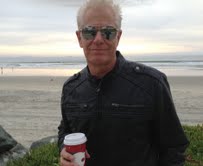
Randy Hasper in CoronadoWe met the Aussies on the beach on Christmas day, waving at them from a distance across the sand, then walking over to them and greeting them warmly. We had actually met and talked to Mona, the Australian mom, in Starbucks only a few minutes before as we met getting coffees, and now here she was again with her son and husband, strolling towards us.

“Are you following us?” I teased.

They weren’t, of course. We had recommended this beach to them. They were vacationing from their home in Australia, and asking questions like,”Where can we best access the beach?” and so we had told them where we were going. They had just come from Hawaii, now they were here in San Diego, then they were going to Washington D. C. and Chile and other places wonderful and distant. Christmas was as they wanted it, away from home,  international, social and interesting, and it was the same for us meeting them here in our home town.

My daughter Laurel and I,  just before spotting them, had been leaning against the big, dark rocks of the jetty in Coronado and talking about finding ways to get out of ourselves, ways to migrate from our obsessions, ways to connect to something bigger than us, ways to place distance between ourselves and our fairly familiar familiarities.

So we talked with the Australians for a while, and then  in parting,  I said, “I’m sure we’ll meet again, when we are in Australia someday and walking down your street.”

Mona laughed and replied, “And we’ll recognize you because you’ll be wearing that same black jacket and Laurel the same blue sweat shirt.”

“Of course we will,” I said.

“I won’t remember you,” said her husband, “because I can never remember people and their names.”

“Then I’ll remind you that you owe me money,” I said, and we laughed.

Only the day before, at church, during the Christmas Eve candle light communion, we had more of this kind of thing. At the service, upon my wife Linda’s request, Isabel came from the row in front of us and stood between Linda and I, and for a moment, just as on the beach with the Aussies, a few of us formed a little, temporary international family. Isabel is seven or eight and on Christmas Eve she was dolled up in a pretty dress with a pony tail in her dark hair, and she stood between us like a granddaughter might and held Linda’s hand and leaned against me.  It was good, very good, because we have history, Isabel, her family, Linda and I, and for a moment, we were without borders.

In front of us in the church were others, new friends from Brazil — Priscilla, Thalita, Lukas and Isabella. We met them at church only a few months before and struck up a friendship. I’ve traveled in Brazil. I love the culture, and since going there I have been hungry to reconnect with warm, beautiful, fine Brazilian hospitality. Through these new friends,  I have done just that, and here, on Christmas Eve, my Brazilian family, was worshiping with me.  At the end of the song-filled, candle-lit, reflective worship, we chatted for a moment at the door and gave each other warm hugs. We are getting to know each other.

Last Saturday, Sebastian, Priscilla’s husband, invited me to attended his daughter Isabella’s birthday party in their home. I went with my daughter Rosalind, and I ate hot dogs prepared Brazilian style — cooked in tomato sauce with spices and onions — and I drank passion juice and ate Brazilian candies.  At the party we sang a happy birthday to Isabella in English, Spanish and in Portuguese.

Isabella, who just turned six, is very shy, but very cute, and so at the party I found myself wanting to win her as a new friend but not succeeding. Then I spotted an art table set up for the kids, and so I took up some colored pens and drew a picture of Isabella and me standing side-by-side holding hands. I gave it to her. She said nothing, but then only a few minutes later I saw that, seated besides her dad, she was adding butterflies and birds and flowers to “our” picture. It was a good start on a new friendship. When I went home, I did so with gifts —  some new friends and a wonderful Panettone, sweet and fluffy and so delicious. Panattone is a sweet bread from Italy, but very popular in Brazil.

My Christmas this year had a pattern running through it.  I liked the motif. I had a Brazilian Christmas. I had a bit of a Mexican Christmas. It was an Aussie Christmas. I want more Christmas’s like that. I’ve been praying for just that.

I have been praying, “God, give me my people. God, give me more people. Please, give me  different people. I want them, I need them, I think that they might need me too. Different kinds of people  are my people. Please send my people to me.”

I think that this is a good thing to pray; I think that this just might be the kind of prayer that gets answered.

P1030619When I was little, I found a safe place high up in a tree near my house.

The first time I climb that tree I saw that above me, higher up and near the top, were grape vines tangled in the branches. I climbed higher, and I saw that the vines formed a kind of roof over me, and so I poked my hands and then head through the leaves and netted vines,  and there found a kind of vine nest, a skyfort — hidden in an upper world.

“Cool!”

I climbed up, and into it, and I laid back, and I floated on my back far off the ground, and I put my hands behind my head, and I looked up at the blue sky, and no one walking by knew I was there lounging above.

That place has stayed with me. Last year, I had the chance to go  back to where I grew up. The skyfort isn’t there any more, but my need for it remains. I still find myself ferreting out somewhere where I might be alone and feel safe for a moment and watch the world pass by below. I need such a place. We all do and if we don’t find it, we go crazy looking for it.

My office, at my work, is a bit of this  kind or place for me, where I meet with people and help them. My bedroom, at home, is such a place for me, where I write and play my guitar and talk to my wife. These places are good, but they are not enough, nor will they ever be.

I spoke to someone recently who isn’t okay —  no skyfort, no place up above it all, where they can go and feel okay. This person has a home, but there is still no place to get away from what he has done and especially what he has not done and fundamentally and intrinsically from the rejection of himself by himself.

“Hold me,” my daughter said to me recently, and so I held her, my own flesh and blood, close, safe, in the arms that have no harm in them but only want to protect and comfort and rescue. And then she let down and rested.  She was safe there, leaning back into her nest of  not-aloneness that exists within the not-aloneness of my care, where she can lounge and  watch the world go by and be okay.

We’re all looking for that kind of okay, but most of us don’t find enough of it. I know I don’t. My daughter either.

Life for all of us is less that we hope for in our moments of hoping and dreaming and imagining what might yet be there somewhere above us.

Needy, we tend to climb life, unrested, looking for a vine-net of affirmation, but usually all we get is a bunch of criticism, a pack of rules and a parcel of lies. They tend to shove us  back, away from each other, and toward the ground. We experience the “not good enough” in the very places we hoped for “your all I ever hoped for.” Even in the places we expected to find the web of understanding, places like marriage, home, church and school, we meet the cool eyes of distancing disapproval.  And then in anger and stubbornness we retreat and sniff out alternate places, dangerous and harmful places of escape and avoidance and brain numbing stultification. Yet these places are not nearly strong enough to hold off the harsh judgments of our peers and of ourselves.

There seems to be no place, to make us okay, because in no place do we find unconditional acceptance.

Except one.

Where is that?

It is in God.

God only, Christ only, accepts the unacceptable heart when it comes to him broken and unacceptable and self-rejected and allows itself to be forgiven, lifted up and held close. There is no other place to go to be okay. No human arms, no social success, no known substance, no  wealth, no hidden tree fort, nothing on the planet or in the universe that can erase the loneliness incumbent in our own failure to love and be loved. This only happens  in God.

God.

One place.

God is the one place in which we unacceptable persons may  begin to be acceptable again. He is a safe place in which  a new okayness can be found,  from which we can begin to recover and look out and gather strength and live and love ourselves and others once again.

God.

He is a skyfort.

2011_0617Nicaragua0509“Would you be willing to help?” I asked her as we stood in the door together, framed in old oak.

Maria is Peruvian, from New York,  living here in California, away from home,  trying to make a go of it with her daughter and husband in a small apartment. San Diego, California is a foreign place to her, as it is to so many of its residents.

“Yes, I will, ” she said.

“You can think about it,” I hedged.

“No, I’ll do it,” Maria responded quickly.

“Great,” I said, “then will you go downstairs before you leave today and tell  Jeanie that you’ll be on her team?”  Maria left me, smiling, to tell her new team leader.

It was good, how she was so quickly willing, and it was good, because we needed her. We needed her to help us give more food away, because in our church, we are aiming for an outrageous generosity, and that takes a group. I gave her a hug. Love felt present.

I looked at her smiling face, more visible to me than only moments before, when she had been just another face among the 160 people in the room, one of many, sitting and watching. But now, standing in the doorway, there she was mattering. She was suddenly more included, and she was just perhaps,  becoming more Californian. Asking her to help — it seemed to make a bit of home for her here.

The ask, the response — it’s needed, by all of us, because we are too much alone, and because there is a huge amount to do when we set out to be generous, and because generosity is best done by a team. Every good NGO and every effective nonprofit knows that.

It has come to me of late, that asking is an art, unpracticed by many, and responding  is an art too, also largely neglected in its various subtly shaded nuances.

The art is in knowing who to ask for what, when and how.

It’s interesting, however, that asking and responding doesn’t always go well.

The very same day that Maria became a member of our food team, a homeless friend of mine came to the church and asked me for food.

I said to him, “I can’t help you right now; I’m meeting with someone.”  He took that well and went back to his car.

But then I saw that I had some home-baked cookies on my desk. At that moment, suddenly I felt like a bon vivant, expose for surfiet. I ran out to him, before he could drive away, and gave him the cookies. On his car seat was a powerbar, partially eaten. He look horrible. I felt badly for him. He was so broken, so irresponsible, so alone, so done.

I had told him only two days before, to come at noon for food that day, and that at that time he would get a really good bag of food from us, but he didn’t. Instead, he came on his own timetable, later, even though he has nothing to do, and it didn’t fit our schedule at all, and the best food was all already given away. It was also the case  that he has often ignored the opportunities to get food when we give it out, and then come late, asking just after we have finished our day’s effort.

So I said, “no,” and I felt okay about it.

Some people are in the habit of asking, too much,  at inappropriate times, for things they should be providing for themselves. My friend is one of those people.

It’s an art, asking, and an art too,  knowing when to say “no.”

I like asking people for things, and I like saying “no” when that’s the best response — for them. More asking is needed, to get more important things done, and more saying “no” is needed, to people who should be doing more for themselves.

Considering the issues our world faces, there is too much asking that is quite simply selfish, and there is not enough asking that is deeply rooted and nourished in love.

Our broken planet and our scattered people need massive amounts of help, but too many us are not taking the responsibility to do something or to ask others to. Why? So many reasons.  We ourselves are selfish, and we tend to our own affairs rather than others. And when we do serve others, some of us really prefer to work alone, or we say we do because it is “easier.”  It is not. There are other excuses.  We say, “people are busy,” and that “We don’t want to burden them,”  and they are, but it is often doing a bunch of things less important than helping others.  And, we are afraid to ask people to help, because we are afraid of being told, “No, I can’t,” with perhaps the implication, “You are making things so awkward by asking.”

None of that is really it.

The real hold back is that we don’t have enough love in us. It is not selfishness that holds us back, as we might first expect, or fear, or awkwardness.  It is love, a missing love that holds us back, because if we store up enough love inside of us, that love will totally suffocate and annihilate selfishness and fear.

The world clearly lacks love’s driving passion, love’s “ask,”  love’s intrinsic leadership, love’s deep desire to make a place for people to belong and to have what they need. There are so many things that need to be done, like feeding people who don’t have enough to eat, but so often, most of us don’t really believe in the importance of such things. We can tell because we are doing nothing to help, or to ask others to help.

We ignore the things that most need doing, things like valuing children, like healing our earth,  like protecting people from violence,  like being there for the victims of sexual abuse,  like making sure kids grow up with a chance to learn, like mentoring a young person,  like helping someone who is marginalized find a new place to belong.

Something is missing in us, a passion to help is missing, and the courage to ask for help is missing, but gladly, it is something that we can change. We can make the choice to make important things matter. We can say “no” to lesser things. We can choose to love. Love is a choice that acted on, brings passion along with it, and it has a natural momentum that pulls others in,  and it is a choice we can make at any moment and in every moment of life. It is a choice to see, and to act, and to value others, to help them to stand out, from the room.

We can stand in a door, and we can see a person in front of us, really see them, see who they really are, and we can do something needed for us and for them.

Love, it’s good. Love see’s who’s there. Love is strong and powerful and much needed to fix what can be and  needs to be fixed.

Love, we need it more — it makes the ask.

DSC00814“What class would you like to teach?” she asked me at the end of the interview. I hadn’t expected that.

I had only walked into the English Department office at this California community college a few days before, and now I was being given a chance to choose the class I wanted. I left the campus excited, surprised, thrilled!

Opportunity knocks; perspicuity answers. I choose to teach “Critical Thinking About Literature,” because I wanted to think and read stories and teach students to do that with me. I choose well, looking back, because I thrived on teaching this class, and by doing so, I realized a long-standing passion — to teach college students literature.

Sometimes we get to knock out the opportunity-that-knocks.

How does that happen? We usually have to belly up to the fact that life’s opportunities don’t come knocking that much, particularly early on, when we are new to the game, young, or a novice, so we have to go knocking.

A few years earlier, on a trip to Brazil with some students from my church, I got to talking to a pastor I worked with about how important children are to a church. I enthused, I gushed, I fired him up, and myself too, and I made a decision right there to write a piece on how to creatively ramp up the positive attention given to children in churches. When I got home, I wrote the article, and then I sent it out to the best magazine in the field. They bought it, to my surprise, and I realized another dream I had been sheltering for years — to be a published writer.

It’s tough when we are young to figure out how to do what we ache inside to do but aren’t sure we can but want to try anyway even when we haven’t tried yet. What to do, what to try, are we good enough? Will it be a mistake, can we live with failure, do we  really want to do it? Does it sound to good to ever be true, are we worth it, can we cut it?  The questions mount, and sometimes come to loom high, like formidable Annapurnas jutting into skies of impossibility.

We should knock anyway. It is worth moving, in a particular direction, when we think we can. By an approach march, we test what is possible. Every journey has its uncertainties, its headwind, its steep pitches, but we don’t know if we can push past these until we try. Trying is not overrated. By trying, even by failing, we learn what we can do and what we can’t, at least at that particular time.

I’ve applied for teaching jobs I didn’t get. I’ve written articles that were rejected by editors. I have sometimes even felt that in these very special areas of personal giftedness, I couldn’t cut it. And I’ve come to see that this is normal. In every area we attempt to succeed in, at some point we will feel inadequate, temporarily frustrated, even done.  And yet,  despite some set backs and disappointments, my chosen careers — teaching and writing — have been my sweet spots, my personal playgrounds, my lovely battlefields, my sacred spaces for thriving and succeeding and making a difference.

I play the guitar; I’ve done so for years. I’ve written songs; I’ve led worship, but the guitar has never been a sweet spot for me.  I have never been paid for my modest guitar skills, I don’t have a good singing voice, and I have never had a song published. I’ve had fun with the guitar, and enjoyed playing on my own, but through experience, I’ve learned my musical limits, and I’ve come to see song as a sidebar for me,  a fun diversion, not the main thing, an appetizer, not an entrée, and this realization has been good for me. It has kept me from wasting too much time with a pick,  and set me to spending more time with a pen, and yet my awareness of the  place of music in my life has still allowed me a fair of amount of pleasure banging out some minor, partial, and power chords at home.

Opportunity — I’m still knocking. These days I’m thinking about what is next, creatively, and I’m looking inside the developing me within the very me of the quintessential me. What can I still do? Where should I yet knock?

The best place to find this answer lies inside of each of us. Other friends and family and counselors can help, but it is crucial that we come to own our own passions. We must, to be genuine, to be authentic, to keep moving toward an inward sense of success,  honor our own unique skills, treasure and safeguard our talents, and resource the opportunities we secretly burn for.

We all will do best when we begin to move towards what we want to do that no one has to tell us to want to do. We must trek toward the thing that gives us pleasure while at the same time that scares us like crazy.  We must go ask for what is reasonably possible and yet is so beyond what we have ever done before that we  fear  that we will not have the energy, intelligence, skill or opportunity to do it.

Our passions, I’m for taking a swing at them.

We just might knock out the next opportunity we knock on.

Randy HasperI didn’t see Carlos hit the old man, but he did, hard, right up side of the head, with his fist, and the old man bled just above his right eye.
When I went over to check things out, Carlos was looking dour. I could see that the world had gone down hard for him. Larry, who knows Carlos, told me that Carlos is homeless, living in his car and scrounging for every bite.

Carlos denied hitting anyone.  Then my friend John spoke up and said, “I saw you hit him,” and pointed to the old man.  But Carlos wasn’t to be pinned down, and seeing that his lie didn’t work, he said to all of us menacingly, “What I do in my family is none of your business!”

Tiffany, standing on the sidelines, spoke up, “I know about abuse, and it isn’t okay.”

I took my cue her. “We’re not okay with abuse and with violence at the church,” I said. I wasn’t sure what Carlos would do next, but whatever the outcome, I was acutely aware that the whole thing was brutal and sad, for the whole lot of us, standing there.

Then I told Carlos, “I don’t mean to disrespect you, but you need to leave,” and he did. I then turned to the old guy who got hit. “It’s nothing he said.”

“No, it’s not nothing,” I said. “It was wrong for him to hit you like that? Why did he do it?”

“He’s just like that,” he said.

I went and got some medical supplies and I wiped the guy’s cut, and I  put a bandage on him. It was only then that I noticed that he was shaking. He had played in cool, out of fear, at first, but now that the threat was gone I could see how horribly upset he was. He too was homeless. He told me that he was afraid that now Carlos would come get him. I suggested he move his camp. Then we fed him dinner, in the basement of the church, along with the hundreds of others who came for the meal.

Three times the guy who was hit came back to me before he left, and he thanked me for caring for him for standing up for him.

Then I got a plate of hot mashed potatoes and gravy and sat down with some older Hispanic ladies who lived near by in the Congregational Towers. They were super cute, and friendly with my daughter, who tried out some of her Spanish on them.

The food was exquisite, and the company too, except for Carlos, but he just needed a boundary drawn, and maybe he needed that more than a meal.

A grandma told me that recently when her granddaughter was at her house, and the little girl was jumping on the couch. she told her, “Please don’t do that.”

The granddaughter said, “No.”

So grandma said back to her, “I’m not asking you, I’m telling you.” That settled that. Another boundary drawn, and so we civilize the world, protect our couches and our heads.

A little while later, the granddaughter asked for something and the grandma said, “No.”

The little one, two or three looked at her grandma, thought a moment, and said, “I not asking you; I telling you.” Grandma told me that she really had to try hard then, to keep from laughing.

We all need more, more boundaries, and more love too. Maybe no one told Carlos “No” enough when he was little. Maybe they told him too much.

On Sunday, Angelina came up to me. She put out her arms and gave me a hug.  She’s five.  Pretty soon she was back for another hug. I picked her up and gave her a big squeeze. I love Angelina. She looks like a little fire plug. Last year I sponsored her for Christmas and bought her a polka-dotted dress and a sketch a doodle. We’re good together.  She came back for a final hug before the morning was over.

Alex also came up to see me after church.  Alex is in his twenties. He has a learning disability.  “I’m getting baptized,” he told me proudly. Alex  has found a place, and some people, in our church, to make a little bit of a family out of, and be loved.

At the end of the morning Elizabeth came by. She too wanted a hug, and took three. Elizabeth is about fifty and learning how to make it on her own for the first time in life. She handed me a letter. “I just need to tell you how I’ m feeling she said, “I’m doing much better.”

We need more, more protection, more acceptance, more of a sense of belonging, more affirmation, someone to hug us, someone to read our letters, more love.

I wonder how Carlos is doing today?  What does he need? What put all that hate in him? What could take it out?  Not punishment. Not prison. Not rejection? Not religion.

I think that he just might need what we all need, more love.

It’s my humble observation that heaven overlapps earth.

The other day, I put my head up against my wife’s head, my check touched her cheek, the skin of her face presed up flat against mine and the porous boundaries of our individuated existances merged. We hugged with hugs that only thirty-three years of marriage can hug. We Venn diagramed.

Venn diagrams, and the nature of earth and occassionally a fleeting idea or two about heavenly possibilities, have long interested me. In Venn’s, circles represent sets. The interior of one circle represents the elements of a set, while the exterior represents elements not members of the set. If two circles, representing different sets are overlapped, then the area of overlap represents members of one set that are also members of the other. For example, one circle may represent creatures which walk on two legs, the other creatures that fly. Creatures in the area of overlapp both walk on two legs and fly, for instance, ducks.

The concept underlying Venn diagrams is commonality. One thing which is different from another thing may yet have something in common with it and even crossover into it. I like it; I  have always liked it, two things sharing common space, cheecks for instance, and I don’t much care for “this-is-nothing-like-that!” and the “us-and-not-them” perspective and other various separating distinctions, selfish individuations and nasty polarization. Legs go nicely with wings. I have legs; I wish I had wings. Antithesis and this-has-nothing-to-do-with-that is not that much fun.

Take heaven. What a weird and absolutely bizzare concept. Heaven is the idea that there is a place which we go after we die, and that it is better than this earth, and it is better than Mars and the time-space continum that we, Mars and Earth inhabit! Really? How would anyone know that?

It makes me nervous when people talk about heaven.  I find myself particularly nervous when people talk about who is not going to be there. The “in heaven” versus the “not in heaven” — how would anyone know that?

It is my rumination that the set of things that make up heaven somehow overlapps with the set of what make up earth and that earth and heaven have things in common, and that no one on earth has any accurate idea of what barriers or for that matter, doorways, exist between earth and heaven.

When Jesus was born, the scripture says that “Suddenly a great company of the heavenly host appeared …  praising God and saying,“Glory to God in the highest heaven,  and on earth peace to those on whom his favor rests.”

That’s an interesting report, from a Venn perspective. According to scripture, the set of things that make up heaven include God and angels, the set of things that make up earth include God’s favor. But elsewhere in scripture, Paul, a fairly repectable authority on the spiritual-space continum, says that in God, “we live and move and have our being.” So, if this is true, then earth’s set includes God too, and if we trust Dr. Luke, angels too, seeing they showed up for the shepherds.  So then if  we look at the teachings on heaven in the Bible, we might conclude that the set of things that are in heaven share with the set of things that are on earth,  things like God, angels who talk, and other attendant and following vague-itudes like “peace” and “favor.”

It’s overlap; heaven overlaps earth. Heaven isn’t some kind of alien place. Heaven shares underpinnings with earth. If we do go there, after we die, it will feel familiar. When we put our faces up against it, it will put a warm face up against ours. When we hug heaven,  heaven will hug back.

It is my observation that some people think heaven will be long church!  I think it won’t! Thank God!

C. S. Lewis posited that heaven is found in our longings for a place that is suggested by the beauty and wonder of earth. We see a beautiful mountain. We long to climb to the top. That longing — its’ a longing for heaven, stirred by the beauty of earth. Earth’s mountains have something common with heaven’s mountains and one suggests and creates hunger for the other.

Speculation? Perhaps, but the hints at what-will-be after-what-is-present-now  indicate commonality. Perhaps, earth  does mirror and even contain pieces of heaven, the angels, the peace, God himself. The best of what we taste here? It’s realized and finalized and perfected there. Coal here, diamonds there. Legs here, legs and wings here and there.

Heaven?

I think we might be experiencing a bit of it now.

Think Venn diagrams.

Lately I’ve taken special note of  my appreciatives, my approbatories, my applaudables, and also those small salvific islands of gratitude lurking along the waterways of my supra-conciousness.

I make a grocery list of them. 1. I like being male.  2.I like being married. 3. I like being comedic.

These idiosynratic commendatories are my cognitive Jacanas, the colorful water birds living on my cerebral Lake Nicaragua, and I watch for them as I round the corners of my mental islands,  putting along in my smoking, psychic motor boat, and I flush them out when I can — my favorables. I exult when they run on the tops of the lily pads on my everyday perspectives.

Dr. Christine Carter, excecutive director at the Greater Good Science Center at University of California Berkeley says her research shows that the more we practice gratitude the happier we will actually be. She suggests keeping a gratitude journal.

I respect Dr. Christine, and I appoint her my mentor, and in my mind, I mind her counsel and keep a mental journal of my gratefulness. I prop it up on the back shelf of  my short-term memory and work it over. I  listify my thankfuls, lining them up, one, two and three.  1. I am thankful for my black  glossy cats with their ulta-soft, outrageously fluffy furification. 2. I am thankful for my wife, particularly her drop-dead gorgeous cerebral cortex and the droll and wry desultory three-storied thoughts housed therein 3.  And I like my hazelnut coffee with milk every 6 am.

I love these and all of my other precious gratitudes. They are my safety nets, hanging above the lower levels of my extreme dissatisfactions.  They are my psychological floaties; they keep me from drowning in my own deep waters;  they are my sport’s brain seat belts, clamping me in my as I accelerate hard out of all my life’s sharp corners.

I  trot them out often, my idosyncratic applaudables.  1. I like my house, the big windows and the odd angles of the high ceilings. 2. I like my two daughters, particularly the way the call me “daddy” and sit close to watch TV or just talk  3.  I adore my job, the taylor-made, custom-designed, hyper-precise fit of it. 4. I love God and the way he loves me back and  how he is so outrageously gentle, patient and gracious with me. 5. I like my pain, and how it eloquently informs me about being human.

By laying out my admirables like this, I anchor what I are grateful for in my brain. These positives, these pluses, these commemoratives — they moor me. When I don’t like something about my job, I  coounter that with something I do like about my job. My thankfuls act like my very own team of counter-insurrgents against negativity. I don’t like my work stress, but I do love my work challenges, and so I embrace them, and I go on this way, cloaked with strength.

What will happen tomorrow? I think that more good will happen tomorrow, and if it does not, then I will roof over my losses with a thick thatch of approvables , and this is how I will survive, and shelter my happiness.

I will be thankful.