As I looked up, I saw one of the little ones jumped to a higher rock, slip — all gangly legs and feet — and slide down again from where it had started. It was a mistake of inexperience.

The lambs had been born in February, and now — only the beginning of April — there hadn’t been enough time yet for them to master the heights.

Through the spotter scope I watched three ewes and three lambs hop to another rock, stroll into a grassy spot to munch on the new grown green of spring, then scramble on up the high ridge. They stopped for a moment at the top, white bodies silhouetted against the bright blue California desert sky, and then disappeared.

To find these reclusive Bighorn Sheep, I had looked high, I had looked low, and I had looked  long, through the binoculars, and then –magically –they were present, like unicorns found when turning the page in a fairy tale. They were high in the rocks above me. When the rangers brought over the spotting scope, a small crowded gathered.

“Oh, I see them now. Ah, there are the little ones!”

We ogled and oohed for a while, a community of lookers, looking.

I loved the day in the Anza Borrego desert, the sheep, the fellow gawkers, all the wonders that we saw.

We hiked the cactus loop trail, clomping up the mountain between flaming magenta blooming beaver tail and hedgehog cactus. The chollas glowed all around us as if they had put on halos.  In a nearby wash we found a sand plant, growing by a cheese bush. It looked like a tiny pine cone with purple and white flowers popping from its dry, grey sides. It was small, and we had to kneel to focus in on its tiny flower-decorated sides.

Later we off-roaded back to a Kumeyaay Indian site where we scrambled through round boulders to find mortero after mortero in the rock tops, proof of family and community and lambs and ewes of a different kind previously thriving in the desert.

On the drive home, up the mountain and out of the desert, we switchbacked through the mountain lilac all purple and blue-flamed around us a wild turkey flushing in front of the car, sailing over the top of us to the road side, finely feathered and stately as it strutted down the bank and under the bright green trees.

We chatted as we swept up the fields and forests in our wake, trekking down from Julian and back to San Diego. I mentioned the very young homeless couple who I had found sleeping in one of the classrooms at the church last week. They broke into the church, ate up all the children’s snacks, smashed an unlocked storage cabinet, and when discovered in the morning, explained their behavior thus: “We were hungry.”

That gets it. These young broken ones, addicted to the meth, are very hungry, and I think they will be more and more.

And the mountain sheep and their lambs are hungry too, for the bright green grasses growing high on the ridges, and the Indians too, who lived here long ago, they were hungry, hunching over their morteros in the desert, grinding grain for bread and waiting to eat. And the sand plant hungry and thirsty too for more spring rain to sooth it’s drying sides, and the turkey crossing the road, headed somewhere to feed and drink in safety, and me and my friends too, headed back to our homes, from a day out —  all hungry.

I love the desert!

I need the desert.

It fills me up, just a bit, to live a little more, in a stunningly beautiful and hungry world.

“I’m frightened!” he said and clutched his little bag of chips with both hands. He was sitting on his nanny’s lap. The whale leaping from the water in front of him was way too big. It was a scary, crazy, child-eating whale!

When he left Sea World that day, he broke, on the sidewalk, yelling and screaming. It was all just a bit too much. He was eventually picked up and carried off to the car. He needed a good nap.

“Blessed are the poor…” said Jesus.

The little four-year old, on the sidewalk breaking down, was blessed, I think, because he was poor, and he knew it, poor in emotional reserves, poor in self-control and in poor in comfort. And so he was blessed by his nanny, holding him at the whale show, picking him up off the sidewalk, carrying him home to rest.

There are many kinds of poor, and there are many possible blessing, but it is safe to say we are all poor; and therefore, we might all be blessed — maybe.

There is poor in righteousness. That pretty much covers the globe. There is poor in health. We all get there one day. There is poor in self-control, (which is episodic for all at best), poor in insight, poor in resources, poor in wisdom, poor in freedom from addiction, poor in peace, poor in love. It goes on, and on, and on beyond on until it is obvious that it is all.

Poor, and frightened and screaming, eventually —  all!

On the same sidewalk — all.

Poor — all!

And so all are all blessed, according to Jesus, if I understand him right, if we realize, recognize and embrace our poverty. If we don’t we aren’t blessed because not knowing we need, we won’t look up, won’t ask and won’t say, “Thanks,” and therefore will miss the blessing of being helped.

It is only when we honestly realize that we are poor that we know we need something more than ourselves and look up and get that needed help. Blessed are all the poor who open the door to the rich comfort of God. Blessed are the nannied.

There is one way more that the poor might be considered blessed. They have the opportunity of figuring it out.

Today I’m poor —  poor in peacefulness. I’m upset.

I’m doing my taxes. That’s enough right there to turn the stumach acid pump on. And there is more, much more, of life, to stress over, responsibilities to mangage,  payments to be made,  contracts to be signed and killer whales to stay out-of-the-way of. There is, life! It’s a kind of constantly stressful poverty.

But I am realizing that each moment has its answers, its solutions, its calm-making decisions, if I will just figure it out. The tax questions, after some hard work, are now answered on my worksheet page, and so will all the other pressing business be answered, as I, figure it out.

It is a blessing, to get to figure it out. It is a blessing to have poverty of some kind, to have taxes of some kind, and to have a brain of some kind, and to get to figure it out after some fashion, and to get up off the hard sidewalk and go home and take a rest afterwards.

Poverty is always our blessed opportunity to figure it out.

And so, happy indeed are the poor, for a least two good reasons.

One, they will be helped, if they look up from their tantrum and ask.

Two, becuase they don’t have enough, they get the blessing of figuring something out.

Happy indeed are the thinking, thankful, receptive poor.

P1020582We ripped fabric for the cross.

The house filled with the sound of tearing, then came the rhythmic hum of the sewing machine and then the hiss of the iron and the soft sound of voices.

Soon there were piles of bright thread on the floor and stacks of colored strips, four inches wide — blue, green, red, yellow, black and white. Then we sewed the same-colored strips together. We ironed down the seams and folded the strips into piles of looping colors, each now thirty feet long.

It looked like we were making streamers for the Olympics. We weren’t. The colored strips, representing the nations, will be braded together and draped on the cross at the front of the church at Easter this year.  We have it in our minds — Easter is for everyone!

Steven Chan emailed me this week. His Chinese Bible study group wants to use more space at the church. I emailed back, “Yes, we’d be glad to work with you on expanding your use of the building.”

Ricardo Rivas, one of the leaders of the Hispanic congregation which meets in our building told me this week that their start time is 2 pm on Sundays. We’ll change that on the sign.

When we met to do the Easter basket project on a recent Saturday, the family from Sri Lanka was there, as well as black and white and Hispanic children. The nations had gathered to care for the poor.

On Easter we plan to read the scripture in several langages, Japanese, French, English, Spanish, Portugese and Chinese.

The Sunday after Easter, when we celebrate the communion, and our leader from Jamaica will prepare the elements. One of the members of our food team, from Peru, will hand out the bags of food after the service.

Last week my new Hispanic friend Hugo and I worked on the banners that will grace the staircases to the front door of the church. Hugo and I have a lot in common, a love for mechanical things that go fast, and a passion for all kinds of people to know that God loves them.

The first banner we will put up on the front staircase of the church,  it says, “You’ll fit here!”

They will.

P1020582When I came around the corner of the breezeway in the church, I was a bit surprised to see a shopping cart stuffed with suitcases, and on the hall floor a rectangle of lumpy sleeping bags and blankets. Then it came to me; a bedroom had been set up in front of my office door, the lumps, under the blankets —  people sleeping.

I had just walked to the office from a large room down the hall where polling booths had been set up and volunteers were in place to receive the ballots of people coming to vote in the special election of a new senator.

There the stuff to make a senator; here, a temporary homeless camp.

Sleeping bags, ballots, blankets and voting booths — the ebb of life mixes the levels and layers which ferry us along, some on concrete, some on mattresses, some with acceptance speeches in their dreams, some harboring alarms and starts and stops and frights all night.

I recognized them, woke them, offered a bit of food from our pantry, and sent them off with some little plastic bowls of peaches and a kind goodbye. They had been at church on Sunday and it came to me with a slight shock that I had never before woken parishioners sleeping on the sidewalk of the church.

But really, this is no anomaly. This is life everywhere. The poor and rich rub shoulders all over the world, one huddled under a dirty blanket, one housed and roofed and clean and safe and voted into power not far away.

It is our nature to seek out a compartment, a place, a niche and corner for the classes, the races, the ages and the genders. You live here, you over there, you up high, you down low, you in this church, you in that, you with this role, you play that, you sleep here and you can lay out over there. We tend too much to craft walls of common social bricks, of preferred addresses, and of identical building blocks.

We tend to set up our camps where we get what we want, moving to the suburbs for the schools, the inner city to blend in with our people, moving downtown to be upscale, moving to the country to get away from the city. We move west or east or north or south to find that little nook, that sequestered cranny, that briefly quieted corner where we can toss out a blanket, lie down a moment with our people, shield off something fearful and recover from our differences.

But when I go to my church, and I see the mix, the family who drove over in the Lexus, the family that walked over from the homeless camp, the one who took the trolley, the one who came in the Mini Cooper, the family from Peru, the one from Porta Rico, the beautiful woman from Jamaica who lives alone, the man with the addiction to power, the one addicted to meth, the woman who just moved up from Mexico with her children, the navy couple from the east coast, and I see them sing the same song and lift up the same hearts in the same place, then I know the truth, we are much the same.

Mix, toss, mash, mingle and lump together — the church is a sacred corner, a wooden floor and a cross-covered roof where we may see we are the same. There we all, with hands raised — children of one father, with identical hearts weighed down the same sins, weak and strong all in need of the same forgiveness — there, we cry out to the same savior.

I like the mix.

ExplosivesToday I noticed that my beautiful skin has sun spots on it, lines and wrinkles too — and one bulgy place, near the middle.

Also, I noticed again that my terra cotta kitchen floor has a dark scratch in it. I have a rug over the scratch, but it slips from time to time, and shows the mar.

Today I ate, steadily — therapy for scratches, and spots —  and I watched Romeo and Juliet die eloquently, in Fanco Zeffirelli’s movie version of Shakespeare’s tragic love story.

Life with or without the Capulets and Montagues, feuding in the background, is often far from perfect. Family isn’t perfect, and we aren’t either. Somebody told me recently, “I don’t like my voice; it’s nasally. It sounds like Yzma, the old lady in the The Emperor’s New Groove.” And there is more than that which is not perfect.

Last week, my uncle Jerry’s wife passed away. I talked with Uncle Jerry on the phone last night. He was watching some nature DVD’s, and feeling lonely —  of course. He said that he had gone out to the a swap meet that morning, looking for art, as he always does on Saturdays. He’s incredibly knowledgeable about American art. He was kind of wondering if going out was okay, seeing how little time had passed. I told him I thought it was.

Life isn’t perfect — or when it is — it doesn’t stay that way for long. Nothing survives the clot and rot of time’s inexorable march into dust.

But in our minds we want it good, better and we want it best. Perhaps we too much want it perfect.

Perhaps we want too much the enviable body, the together look, the perfect floor or family or schooled and accomplished self.

But it’s come to me of late what a fool’s errand perfectionism is, a false companion, to us all.

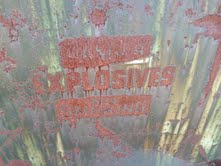
I’ve noticed lately how beautifully imperfect all things present themselves. I happened across on an old rusted trailer last weekend, rotting in a field. There, in the moment, it was a sort of amazing piece of dying artwork,  colored in rust —  a ripped, deteriorating, eroding, fading wonder. It was splendor in decline, but still splendid.

Take the human body. Most bodies, after the early years, aren’t taut, toned, sculpted, curvy or proportioned perfectly. They aren’t like the ones in the  magazines, they are not like the bodies on TV or in the movies. But bodies, not perfectly shaped, not the advertizing standard, not the current culture’s fickle fashion, are yet all amazingly beautiful.

Small, large, skinny, layered, lumpy, protuberant, muscled, flabby — all good. Skin itself  is always beautiful if we just accept it as it is — in rolls, puckered,  smooth, wrinkled, lined. It is all gorgeous and amazing as the protective human fabric we model for each other everyday.

It would be best to be done with wanting things to be perfect. If they are, we should enjoy them as that, but if they are not, and they will be not perfect longer than they are perfect, we should enjoy them just as well.

Exult in imperfection! Take pleasure in used. Accept scratches. Revel in spots. Even, make friends with death.

And, be particularly kind, I’d say, to family, and avoid feuding, with others and yourself. And most personally, be easy on your body, your own artfully deteriorating trailer. Gentle your needy. Honor your cracking voice. Savor your rust! Tender your fat. Love your jiggly parts. Be kind to your scrawniness. Shepherd your shyness and your sadness too. Make friends with your forgetfulness. And love your skin, that sumptuously beautiful bag that yet retains your lovely, sagging warp and woof.

I’m good with that. I advise you, to be happy, be  good with all that too.

I expected skilled and seasoned men.

I got little girls.

They were fine, better than fine. They were more fun than the tough guys; they took orders well, and more than that, they took the job by the throat and finished it off!

I asked the nine year old if she had ever pushed a wheel barrow. She said that she hadn’t, but she was ready to try, and off she went with the handles, plants swaying wildly but getting to their destination nonetheless.

The five year old, she could dig, and stand in the hole up to her waist, and roll a Raphiolepis into it and cover it up with a bag of garden soil.

When the job was done, we high-fived, and I was happy. It was a good workday at the church. My people came out.

Earlier that week, I’d had a similar experience. “Where did you get your skills?” I asked the guy who was kneeling in the doorway, hammering in a new threshold in our new worship leaders office.

“I learned a bit of everything when I was incarcerated,” he replied.

I needed him. We needed him. He was the perfect man for the job, the job of restoring fifty rooms at the church.

I drove him home. We were both happy.

The day after that, it happened again.

I was sitting in my office, with some of my church leaders ” We are a motley crew,” I said and laughed. We all laughed. A quiet artist, a retired school principal, a young Navy instructor, a former media repairmen, and me, the pastor, with an MA in literature from a secular university rather than an MDiv from a seminary — we are the ones driving forward a successful renewal at the church.

It’s Biblical. Jesus gathered a ragtag group of people around him. They got a shot at leading. They did good.

Recently I met with the leader of our food ministry. When she came to us she was a silent figure in the line — now she runs the place.

The transformation is stunning. She talks!

I look at her. One day she was a quiet follower, the next she was an empowered leader. We laugh thinking about it. “I know you can do this,” I say. “With your help I know I can too,” she replies.

Joaquin called me on the phone today. “Yeah I got your text. $1,800 is fine,” he tells me. We discuss capping the sewer, running the new water line.

We are unlikely partners, moving houses, building a big, beautiful new courtyard at the church. I prayed for the safety of his workers the other day after Joaquin and I finished lunch together.

“That was different,” he said, “I’ve prayed for myself, but I’ve never had anyone pray for me.”

Our church is undergoing a fairly dramatic renewal.

It’s being led by children, felons, and introverts, even by those just on the edge of the inside of belief.

A motley crew of successful leaders, bringing about astonishing changes — that’s different. That is so God!

20130302-135133.jpg

P1020582Francis Bacon said, ” A good conscience is a continual feast,” but this sumptuous feast isn’t one everyone eats at.

What is a conscience?

Conscience is our inner voice that tells us what is right and wrong. Conscience is a kind of knowing of self, of knowing what we believe and value, of knowing the voice of right and wrong within.

It may be helpful to note that there are three types of conscience.

First is the silenced conscience. This is a conscience that has been ignored so much that it no longer has a voice, it is silenced. We may speak of this as the deadened conscience, a hardened heart, a conscience with no voice left.

How do we know if we have silenced our conscience?

We know our conscience is silenced if we can do wrong things and feel no guilt, if we are numb to guilt, even when we know we have done wrong.

I had two bowls of ice cream last night. My conscience spoke to me about this. It said, “You should have had three.”

When it comes to eating, my conscience is broken.

If I say mean things to people and it doesnt bother me, my conscience might be hard. If I steal and I dont feel wrong, if I lie and it feels normal, if I have sex with other people’s spouses and I dont feel its wrong, if I dont serve other people and have no conviction over that, if I dont feel guilty for not caring — then perhaps I have knifed and silenced my conscience.

The second kind of conscience is the loud mouth conscience, the over-active conscience.

We have a loud, talkative, over active conscience, if it is always telling us we are doing wrong, even when we are not. “You can’t eat that food. You can’t have a friendship with that person. You can’t see that movie. You can’t take a vacation.”

If we see life as full of wrong choices to avoid, we may have a permanently guilty conscience, a kind of floating guilt, not that we have done wrong, but that we are wrong.

If we have a lot of rules for living, if we are always telling people they are doing the wrong thing, if we never feel good enough, perhaps we have an over-active conscience.

This may have come from our parents, if they were too strict, and we were made hyper-sensitive to right and wrong. It may have come to us from shame, from not feeling forgiven, then we may default to a guilty, shame-based identity.

What can we do with our too silent or our too loud conscience, our conscience that doesn’t speak to us enough, or that speaks to us too much?

We can recalibrate our conscience. Think of the touch-screen phone. Our phones with touch screens must be calibrated to work correctly. To accurately calibrate the screen, we go through the steps of touching center, top right, top left and so on until the surface is accurate to the touch.

So how do we recalibrate the conscience?

First, we can calibrate our conscience by exposing it to the truth. This is done by reading truth, by reading the scripture, by reading wise books, by resetting our brains with wisdom, knowledge, reality, as seen through the lens of written truth. What is right, this is wrong — these are not new concepts, and we will all do well to build our sense of morality with the wisdom of the ages.

Secondly, we can put ourselves up close to wise people. We can open our thoughts to the wise, and ask them if they think what we are feeling guilty about is right or wrong. What is right? What would you do?

This will lead to the development of the third kind of conscience, the healthy, accurate conscience.

This is the conscience that knows right and wrong, convicts of wrong at the right time, and gives permission to do right. It says “guilty” when we are guilty; it says “pure and free,” when we have done nothing wrong.

The healthy conscience can detect bad advice

This week a conversation with someone about sex. It is so healthy, to talk about sex, especially with the younger generation. Someone told another the person I was talking to, ” I had sex with my boyfriend, I don’t see anything wrong with this. I think the Christians have made too big of a deal about this.”

The person I was talking to said, “I don’t agree with what my friend said. I still want to wait until I am married to have sex.”

I said, “We’ll, then honor your conscience, honor your own soul. Know what you soul needs. I actually don’t think it is wise, to fragment your soul, by bonding it sexually with multiple partners. I think that it is wise for you to wait for sex until you make your marriage vows to one person.”

That is what the wise books have always indicated is wise, and I think that a healthy conscience is in tune with a morality that is larger than ourselves.

We didn’t make the conscience up, and we don’t make morality up, it is a gift, something God put in us. I think that one of the really amazing experiences of life is to life is the alignment our conscience and our behavior with God.

All of us always do well to ask: God, what do you want me to do? And what do you want me to stop doing?

We fragile, shifting humans, we want many things! But who we are, and what we will be, and what we say is right or wrong, this is best put before God, because a healthy conscience is the continual feast put on by the master chef of the whole universe.

DSC00814“What I appreciate is that when I was blowing it, you didn’t judge me.” The team member speaking looked across the table at me with warmth. I don’t think that anyone else had any idea what was being talked about. “You helped me see what I needed to do, and you went through it with me. You didn’t condemn me.”

There was a pause. We soaked in the good feeling of the semi-private moment. Another staff member looked at me and said, “Just don’t try to do too much, too fast. You’ll have to rely on other people. I thought when I first worked for you that you micro-managed, but then I saw later that you didn’t, that you let people do their jobs, but just watch that.”

I looked around the table at my staff. The moment felt good. We were in the middle of an exercise from  Patrick Lencioni’s book The Advantage. The instructions were to say something you thought the team member was doing well and add any suggestions for improvement, perhaps something to watch out for that might trip the person up.

It was good, the affirmation, and the honesty. I thought the team might not do well at the part of the assignment where they were to suggest improvements. They did. It was almost like they had just been waiting for permission to be helpful to each other.

It worked, but partly because a number of the team members are already good friends. They love each other, and that already-established warmth and trust, it helped the room.

Later, one of the team members told me, “My friends and I haven’t always been honest with each other. I’m going to stop doing that.”

I like it. I like the power of it. You create an open atmosphere in your organization where people can be honest, in appropriate and positive ways, and the next thing you know, they are establishing a redemptive culture of mistake-making. Cool! They begin looking at each others mistakes and weaknesses not as disqualifying, not as behavior to judge and condemn, not as,”Well, fire her!” but as an opportunity to help each other get better.

Recently, I told someone who we had helped through a tough mistake, “Hey man, we love you.” He quipped back, “I know that; otherwise you would have called the police.” Touche!

Sometimes we do need to call the police, and sometimes we do need to let employees go, but too often bosses and teams default to quick and dirty solutions when we all would be much better served by allowing mistakes to become part of a process by which we  create growth and improvement, a process by which we churn out healthy leaders.

Mistakes and weaknesses; all teams have them, we all make them, but in our businesses and our homes and our churches, it is full of warmth, good will and future promise to go through our failures with honesty and love — together.

P1020582“Sometimes I can’t stop crying at night,” she said to me.

I understand; I don’t at all. I don’t know what it’s like to lose a husband after a lifetime of having him.

Someone else, whose mom recently die, (her mom had lived with her and taken care of her for fifty years),  said to me recently, “I just feel so totally al0ne. I miss my mom. We used to sing together. Now she’s gone. I sing alone. I watch TV alone. She isn’t there to laugh with me, to tell her something that I’m thinking. I feel so all alone.”

I’ve felt alone —  not that alone. I don’t know what it’s like to lose a mom that took care of me for fifty years because my disability made me dependent on her, then to have her gone, vanished, never coming back, an empty apartment, everyday and every night. The silence. The utter aloneness.

We know; we don’t know. We know loss; we don’t know others loss if we haven’t experienced it. Empathy only goes part way up the steep path.

This week we finished cleaning out the old house that once served as the church office. It was a house, then an office, now it is going to be put on a truck, driven to a new lot, and become a house again. It is being repurposed.

Life is like that, here, gone, then something new.

I told one of my friends whose has experienced a huge loss, “Think of it as like moving to another country. You used to live in the country of  mutual dependence; now you live in the land of independence. In this new land you make your own decisions, and you take responsibility for yourself. It’s very different for you, it’s scary,  but gradually you’ll get more used to  your new country and it feels more familiar to you.”

I know what I’m talking about; I have no idea! Every person has a snowflake experience of life; every relationship is unique, every loss is unique too. And yet I’ve noticed of late that loss has a parallelism in it; my tracks run through territory not unlike that which others travel.

Loss has a tendency to have a kind of gain in it. Gain runs right there along side of loss.

The old house has that in it.  Things that happened in that old house that were vert good; people connected with each other there. Other things  dark, harmful and  wrong happened in that house. Peope were hurt there. I’m glad the house is moving. A bit of the ugly past  moves with it, and gone, the space opens up for something beautiful, and new.

I’m happy. I am happy for what will replace the house. The little piece of earth it has squatted on will now become a beautiful church courtyard, a patio garden, a place where lovers will marry, where children will chase each other, where people will sit and eat and talk and be not so alone anymore at all.

We drew the plans for the new courtyard on paper this week. Very soon it won’t be on paper. I’ll walk on new; I’ll celebrate on it! I’ll walk on an epiphany, a vision, a dream — a sacred space will itself contain new paths that will lead to new relationships.

Loss can be so very painful;  we won’t have what we once had, ever again, and that really sucks.  And yet, when something is gone, then there is new space for something else to begin. Loss creates new open space, to run in and new experience to play with,  and new places to be a different person in. Change offers a different country to find new friends to sit with, to cry with and to talk a little to and maybe sing together with.

I’m looking forward to seeing that old house on a truck, flying down the street to its new home.  I’m looking forward to a new garden to sit in with new friends, especially those friends who have losses and need a new space to recover in, and places, just perhaps, to laugh in, once again.

I don’t like loss, but I like new places.

Let it come.

P1030190There is a bison, with eight legs, running underground in the dark. It’s beautiful. There is also a horse with its quadriceps bulging, flexing and moving, graceful and lovely.

There are mammoths, lions, leopards, panthers, bears, owls, hyenas, and
rhinos. They are all together in a ancient, hidden place, drawn on limestone in the famous Chauvet cave in southern France.

What should we make of this beautiful ancient art, these creatures, these fluid lines, their shading, their placement in a cave on a cliff, their simple, graceful beauty?

Scientists and art historians are still working on that, but at the very least Chauvet tells us that ancient people understood the grace and dignity of animals, the beauty of motion, the power of place and of art

Last week my friend Joaquin and I stood in the inner courtyard of my church in Chula Vista, California and looked around. The patio was a bit cave-like, and not.

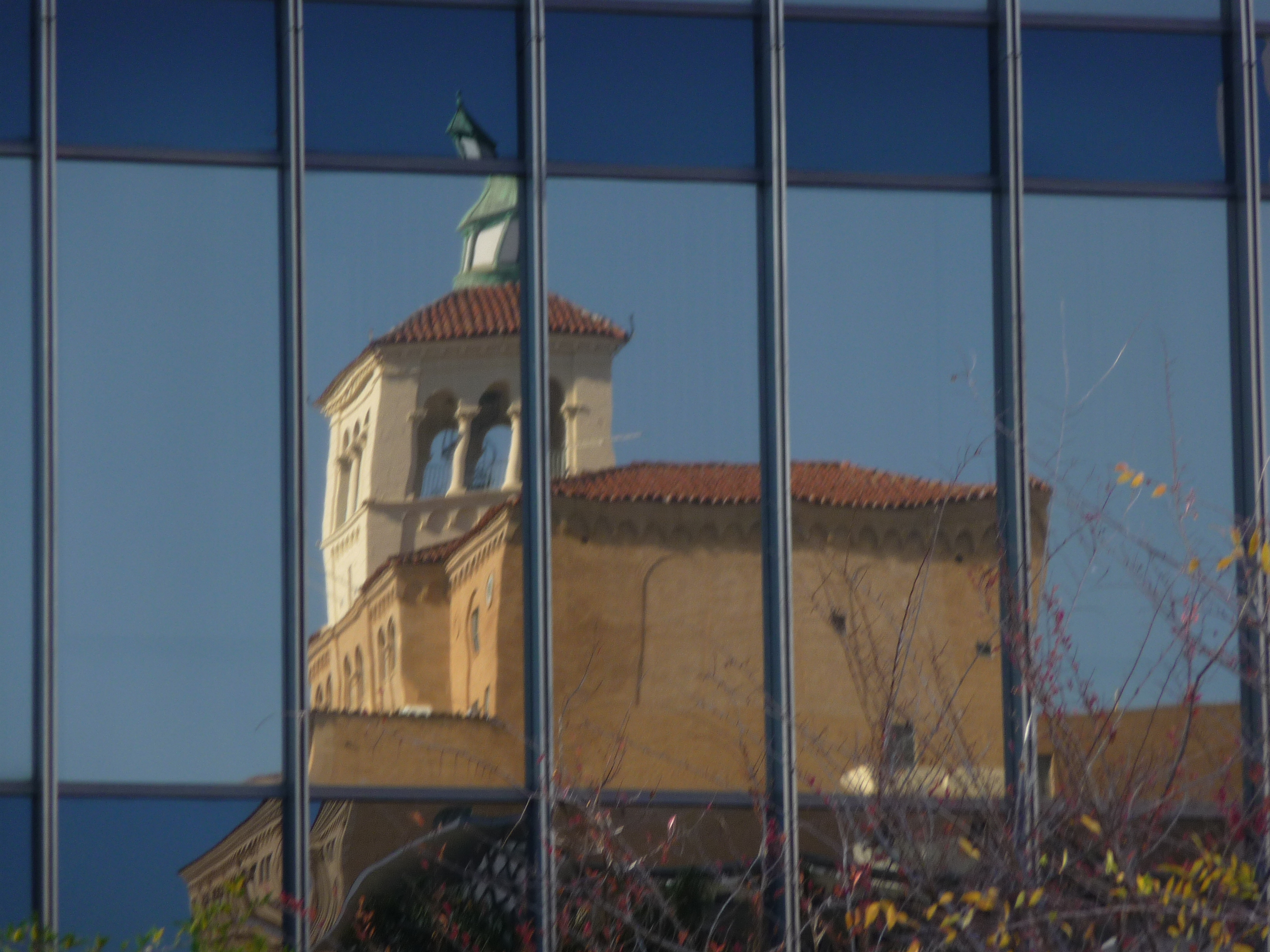
A two-story classroom loomed like a stucco cliff on the south side, the church sanctuary sat like a stately piece of art on the west side. The sanctuary is Spanish Revival, stucco, tile, with arches, and a bell tower. It’s nice, some good lines, but by way of contrast, in the center of the courtyard squats a small house — old, chipped, worn and out of character.

Joaquin and I walked into the little house to check the electrical subpanel, then came back out and looked around, like spelunkers, blinking upon returning to the surface. Ugly, cracked black top covered the ground at our feet. Overhead was better, a nice Ficus tree in a bright cerulean sky. At the east end of the courtyard reclined a patio garden room, recently renovated, very nice, with brick pavers in circles, trellises with vines, curving areas of grass bordered by Agapanthus — good lines.

But the house in the middle, as we turned back to it, pointing out this and that — very un-Chauvet — no art, no grace, a minimum of dignity. This little two-bedroom bungalow was the true eyesore on the property — nothing revival or Spanish about it — cracking paint, decaying wood, composition shingles, a huge, warty, rusted swamp cooler on the roof.

Joaquin and I looked up from the swamp cooler to the bell tower on the church sanctuary. A decorative design graced the stucco tower; dignified arches and a lovely red tile roof capped the top. There was no match here, between the swamp cooler and the bell tower. In fact the entirety of the little house, by its very design and essential character, broke the dominant architectural theme, like a blotch on a canvas.

On Tuesday of next week Joaquin’s property developer and I will sign an agreement for him to jack up the little house, roll it down to the street, put it on a truck and drive it away. It is going to a new home, in a residential community, where it will get a facelift. I’m glad to see it on the move, finding its legs, repurposed in this way.

And the church courtyard, it will at last open to more light, it will begin to breathe freely, be given eight legs, a beautiful stucco wall, with lovely arches, and bright green grass and flowers and climbing vines. And the courtyard and the bell tower will run together at last, like the horses and the bison at Chauvet.

People will come here, I know it, to this artful courtyard, with its Spanish Revival motif, as if to a destination. Children and young adults and their parents will meet here and they will luxuriate in this sacred, open cave, and like the ancients, take joy in the beauty of motion, the power of space and the redemptive power of art.

How will that happen?

This is a church, and I believe that God himself do that.