reading
Here are the best books that I’ve read recently.
 The Boy Who Harnessed the Wind by William Kamkwamba tells the story of a young boy who grew up in Malawi so poor his family couldn’t pay his fees to attend school. But with some old science texts, some junk parts and some real genius, he built a windmill and brought electricity not only to his house but to his whole village. It’s inspiring!
 Okay For Now by Gary Schmidt is a story about a kid growing up in a family that offers him little and a community that offers him much. This is a good read, and a good reminder of how much positive difference an attentive adult can make in a young person’s life.
 Daring Greatly by Brene Brown is a good book for people who want to move from just maintaining to actively thriving. Brene does a good job of dissecting the things that hold us back — shame, guilt, embarrassment and humiliation. She cheerleads for a raw openess and an unpolished vulnerability. She dares us to cultivate change and to fully engage the next thing. I like it!
 Help, Thanks, Wow by Anne Lamott is a good primer on prayer. It’s basic, simple, conversational and profound. Anne begins at square minus one, assuming that her readers don’t want a sermon or a particular religion thrust on them but instead a discuss with another human being who also wants to call out to something greater than themselves:”Help! Thanks! Wow!” It’s good!
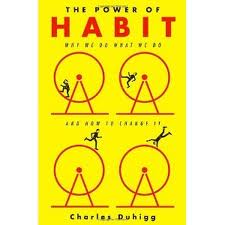 The Power of Habit by Charles Duhigg clearly expains to us how habits work, how habits form a loop, why we form them and how we might work on changing them out for better habits. It’s a good book, well-research and very useful to those who want to take responsibilty for changing their habitual behaviors that are unhealthy or harmful. It will also aid you in being helpful to friends with addictions — recommend the book to them!
.
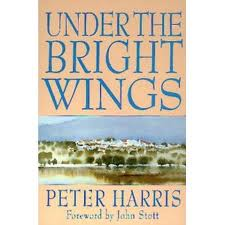 Under Bright Wings by Peter Harris is a fun, humorous and insightful telling of how a British pastor and his family founded a conservation center in Portugal. Peter’s story provides open space to explore the interface between care for the earth and the Christian passion to share the good news of God’s love. It’s a well-told story of the founding A Rocha, now a multinational movement focused on the stewardship of creation. Peter’s second book, Kingfisher’s Fire continues the story. It’s insightful, but it lacks the immediacy and fun of Under Bright Wings.
The Will To Climb by Ed Viesters is an inspiring account of the failures and successes in climbing the most dangerous 8,000 meter mountain in the world, Annapurna. From Maurice Herzog’s first assent in 1950 to Ed’s own success on Annapurna in 2005, Ed tells the stories, adding his own good insights about team work, risk management, and the pursuit of fulfillment. It’s fascinating, compelling and instructive. Climbing the Himalayas provides good opportunities for insights on climbing through life.
The Immortal Life of Henrietta Lacks, by Rebecca Skloot is good science, good story and good medical history in one.  Rebecca tells the story of Henrietta, a poor, black tobacco farmer whose cells have have sold by the billions, making possible important advances in vaccines, chemotherapy, cloning, gene mapping and in vitro fertilization. This story needed to be told; it needs to be read. It’s pain, handled with grace.
City of the Sharp-Nosed Fish, by Peter Parsons is fascinating ancient living, personal history as Parsons takes us with him into the eeveryday lives of Greek-speaking settlers in the Nile valley between Alexander the Great and the Arab conquest. How is this possible? Through the 1897 discovery of ancient papyri preserved in the rubbish dumps of Oxyrhynchos, the City of the Sharp-Nosed Fish. Private family letter, shopping lists and wills tell the stories of mom and dads and friends and business partners as they feel, think and live so much like us. This book will help you to understand the universality of the human experience.
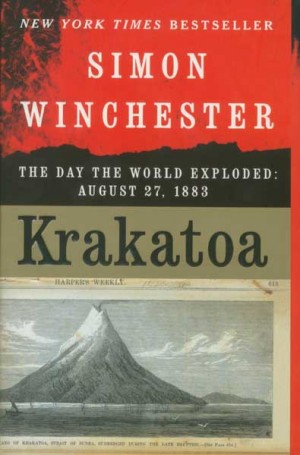 Krakatoa, by Simon Winchesteris a fascinating book,. Its the account of the explosion of the Krakatoa volcano in 1883. It’s a good story and it’s good science — plate tectonics, vulcanism and some fine detours into the history of the pepper trade, the story of Wallace’s line, and the history of the Dutch colonization of the East Indies. The account inspired me to write some proverbs. Check them out on www.modernproverbs.net Click on the “Science” tab.
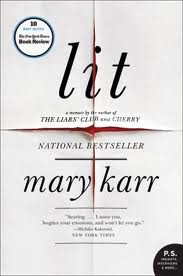 Lit: A Memoir by Mary Karr is Mary’s story of leaving and arriving. Mary, with humor and brutal honesty, tells us of the leave taking of her broken marriage, her alcoholism and her painful memories of her mom and dad. Then she tells us of her arrival, cussing and kicking in her high heels, at a place of sobriety, God and peace with her dying mom. Mary is crude, rude, funny, poetic, insightful and finally tender. If you don’t mind the f-word and holy scripture package together, and if you like recovery stories, you might like this one.
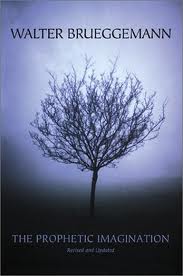 The Prophetic Imagination by Walter Brueggemann is a brilliant bit of Old Testament criticism. Brueggemann clarifies Jeremiah’s role as the articulation of grief, the passion of social justice and the imagination of newness as opposed to the Jewish courts royal consciousness of dominance, oppression and tradition. Brueggeman is the author of many other books worth reading. In Man We Trust is annother I’ve recently read. It is an excellent critique of Old Testament wisdom literature.
  Provocations is the most accessible collections out of the witings of 19th Century Danish theologian and philosopher Soren Kierkegaard. His core ideas, his keen wit and some of his best sayings are nicely prepared and served up in this well-organized book. Here you’ll find superb Christian existenialism, pithy parables that skewer conventional Christianity and wry humor. Enjoy!
 Babylon’s Ark, by Lawrence Anthony details how Lawrence, a South African conservation, goes to Bagdad after the US invasion to save starving, dehydrated and diseased animals in the Bagdad zoo. It’s crazy, dangerous, impossible and brilliantly successful. Lawrence and his Iraqi com rades save starving lions, abused bears and kidnapped Arabian horses. They slave in horrific conditions to save beautiful animals from starvation and slaughter. This is one of the best stories from Bagdad. It’s inspiring what a man with a vision and an impossible problem can come up with in the end.
  In Corn Flakes with John Lennon: And Other Tales from a Rock ‘n’ Roll Life, Robert Hilburn, long-time rock critic for the LA Times, provides readers with some behind the scenes conversations with iconic performers like Janis Joplin, Robert Fogerty, Bruce Springstein, John Lennon, Bob Dillan, Michael Jackson, Bono and more. Hilburn hung out enough with these stars to see inside them, what drove them and what depressed them. It’s interesting — the egos, the fragility, the fame, the loneliness. Becoming a star has a tendency to mess with the mind, to put one out of rhythm. Hilburn notes that, and works hard at separating the pretenders from the authentic voices, the writers who kept developing, like Springstein, from those that got lazy and embarrassing, like Elvis. It’s an interesting read for those interested in the stories behind the music.
  The Elephant Whisperer by Lawrence Anthony is the best book I’ve read this year. It is a thrilling, exciting story of how Lawrence Anthony transformed an old hunters’ camp into a wild animal preserve and a home for his adopted herd of wild elephants. The preserve, Thula Thula, contains 5,000 acres of slithering, crawling and charging wildness in the heart of Zululand, South Africa. The story recounts, in a wonderfully fast-paced fashion, how Lawrence saves his troubled herd, wins their trust, and discovers how they communicate — in deep, rumbling loving “whispers.” Poachers, assassins, tourists and disloyal employees — Lawrence, his sweet French fiance and his dogs survive them all. You’ll love this read!
 The end of overeating by David A. Kessler, MD, a New York Times bestseller, is a must-read for everyone. This is outstanding information. Dr. Kessler gives names to what the food industry is doing to layer and stack us with sugar, salt and fat. Conditioned hypereating is an epidemic, and this book gives you the scoop on it. Hyperpalatable foods, big foods, craveable food, foods designed for irresistibility, hedonically optimized foods, multisensory foods, shovel-ready foods, layered and loaded mouthable foods — Dr. Kessler exposes them all. And he presents theory and practice to help you think correctly and eat wisely. For you own health, the health of your children, the health of all the people you love and cook for and eat in front of — read this book.
  Acedia & Me by Kathleen Norris chronicles acedia, a disease of the heart that erodes spiritual caring. “God is to be adored everywhere,” wrote Ponticus, a fourth century monk, but He isn’t. Indifference wins on too many days. It helps to name the disease, to understand its orgin, to take in the needed remedies. All this and more, Kathleen offers as she explains how our crazy-busy lives and misguided priorities are symptoms proving we suffer the ravages of acedia. Knowing that you have an illness is the first step toward becoming healthy again. Katheen offers curative wisdom, eloquently mixed and served.
  Pilgrim at Tinker Creek by Annie Dillardis one of my favorite reads of all time. Annie is brilliant, lovable and joyfully astonished by the natural world. She warmly invites us into her walks, observations and reflections. She exults in the now, while making observations that last, that stick in your head and give you new eyes to see with. She is intensely spiritual and scientific at the same time. “Nature is, above all, profligate. Don’t believe them when they tell you how economical and thrifty nature is, whose leaves return to the soil. Wouldn’t it be cheaper to leave them on the tree in the first place? This deciduous business alone is a radical scheme, the brainchild of a deranged manic-depressive with limitless capital. Extravagance! Nature will try anything once.” Try this book, more than once.
  Into Thin Air is Jon Krakauer’s personal account of the May 1996 disaster on Mount Everest, and it’s a fine read. I recommend reading climbing stories because they are about people who are willing to go all out for a passion, a dream, a goal. They are inspiring and yet they also often reveal, as in this adventure, that if one becomes obsessive about the goal and loses touch with reality, the consequences can be tragic. Jon tells this well-known story in a way a non-climber can connect with, helping us get to know the professional guides and their high-paying clients, the extreme discomforts of an Everest assent, the types of climbing required to go up this giant mountain, and the heart-breaking losses that ensue in 1996. Rob Hall’s call home to his wife, when he is stranded and unreachable in the storm, is an unforgettably tragic moment in mountaineering history.
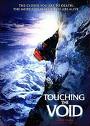 Touching The Void by Joe Simpson recounts a thrilling survival story that takes place as Simpson and his partner Simon Yates climb and descend 21,000 foot Siula Grande in the Peruvian Andes. They are climbing buddies, thriving together and winning until Simpson falls and beaks his leg. Then they are two men caught in a life and death struggle to get off this snow and ice clad mountain. It only gets worse. Shortly Yates is climbing down alone thinking he has killed Simon, and Simon lies at the bottom of a crevasse with little chance of survival on his own. There is no philosophizing here, but it’s great drama and a good reminder that we can be tough when there is no other choice.
 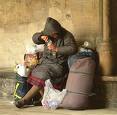 Souls in the Hands of a Tender God by Craig Rennebohm is good medicine and counsel for those of us who have a passion to help people broken by mental illness and homelessness. Craig takes the patient, gentle approach to win the trust of people who live on the streets of Seattle. He shows us how to coax hurt ones, full of fear or confusion, into healing relationships.
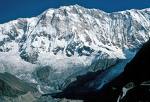 Annapurna by Maurice Herzog is the story of the French climb of the first 8,000 meter peak, Annapurna in 1950 . It’s well written, with a flair for the romantic and the ideal. It’s also the best selling mountain climbing book of all time. Through Herzog’s eyes you follow the team through a long approach march, an epic reconnaissance, a brave assent and a brutal descent. The aftermath makes you wonder if the choices were worth it for summit-makers Louis Lachenal and Maurice Herzog. It’s a good read for middle-class America, stretching the boundaries on what we might think people are capable of. This is a great adventure story.
  Plan B:Further Thoughts on Faith by Anne Lamott is Anne’s usual raw, honest, brilliant, radical Christian thinking. She is funny, out-of-the-box and unflinchingly liberal. She writes, “Some people think God is in the details, but I have come to believe that God is in the bathroom.” It’s a good place to talk to God. She is good at cutting to the chase, “You don’t always get what you want; you get what you get.” If you are an arch conservative, you may hate this book. Knowing that should attract the rest of you. You also, or first, might want to read her other best seller, Traveling Mercies.
 Eyewitness To Power by David Gergen is a fine book on leadership. Gergen gives you a front row seat to the presidencies of Nixon, Ford, Regan and Clinton. All along the way and summarized at the end our some really helpful insights on how not to lead, and how to lead and get it right. I recommend this book to those who want to learn from other leader’s history. It’s less painful than waiting to learn only from your own. Some real disasters can be avoided by understanding and applying the leadership gems Gergen offers from a life of study and close observation.
 Strength In What Remains by Tracy Kidder is recently available. Go straight to your local bookstore or Amazon.com and buy this book. This is a deeply moving account of the 1994 tragedy in Burundi and Rwanda. It takes you there, a tough place to go, I’ll admit, but this is the landscape of second chances. Slaughter to redemption, mindless killing to hope — that’s the journey you’ll go on as you follow the history of one survivor, Deogratias. Read his true story and you’ll be inspired to do more than you are now to make the world a better place.
  K2 by Ed Viesturs is interesting. It’s a history of the fascinating attempts to climb K2, the dangerous 8,000 meter peak in the Karakoram Range of Northern Pakistan. Ed covers the 1939 expedition, the 1954 Italian success, the 1986 disaster, the 2008 horror. At times Ed brags a bit on his own climbing successes and the whole thing is a bit disorganized, but Viestur, with the help of Roberts can tell a good story and bring fairness to controversy. I like his insights. K2 is a fascinating place, and Ed is a good guide to the mountain.
  No Shortcuts To the Top, Ed Viesturs. This is one of my favorite reads. Ed is profoundly inspiring in his smart, gutsy, careful climbs up the worlds’ 14 magnificent 8,000 meter peaks. He lives by and through his motto: “Getting to the top is optional, getting down is mandatory.” This is a climb worth taking, adventure and insight from a high altitude thinker. No oxygen provided. Bring your on bottle. You’ll need it.
 Soul Survivor, Philip Yancey. Ever felt disillusioned with Christianity because of the narrow-minded biases some Christians espouse? Join Philip in a search for a more honest, gracious, loving faith.
The Earth is Flat, Thomas Friedman. An amazing explanation of the effect of technology and the Internet on your life. This will make you get up in the morning and start running, toward your computer and the rest of your new, flat, collaborative world.
Swimming To Antarctica, Lynne Cox. Is she too chubby to swim the English Channel? Guess not; she set a new world record when she swam it at the age of 15. Lynne Cox makes you want to jump in cold water, or if not, at least she makes want to jump into something challenging.
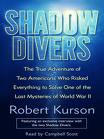 Shadow Divers, Robert Kurson. This deep wreck diving adventure will take you into another world. At 23o feet down, you’ll make a fascinating historical discovery. This, my friend, is a good read. You’ll hang on to this like an oxygen tank in deep water.
Men of Salt, Michael Benanav. Walk across North Africa with Michael, from Timbuktu in Mali to the salt-mining outpost of Taoudenni. Camels, salt slabs, the Sahara — it’s a chance to travel to a very different place while still enjoying all the comforts of your own home.
Long Walk to Freedom, Nelson Mandela. From prison to President of South Africa, you’ll be inspired by this Nelson Mandela autobiography. It gives me hope that we can sit down at the table and come to solutions we can live with.
Winter Dance, Gary Paulson. This is a hoot, fun, a bunch of good laughs as you ride the sled with Gary and his dogs into the Alaskan wild.
Last year I read Leaving Microsoft to Change the World by John Wood. It’s crazy inspirational! It knocked my visionary, altruistic socks off.
John did it. He saw a need, he realized it was a defining moment, and he left a great job at Microsoft to carry books and libraries and schools and scholarships to millions of children with rich potential but no resources.
Some of the lessons:
See a need, imagine a solution, then imagine a bigger solution.
It’s painful to leave a secure place; it’s exhilaration to follow a dream.
Results, results, results — settle for nothing less.
Think about it. What need do you see? What could you do about it? When are you going to start?
Classic Christian Literature
The following books will crack your head open to beautiful old ideas that may be new to you. These writters are among my best friends.
Orthodoxy G. K. Chesterton
Pansees Pascal
The Imitation of Christ Thomas a’ Kempis
The Complete Short Stories of Flannery O’Connor O’Connor
In Praise of Folly Erasmus
On the Consolation of Philosophy Boetheus
Christian Perfection Fenelon
A Serious Call To A Devout and Holy Life Law
 Thrive!
finished Elephant Whisperer and then looked up website for Thula Thula. thinking we should go there for a leadership retreat