Archive for the ‘thriving’ Category

Lately I’ve taken special note of  my appreciatives, my approbatories, my applaudables, and also those small salvific islands of gratitude lurking along the waterways of my supra-conciousness.

I make a grocery list of them. 1. I like being male.  2.I like being married. 3. I like being comedic.

These idiosynratic commendatories are my cognitive Jacanas, the colorful water birds living on my cerebral Lake Nicaragua, and I watch for them as I round the corners of my mental islands,  putting along in my smoking, psychic motor boat, and I flush them out when I can — my favorables. I exult when they run on the tops of the lily pads on my everyday perspectives.

Dr. Christine Carter, excecutive director at the Greater Good Science Center at University of California Berkeley says her research shows that the more we practice gratitude the happier we will actually be. She suggests keeping a gratitude journal.

I respect Dr. Christine, and I appoint her my mentor, and in my mind, I mind her counsel and keep a mental journal of my gratefulness. I prop it up on the back shelf of  my short-term memory and work it over. I  listify my thankfuls, lining them up, one, two and three.  1. I am thankful for my black  glossy cats with their ulta-soft, outrageously fluffy furification. 2. I am thankful for my wife, particularly her drop-dead gorgeous cerebral cortex and the droll and wry desultory three-storied thoughts housed therein 3.  And I like my hazelnut coffee with milk every 6 am.

I love these and all of my other precious gratitudes. They are my safety nets, hanging above the lower levels of my extreme dissatisfactions.  They are my psychological floaties; they keep me from drowning in my own deep waters;  they are my sport’s brain seat belts, clamping me in my as I accelerate hard out of all my life’s sharp corners.

I  trot them out often, my idosyncratic applaudables.  1. I like my house, the big windows and the odd angles of the high ceilings. 2. I like my two daughters, particularly the way the call me “daddy” and sit close to watch TV or just talk  3.  I adore my job, the taylor-made, custom-designed, hyper-precise fit of it. 4. I love God and the way he loves me back and  how he is so outrageously gentle, patient and gracious with me. 5. I like my pain, and how it eloquently informs me about being human.

By laying out my admirables like this, I anchor what I are grateful for in my brain. These positives, these pluses, these commemoratives — they moor me. When I don’t like something about my job, I  coounter that with something I do like about my job. My thankfuls act like my very own team of counter-insurrgents against negativity. I don’t like my work stress, but I do love my work challenges, and so I embrace them, and I go on this way, cloaked with strength.

What will happen tomorrow? I think that more good will happen tomorrow, and if it does not, then I will roof over my losses with a thick thatch of approvables , and this is how I will survive, and shelter my happiness.

I will be thankful.
Drive from work to the gym.

Eight stop lights. Ten thoughts about work. Think about six people. One thought about wife. Bad ratio.

Run on the elliptical. Lift weights. One thousand five-hundred and fifty-one different movements.

Wash hands. Diseases on my mind. New gym; probably crawling with bacteria.

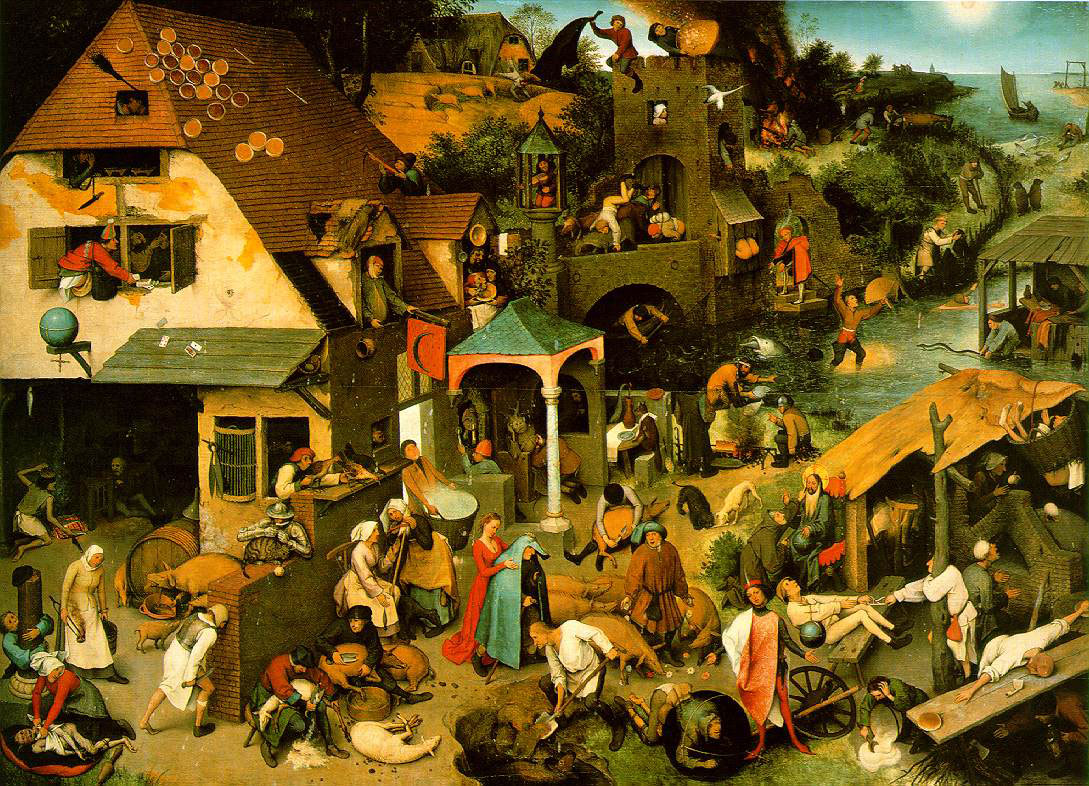
Stop and talk to the gym owner. He is going through third divorce. Sucks, for him. I live in a Brueghel — sweaty, pulsing, messy, high-density.

Drive home. One near miss. Eleven traffic lights. One incident. No hand gestures. Eleven emotions during whole drive.

Accelerate hard with the turbo-charged engine twice. Rocket forward. Smile twice. One phone call on car phone to wife. She’s in traffic. Our cars talk, then we talk.

Pull in garage. Car off. Break on. One car door. One backpack. One phone. One garage door button.

Greet my daughter and both cats. Stash backpack.

Make dinner. A hundred and seventy-two different steps.

Feed the cats in the middle of the process. Six motions.

Answer two texts. One from work.

Eat exhausted, with daughter, wondering if the homemade spaghetti is worth it. One hundred ten motions not counting chewing.

It wasn’t, worth it. Daughter didn’t like it, but it was good the next day as leftovers.

Do the dishes. Fifty four disparate movements.

Help my daughter change a setting her iPad. Stress! I didn’t want to.

Think about a bill I need to pay online. Decide to pay it in the morning.

Think about work. Eight thoughts in a row. Three were repeats.

Wife arrives home. Hug. Get her food. She likes the spaghetti. Ask about her day. Answer a text. Try to stop thinking about work.

Get a work related call. Ignore it.

Sit on the couch — exhausted. Turn on TV.

Run through the DVR list while scanning the news on my iPhone while answering a text.

Watch one show.

Go to my room. Think about life as a crush of details and problems. It’s clutter.

Think.

Read my Bible.

Pray.

Rethink.

Got it!

Life is simple.

There is the clutter, laden with detail, fraught with emotion, cargoed with movement, and then there is one simple thing.

I have only one thing to do.

I have just one choice to make.

One thought.

One movement.

One goal.

Love.

Simply love. Love them; love it.

All.

I go to sleep.

I’m okay.

I went to a wedding last night, very social, very nice, good company, good beer, decent food — which of course we waited for. Waiting for the meal after the wedding is like waiting for the second coming; you know it will come but not the hour or the day.

But the waiting at least has a purpose — pictures with translate into memories, all good.

Actually this wedding was reasonable, the wait, the money spent, the whole thing.  The couple had been sensible about it. I’ve been to some that were completely over the top. Perhaps couples over-spend on their weddings to protect their marriages — they’ll have to stay together forever to have any hope of paying off the debt.

I met a lawyer at the wedding.  Cool. I like lawyers. They have stories.

“Tell me stuff,” I said.

“Give me a topic,” he said.

“Does money make a difference in court?” I asked.

“Money gives you access,” he said.

“Define access,” I said.

“Access comes through lawyers,” he said, “and motions. Say you have a patent case. The small guy is claiming that he created something, but if the rich company that has gotten a hold of it, and is not paying him adequately for it, prolongs the case long enough, filing motion after motion, then at some point the little guy can’t afford it, and he gives up. Money wins.”

I got it. In court, the rich defeat the poor by outlasting them. No money? No power!

It sucks to be poor, in court, and weak.

It suck so be weak at all. It sucks not to have access, to not have a nice wedding, to not be able to last all the way to justice in court or to not have what you need to live.

I gave away a bunch of  money yesterday and then some today too.

Why?

Access. I want some people in my family, people I really love,  to have access, and some of my friends too,  so I choose to resource them in the same way that I have been resourced, with access. I  have been given access and I am beginning to want to be a person who provides access to others.

It has come to my attention that access is a big deal, and that God himself is outrageously committed to access.  Look around. He holds back his judgments, he blesses the earth with resources and beauty, he waits, he forgives, he waits some more, he is patient, he is unfathomably patient, he pauses, we live in the great pause, we have been given time to choose, to change, to experiment, to fail, to try again, to persent our case, to have a hearing, to be given justice, to have justice withheld and replaced by mercy,  to discourage him and each other and yet remain under the fierce weight of his patience.

The door of the world is open, the windows flung back, the roof is off, the sky is huge, waiting for us to decide. The  white  carpet is laid out for us, the bridal party awaits us at the other end, smiles everywhere, expectant on us, to run down the aisle of the universe to them, to the meal, to justice, to the wedding gifts.

Incredible. Unspeakable. Shocking. Knock you down good.

Access is being poured out on the earth by a good God.

Our best response. Take it, and make access for others too.

Being serious is way overrated.

Snarled up in the clutches of our worries about our health, sanity, money, family, work or waist lines, we may fail to see the droll, weirdly funny, hilarious angle on life.

Wry is good medicine for a bad bout of over-seriousness.

Mr. Mark Twain was particularly adept at ham and rye and cultivated the habit of being oddly humorous as a salvific way of life.  Mark said things like:

“Clothes make the man. Naked people have little or no influence on society.”

He also famously remarked,”When a boy turns 13, seal him in a barrel and feed him through a knot hole. When he turns 16, plug up the hole.”

Dorothy Parker had it too, the wit and wild thing going on too. She was a bad girl.  She and Twain would have been a hoot together.

“I don’t care what is written about me,” she wrote, “as long as it isn’t true.

Consider Ben Franklin. Respectable, right?

“Three can keep a secret if two are dead.”

Or Zsa Zsa Gabor. I wonder how Zsa and Mr. Franklin would have gotten on?

Zsa Zsa: “He taught me housekeeping. When I divorce, I keep the house,” or “A man is incomplete until he is married, then he is finished.”

I know Ben would have hooted over Zsa.

More wry is needed, to help us laugh, and to wryght wrong and wrong wryght thinking.

Who was it now, who said:  “He who has been forgiven little loves little”?

Wasn’t that Jesus, being a bit wry?

Wry? It’s good company, with just a touch of bad manners.

I’m with Groucho Marx, “Those are my principles. If you don’t like them I have others.”

Trash collects in known places  — at the base of walls that barrier its movements and in corners that corral it. Unwanted stuff —  dirt, litter, grime, dead leaves, dust, cat hair and lost insect parts — are commonly harbored underneath raised furniture, hidden in dark nooks under car seats, smothered below couch cushions and sanctuaried in small  crannies and  crevices throughout the earth.

This morning I swept the sidewalk along the east side my house. It always needs sweeping. Dead leaves congregate there, and dirt and bits of paper hold daily convocations there too. That side of my house is a trash convention.

Live anywhere long enough and in the same body for any length of time and you’ll know where to find rogue detritus — under the fingernails and hidden in the epidermal creases of all your lesser and minor planetoids, discrete entities and bio-creaveses.

And what about that which is not that? Where might one find something that doesn’t begged to be cleaned up, something that is fresh and new and bright-eyed and full of verve and laced with the gold vein of  future hope and direction.

Where might one find wisdom, that shifting, blowing, migrating essence of smart living?

One might find it, like one finds trash, in common places.

Wisdom shines from every fissure, riff,  nook, platform, roadway, open shelf and wide roof top of the earth.

Wisdom, says one ancient proverb, cries out from every corner.

I believe that. I see wisdom lurking in every experience, hiding within every challenge,  residing inside of the lining of every problem and taking wing within the potential musings of every person. But there is one place, I have noticed, that wise stuff tends to collect most. Within a breathing, heart pounding, dialoguing relationship with the source of all knowledge and wisdom.

Wisdom, the gold of smart living, is found first, second, third, fourth and every other number in the universal catalogue of  numbers —  natural, whole, interger, rational, irrational or imaginary — in God.

Want wisdom? Then ask God for it; go further, cry out to God for it!

Really want it? Then do not let up in this single, beautiful and too seldom actioned request: “God, will you waft wise bits of  smart thought and way down my mental sidewalks and into the tiny creases and crannies of my small brain?

Mind blowingly, He will.

Favor

Posted: June 10, 2012 in thriving
Tags: , , , ,

As the boat rounded the thin edge of the island, all manner of hell broke lose along the bank.

The Jacana were running on the tops of the water lily pads.

We yelled and the guy running the outboard motor cut the throttle.

There were two of them in front of us. One went airborne; the other ran. Across the lilies in long, skipping, gliding motion — lily ballet.

It was a moment of favor for me. To see the Northern Jacana, long-legged-red-and-yellow run on the bright green pads floating in Lake Nicaragua. In seconds they were gone. So was I — too cool.

On the fight from Managua to Bluefields the views from the 12 passenger plane were nice — jungle, brown water, snaking rivers.

In the evening, walking back to our house we noticed Scorpio and the northern cross blazing on the horizon to the south.

We ogled; it had been a long time since I had seen the southern sky. A firefly flashed. The stars flashed. More favor.

We went to bed in a sticky, muggy cloud of heat. It was much too tropical hot to sleep. Eventually I did anyway. I awoke at midnight to a mad rush of wind. I thought that Daniel had turned the fan up to high.

Then I felt the rain on my face. It was cool, fresh and clean, blowing through the screen. Favor. It seemed to wash out of me some of my insanity, some of the toxic thoughts I had gone to sleep with.

When I had been teaching earlier that evening I made the comment that life is difficult. Everyone agreed It is. Lots of unwanted thinking.

When we arrived in Bluefields my luggage was missing. All my clothes, all my bathroom stuff — gone.

Life is full of stuff gone, stuff broken, stuff taken. Life is full of thoughts in the night that we would rather not have.

And life is full of favor.

This morning we sat on the veranda and let the cool and wet wind blow on our faces.

I like the favor. It so refreshing.

It’s bright like the stars.

t’s cool like the rain.

Favor runs on the water lillies like the Jacana.

It’s light on its feet.

Our level of confidence defines the quality of our social relationships. When we are insecure  our relationships may seem fearful or dangerous to us. When we are confident, our relationships tend to feel energizing and safe for us.

What to do?

I’ve been thinking about this and something interesting comes to mind.

Think about this if you are want to thrive more socially.

I remember going to a young couple’s party at their house one evening a few years ago.  I hated the whole experience. I felt very insecure there.  Come to think of it; they were very insecure too. An atmosphere of social ineptness reigned.  We sat on couches around a coffee table, but there was no coffee to spike our energy and no comfortable table of conversation to chew over.  The young couple and some other people present controlled the conversation. I couldn’t think of things to add.

Wow! It sucked! It felt unbearably awkward. My wife and I left early. I felt like a social failure, no confidence that evening, no social success that night. But now, years later, with much social water having run under and over my bridge, I better see the truth of the thing.

We are powerless in social relationships, when we think we have no control. This sense of powerlessness adds to any insecurity we might already have, and when other people control the conversation, when the turf is theirs, then this is very confidence-deleting for us.

I see now that much of the insecurity was within me, and then so was the solution. I let it happen. I did nothing. I thought of myself a guest with no responsibility. Not good, now I realize, not good.

I’ve changed. Enough weird parties, enough awkward conversations, enough counseling,  enough personal responsibility to make social events happen —  I’ve begun to have different experiences.

Recently I met a quiet and awkward young couple. I asked them questions. I expressed interest in their personalities. I took time to explore some things we have in common. I invited them to meet me again for coffee. The next time we met, they told me that they had really enjoyed their previous conversation with me and they wanted to talk more, to get to know each other.

What a difference a few years makes.

The real difference? My level of confidence. I’ve gotten more confident, more secure. I know who I am now,  and I am not afraid to let that be the social oil  or the social glue in awkward situations.

I used to think of myself as socially powerless.

Now I have come to generally think of myself  as in charge of any social situation I am in.  Wherever I go, I consider myself a co-host with those present. I see myself as in the position of  a self-affirming impresario, one of the masters of conversational entertainments. I see myself, in the role, if needed,  of group discussion leader.

This isn’t a total panacea. There will be and even lately has been social awkwardnesses. I mistook someone recently for someone else! Awkward! I still sometimes want to leave the party early.

But things have largely changed for me.  I like it. I  refused to be as silent as wall paper. No more. I now  refuse to engage in debilitating social silence. I refuse to be socially helpless. I refuse to act like I have no control. It’s good; it’s better this way. This is working for me, because social confidence is largely a matter of self-perception and self-actualizing behavior.

If you and I see ourselves as  leaders in  social situations then we usually will be.  Act confidently, and we will generally act socially competently.

Social confidence — it’s a way of seeing, and it’s a way of chosing, one thing and not another. It is about chosing to take control. It is about chosing to not be socially helpless.

Parties, better? They can be.

Take charge, my gentle friends and thrive!

“A child of seven is excited by being told

 that Tommy opened the door and saw a dragon.

 But a child of three is excited by being told

that Tommy opened a door…”

                                                                                                             G. K. Chesterton

I remember the door that let me into my first private bedroom in the cinder-block, Missouri home I grew up in. I  remember passing through that door, ecstatic to not live in my brother’s room anymore. “Yes!” I now had my own double bed, my own closest, my own window, my own personal space away from my family and from the world.

I loved that bedroom, as I  now love all bedrooms of the world.

I love the bedroom I now live in with my wife.  I love our double, bedroom doors.  I love going through them in the evening, to put on comfortable clothes, to sit in my comfortable chair and look out the window and watch the sun set over the ocean. I love to lay on my king-sized bed, the beautiful, dark wooden bed that my parents gave me, in the evening, and write on my laptop, and savor the moments of leisure and memory and quiet.

And I am not alone in this. Many of us  love our bedroom privacy; we profoundly crave our bedroom sanctuaries, spaces to rest in,  places of safety,  walls around us so we can  close our eyes without fear and recover from the world. And those who don’t have a room, the homeless, the transient, the lost, they also needand love a private space, if nothing else a cardboard box, a place behind the dumpster, a moments quiet in a grimy corner of the earth.

I remember so well the door that opened to my first-grade classroom. I passed through that door in R-10 school in rural Missouri into an astonishing space filled with learning, a veritable universe of books and papers and drop-dead gorgeous ideas.

I loved that little classroom, as I love all the classrooms of the world.  I love the door that opened to the first college classroom I ever taught in, because it was there that I finally sat on a table and held  court and dispensed truth and schooled my students. Many of us love the spaces where we first learned to read. And some of us love the place where we first  taught  others to read and to write and to think.

Tonight I  sit in my bedroom and look out, through the double doors, through the window over the stairs and through the trees in the yard to the mountains and the fading light in the sky. There is something about my bedroom doors, that open upon the world, something to thrill a child and more.

And now I’m thinking, doors.

There is another one. It’s inside me.

I love this inner door; it’s doubled, open now, then pulled nearly shut again, now cracked, now slammed, now pulled but not latched within. Today I encountered someone who hasn’t loved me much. The door closed. Tonight when I saw my wife, the door opened.

Tonight, lying in my room,  I am trying to recover from too many days that had too little time behind too few closed doors. I am lying on my bed; I am empty inside, and someone knocks.

Like a three-year-old, I turn and look out through the opening.

Someone is there.

Who?

God.

I open, as much as I can.

I love opening this door, in this way, in just precisely and exactly this swinging out kind of way.

I look out, throught the opening,  into the spaces that go beyond my sense of what a room can hold.

I am not alone.

I keep eating.

I keep working.

I keep resting.

I keep laughing.

I keep thinking.

On Saturday I spent the day at La Jolla Shores beach. Nice! The wind, sun, sparkling water and yum food combo works well for me to relax.  My family and I do this every summer. My girls and I, go to the beach, stick our toes in the sand, eat, surf, snorkel, kayak and chill.

It’s called consistency. Haspers do the same things, over and over, the same way, and this is really, really kick-tail good!

Today I got up early and made strong, dark, hazelnut coffee and put milk in it. I do this every single morning without fail and I pet my fuzzy cat Megan and sit in my Lazyboy and luxuriate and extend time and  write and read wise writers and dawdle with casualism and alonification and cud chewing.

Life has a pocketful of  change in it, that much is certain, but to maintain sanity and peace and to show courage we must keep doing the same things again and again and again, and then yet again squared.

This is a prescription for mental health.

Families in crisis, families with losses, need to find ways to maintain consistency, movie going, meal making, regular bedtimes. Why? It shows courage, especially to the children, to keep going, to keep living, to keep keeping the family-keeping behaviors.

Emerson quipped that “a foolish consistency is the hobgoblin of little minds, adored by little statesmen and philosophers and divines.” Emerson, of course, was wrong — even while he was partially right. People have a foolish tendency to stick to old perspectives, but they rightly stick to what is consistently true and what is consistently helpful.

A wise consistency is the trademark of great minds, a consistency of love, a consistency of order, and consistency of stabilizing practices.

This morning, Megan, my cat brought me her toy whale. She always does this, drops it by my chair, and then talks, and waits to be congratulated with a pat. She does this because she is worried, seeing that I don’t have claws like her, that I can’t catch my own food. Megan wants to feed me, again.

Even the animals know, and thrive on Consistency.

The same thing is often the next good thing we need.

Wise stuff is good stuff.

Last night I thought of all the good mayors in Mexico who have been murdered in the drug wars. Wow, tough their families and their towns.

Today I found myself fascinated by the ebook publishing phenomena. We read differently now, on Kindles and Nooks and ipads, and so I must think differently as a reader, a print consumer and a writer.

I love to notice it, life, the changes, and think about how to respond.

It comes to me more and more, that to be wise is to realize that nothing in life is unworthy of my attention. Nothing is mere background. Everything qualifies as meriting focus.

I ache for it. All who want to know do  —  new experiences, fresh observations, other interpretations, possible theories, startling conclusions, needed disambiguations of the everyday and familiar and miraculous too.

Wise acknowledges it all, the supernatural and the  human.

The other day a college aged girl told me that she eventually dumped all boys because they simply, in the end, didn’t measure up to her high standards. She said it, then said she didn’t want to be like that anymore.

Why? She realized that her perfectionism was sabotaging perfectly good opportunities for friendships. Bingo. Get wiser, be more tolerant.

In the 17th Century Fenelon had this figured out, noting that perfection is the only thing perfectly tolerant of imperfection. Whoohoo! Good! Nice!  People so misjudge the judgments of the ultimate judge by thinking him mainly judgmental in nature.

And the  wise girl get it as she  is interested it all,  in shadows on her backyard fence and in the shadowy projection of her own desire to be perfect onto others.  A trophy boyfriend; the secure woman doesn’t need it.

Here is the deal; to get wise  is to get fascinated with oneself and everything within ones imperfect realm.

Eugene Peterson, in his introduction to the wisdom literature of The Message  version of the Bible comments that “Wisdom insists that, “nothing in human experience can be omitted or slighted.”

So wisdom literature, the psalms and proverbs, take on all topics and all particulars that wisdom can think of.  Wisdom is fascinated by both the large idea of  science and by the small observation of the micro-hairs on the bottle fly’s feet.

Peterson observes that this comprehensive perspective on life is the content of the Biblical psalms. “The Psalm are indiscriminate in their subject matter — complaint and thanks, doubt and anger, outcries of pain and outbursts of joy, quiet reflection and boisterous worship. If it is human, it qualifies.”

Beautiful, neutral, ugly, all of it, yes!

If it is human, it qualifies for a psalm, for a proverb, for a second look, for inclusion into the canon of what is spiritual.

Jesus turned water into wine at Cana. The supernatural coexisted with the mundane. It was a miracle of a most everyday and normal kind, for as C. S. Lewis has pointed out, in the fields grapes left begin to turn into wine naturally.

Do we want to be wise, to traffic daily in wise stuff? Then we must reject nothing as unworthy of thought, hope, redemption, promise.

Think broadly and beyond.

Wise.