Archive for October, 2009

Fly

Posted: October 27, 2009 in thriving
Tags: , , , , ,

break through momentThere is a moment, when there is no going back.

You are in the air. You are falling down a cliff. You are falling for thousands of feet. 

How do you get into such a no-going-back position? You hike to a really high spot and jump off.

There are people who jump off huge cliffs wearing wing suits.  When they reach a speed of 140 miles per hour, they fly, kind of.  But it is not flying, as much as it is controlled falling, fun falling! They fall two feet for every one foot they travel forwards. Then before death, they pull a parachute.
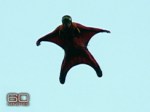
flying menThese “bird men” are crazy, risking, adventure lovers. They are thriving, and having a great time besides. After 60 Minutes filmed one of their jumps in Norway, one of them remarked: “Nobody on the planet, had more fun than us today.”

I love to fly. My favorite plane ride was in a Cessna in Alaska, up a glacier and over Glacier Bay. But, I’ve noticed one subtle thing about adventure flying; if you want to fly, then you have to get on the plane. In Alaska, there is a lot of flying and quite a few plane crashes. If this scares you, then to fly, you have to have a break through moment. You may be afraid, but you do it anyway.

I remember my first jump off a high dive into a pool when I was a kid. I thought, “This might kill me.” I died in the air. I came back to life in the water, “Whoohoo!”

History is full of cliff jumpers.  Moses killed a man in Egypt and fled. Then he went back to Egypt and liberated his people. His decision to come out of hiding and confront a Pharaoh was a brake through moment.

Ester, a totally unknown Jewish beauty,  became a Persian queen. She had never been a queen. It was dangerous. But she had a break through moment when she went before the king, uncalled, and pleaded for her people’s lives.

This inexperienced, unknown gorgeous girl wanted to fly, so she jumped off a political cliff.

Some people have a past that has makes them afraid of the cliff. But history has been made by people who went past their pasts and jumped.

When Jesus was walking beside the Sea of Galilee, he saw some good Jewish boys, Simon and his brother Andrew fishing.

“Come, follow me,” Jesus said. The historical record says that at once they left their family business and went after him. Peter and Andrew made a major life decision quickly. They didn’t take years at the edge of the cliff.

They didn’t follow the family business to their own fortune. They emancipated themselves. Perhaps as good Jews they had been told in various ways, “Don’t do anything rash.” But when they went after Jesus they were rash. The history books are full of  rashly successful people.

As a little girl, Drew Barrymore was our ET star. She charmed America. She believed and we did too.

Then came the clubs her mom took her too, the alcohol, the drugs. She was in rehab by 15. It came to her that she shouldn’t  keep living with parents who took her to clubs and let her use drugs. In a legal process, she was emancipated from her parents. Then came more successful movies, Never Been Kissed, Ever After, Charlie’s Angels. Now she is a director.  Her emancipation was a break through moment. After that, she  was able to fly on her own.

Peter and John did the same, leaving the family business. Peter,  in making this jump, became the leader of a movement, a director in a new film that would sweep the world. “Can I do this?” he must have asked himself. And then he stood and delivered. He switched identities in a rash way, “at once,”  without delay.

Why do some people come to edge of a fun, adventurous, life-changing cliff, and not jump? Perhaps they have been playing it safe for so long, jumping isn’t an option.  Perhaps they are afraid to be successful.  Perhaps they are tired, depressed, hurt.  

Thrive? Fly? They have to jump.

The bird men, Moses, Esther, Peter had had amazing lives. They made the turn, walked to the edge and leaned into the air.

How did that happen? Each one had a break through experience, a moment when they chose to move past the past and risked something new. The best  life includes a willingness to respond to a possible adventure, to go into action when the opportunity arises.

Here is truth: Believing something can happen and doing nothing to make it happen is worthless.

At certain moments in life, I believe that we hear a voice saying, this is it, your time, take the jump, surrender to this experience. Then we have a  chance to fall and fly. By risking, we can set in play a momentum, created by a decision, and something fast and good can flow from that.

Some jumps matter more than others. I believe that the best jumps come down to catapulting ourselves in sync, in formation, in conjunction with others.  Every person who has changed the world in a good way has jumped with someone and toward someone. I think the best jump isn’t the lunge into thin, existential  air, but the purposeful drop toward someone else’s benefit.

Antonio Stradivarius was a great violin maker.  After Stradivarius died in 1737, no more great Stradivarius violins were produced. Why? He left no apprentices in his workshop. He didn’t pass on the secrets. 

Each one of us is a Stradivarius,  a unique, cultural, idiosyncratic expression of something that  can inspire, help and change the world. But it dies with us if we don’t pass it on.

I went to Mexicali  recently with friends. Mexicali is a town of a million peoples south of El Centro. We drove from San Diego for two and one-half hours to get there.  Mexico was in the 90’s that day in October.  Friends navigated; once in Mexico, I had  no idea where we were. I was flying.

P1000675We arrived at an escuela. We were there to help, and so we were given the job of painting a classroom.  When I was about to pour paint, ten Mexican teenagers showed up to help. It is a dangerous thing to give ten teens  paint rollers and a continuous supply of  paint. They painted themselves, each other, the floor and all the walls. They did a beautiful job. And then they cleaned the spilled paint off the floor.  What a pleasure, seeing gentle, beautiful altruistic young people give, serve, care.

And it wasn’t all work. When we finished we celebrated what was right with the world. We ate huge, grilled slices of carne assada in the shade of a bean tree.  Rocking music, played by a band from a San Diego church, filled the spaces between us.

It was good. And then we headed for home.  Up the El Centro valley and into the hills, the sunset flamed on the electrical wires strung along the road. Once in the mountains, we passed through a land of glowing rocks, twisting Ocotillo, and stately barrel cactus. 

It was a spectacular ending to an international, friendship adventure. Nobody on the planet that day had more fun than my friends and I who went to Mexicali. Why? We broke through. We jumped. And we flew.

The best life is no arm chair life. Sitting at the cliff’s edge is missing the fun. Jump life, risk life, reach life, fly life is the best life. Cliff jumping is emancipating.

Yet for some people, as they hear this, voices counter in frantic, parental whispers … be careful, be responsible, preserve resources, be cautious.

Of course, this is the wise parental voice, working in so many of our heads.  To be sure, safety is a consideration in every choice. Certain things should not be done by certain people at certain times. Responsibility, caution, calculated risk, all beautiful things.

But know this. If you live a life of fear, then you will on reap a life of fear. And fear? It is one of the worst crops you can ever hope to pack into your mental barn.  Fear is the absolutely worst motivator in the universe. Fear opened Pandora’s box. Out of fear came and continues to come self-torture,  oppression of others, apathy, isolation and paralysis.

Get a grip. You were made for more. There is a Moses in you, an Esther, a crazy successful Peter. Bird men circle inside you waiting for their time.   

Make a choice. Emancipate. Break through. Share your secret.  Thrive. Jump. Fly. Now!


It’s Good!

Posted: October 19, 2009 in thriving
Tags: , , , ,

puff ballThe second-longest  running  Off Broadway musical comedy is called I Love You, You’re Perfect … Now Change.

Murphy’s law tells us: “If anything can go wrong, it will.” Someone added: “And it will be your fault, and everyone will know it.”

Mark Twain famously quipped, “If man could be crossed with the cat, it would improve man but deteriorate the cat.” For starters, the cat would stop purring.

It’s easy to carp, and kind of fun to pick on our species. I was negative, once in my life. Or was it twice.  I enjoyed it.  Sometimes I even enjoy being negative about being negative.

To be honest, many of us incline toward the gloomy. Foreclosures, bankruptcies, corporate greed, natural disasters, terrorist attacks, and declining moral values – a negative outlook is simply the downside of being informed. People shouldn’t have taken financial risks, our country shouldn’t bail people out, our leaders shouldn’t…

Yes, perhaps, but I say, beware, the naysay. Don’t … shouldn’t … too much.

 Last week I found my red and yellow peppers had molded in the refrigerator. Proof: it’s a spoiled world.  But Friday night I ate a large slice of spice cake. It was moist and sweet, a sticky cake with a rich, creamy, smooth frosting. Times may be hard, but the spice cake is still lip smacking good.

I’m a Christian, and I believe that Christianity, at its core, is a positive-narrative. Christians aren’t the financial police, the social police or the food police of the world. We aren’t the moral scolds either. We are happy, good news reporters. In the worst of times, we always have good news.

In the ancient days of Noah, there was a large retributive flood; but there was also a rescuing ark-zoo. The ancient Hebrew God-lovers were enslaved in Egypt – but they were liberated by Moses.

 For every negative, in the Bible, there is a leaning into something positive. For every failure, there is a contrasting redemption.

Calvinism is making a comeback in Christian circles. Famed reformation scholar John Calvin held that the Bible teaches a doctrine of “total depravity?” Yes, I agree, I’m depraved. I have a penchant for forbidden, harmful cake. For anyone else to recognize this requires a look no further than the edges of their own unhealthy thinking.

But the Bible also teaches a doctrine of total forgiveness. We taste Christ, and we are good again.

The cynical nursery rhyme says, “All the kings’ horses and all the kings’ men can’t put Humpty together again.”  But the Bible counters that there is a king who can put Humpty together again.

Shakespeare quipped that life is a “tale told by an idiot, full of sound and fury, signifying nothing.”  The Bible says life is a tale told by an artist, full of symbols and meaning, signifying everything.

Do you want to thrive?  Repent from being negative and celebrate what is right with the world.  

What is right with the world?

“In the beginning God created the heavens and earth …” and after each brush stroke, each God breathed event,  the Bible records that God paused and saw that “it was good.”

Light, pause, good; land and sea, pause, good; plants, pause, “good;” creatures, pause, good.

The pause was in the “saw,”   “Check out that spiral galaxy, 100 million light years across. That’s good.”

“Love that pink rose with the yellow center, good.”

“The kids are going to go crazy over those pandas and striped zebras, very good.”

Good? How good? Good as in beautiful. And it still is beautifully good.  

 I was out walking the other day, and I saw little circles on the ground. It was the sun, shining through the leaves, reproduced, by the solar pinhole effect. 386 billion megawatts of energy was projected on the ground in a tiny, me-sized image!  Good!

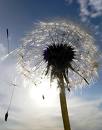
 Dewitt Jones is a renown National Geographic photographer tells of  how he once he traveled to the British Columbia on assignment. Out in the field, he decided to photograph a field of dandelions. But then not into it, he packed up and with a mind to return later. Several weeks passed before he got back. The field had turned to puff balls. 

About to leave again, Dewitt instead began to move in a more positive direction. With his camera he was suddenly over the puff balls, eye level with puff balls, under the buff balls, and there it was – an award winning shot!

We live in a God kissed world.

 Psalm 24:1 says, “The earth is the LORD’S, and everything in it, the world, and all who live in it.”

 And yet even as we claim this, less positive images come to mind.

 I have several friends who work in hospitals. The hospital presents a 360 degree view of life. One of my hospital buddies told me that this week a man with diabetes had his leg cut off.  I grieve for that man. But on the same day, in the same hospital, a baby was born with all its fingers and toes.

 The good is always framed by the tragic. This doesn’t take from good’s intrinsic goodness.

A man named Jud came to my office recently. He is a devastated person. He has vacant eyes. He has little contact with his family. His spirit is broken by an alcohol addiction. What can I do? In 30 minutes can I fix 50 years? I invited him to use the phone.

 I watched as he called his parole officer. I watched as he called a detox program. I watched a man digging himself out of his own grave. I invited him to come back the next day, sober, to call again. He came back. He made more calls. He left for the trolley, to go downtown to the detox center. I watched his back as he left, a man on a mission.  It was good.

 How good? Good in being one step back toward beauty in the form of order. This is what good means –order out of a depraved mess.

 I striped a parking lot recently, laying down new white parking space lines in measured, chalked and then sprayed rows. When I was done, I paused, the divine  pause, and enjoyed. I thought, this is how God must have felt after making the zebra. Striped is good. For me, striped is a mirror image of some kind of mysterious divine order.

 Perhaps we have been busy without pausing. Perhaps we should eat more spice cake and buy more paint.

 Life isn’t just a bunch of shouldn’ts and didn’ts. Certainly it is tragic, but certainly it is also framed in wonderments and full of astonishing possibilities.

 Look around. Life is good.   


.

Remember To Forget

Posted: October 5, 2009 in thriving
Tags: , , ,

Press on!Press On!

In the Disney movie Hercules, Hades hair busts into flames when he gets angry. But it isn’t just the god of the underworld who spontaneously combusts.

We all have fire in us. We all house residual emotional embers. We all carry incendiary memories. All heads occasionally flame.

Friends turned out not to be friends. Financial losses beyond our control occur. People close to us die. We fail to parent or spouse as we should. Embers smolder in the rubble.

But there is an extinguisher for this. We can still thrive.  To do this, we must learn to forget some things. The remedy for a firey past is to let some fires go out, to put them behind us.

Forget it. Forget it? That’s problematic. What does forget mean? It can’t mean erase completely or permanently from memory. Short of brain damage, and we don’t want that, we can’t and won’t forget loved ones lost. We can’t and won’t forget former friends who stabbed us in the back.

Traumatic, difficult things are not forgotten, and really shouldn’t be forgotten, a lost son, a betrayal, a mistake. The Apostle Paul never forgot that he persecuted Christians, referring to it in writing. The fire in his past was often on his mind. But he also spoke of “forgetting what lies behind.”

I remember driving to work one day when I was in high school. It was a two lane road. I came up behind a slow car. I accelerated to pass. Then I saw, another car coming straight at me.  I couldn’t make it around the car I was passing. I braked, hard. My car went into a slide. Off the road, spinning around — I came to a stop in a cloud of dust. I was shaking. I drove to work, very carefully. I continued to drive carefully — for about two weeks.  But I haven’t forgotten. I am informed by my driving memories.

Recently, a friend came to dinner in her sports car. She offered to let me take it for a spin. I did. I felt a calling to explore the potential of the turbo-charged engine. It was a caged beast. It needed to be let out. I went fast but not too fast. My right foot, it knows.

Fortunately, there is no wipe for driving memories. If there were, we wouldn’t learn from our mistakes. We couldn’t identify with others pain.

Then what does it mean to forget what lies behind?

To forget means not call to mind in a way that will hold us back  “Forget” means to not let the past drag us down, burn us down, keep us from the future God has for us. It means to not fall into a disabling grief. This is a choice we can and should make.

There is a need to say, “I am getting on with my life. I am living post-crash, post-fire!”

Clara Barton, founder of Red Cross, was once hurt by a friend. When she seemed unaffected, later, someone asked her, “Don’t you remember that?” She replied, “I distinctly remember forgetting that.”

How does one do that? To forget, first remember. This may seem counter intuitive. It is not. To forget a hurt, take it out and feel it, for a time. Say out loud what you feel. Write it out in a journal.  Find a safe person to tell.

It is okay to remember losses, to cry, to feel sad for a time, to grieve. But then, to be healthy, we must put them away. We call this the compartmentalization of grief. Hold it, then put it away in a mental drawer.

In other words, remember to forget.

There are 2.5 million annual deaths in the United States. Each directly affects four other people, on an average. For most of these people, the suffering is finite — painful and lasting, of course, but not  disabling

Skip to next paragraphSome people, however — an estimated 15 percent of the bereaved population, or more than a million people a year — fall into  “a loop of suffering.”  They go back, around and around. They can barely function.

This extreme form of grieving is called “complicated grief disorder.”  It has no redeeming value. It steals the present and the future.

Perhaps, we all get stuck at times in a loop of remembering, suffering our loses and mistakes over and over again. Then our heads are on fire, with the past.  We are suffering from a complicated grief disorder. To break out, we must put a psychological foot down. We must choose to set aside what we remember and press on.

Say we have a lost relationship. It is wise to look forward to the new relationships ahead for us. Say we have made a mistake. We can look forward to choosing not to do that again. Say we have been sick. This can purge us of our focus on things and center us on the core of life, relationships, God.

Want to thrive? Press on. Press forward. Keep driving. Occupy yourself with new plans, school, work, church. Don’t loop back very much. Loop forward. Remember to forget.